




Weiss Distribution Technique (WDT)
WDT stands for Weiss Distribution Technique: using fine needles to break up clumps and redistribute ground coffee throughout the portafilter basket before tamping. It is especially useful when your grinder leaves clumps or piles most of the dose in one part of the basket.
What WDT changes in the coffee puck
Water takes easier routes through loosely packed areas. A basket can look level on top while still having uneven density underneath. WDT works below the surface to reduce those differences. The aim is more repeatable flow and flavor, not a perfectly decorated puck.
It will not correct an unsuitable grind setting, an overfilled basket, or stale coffee. Start with a repeatable espresso dose so you can judge whether distribution is helping.
How to use a WDT tool
- Start with a clean, dry basket and weigh your ground coffee. A dosing funnel helps keep grounds contained.
- Insert the needles into the grounds and work gently through the depth of the bed, including the edges. Avoid scraping the basket.
- Use small, overlapping movements to break up clumps and move coffee from dense areas into gaps.
- Finish with lighter movements near the surface to leave a reasonably level bed.
- Remove the funnel carefully, settle the grounds with a gentle vertical tap if needed, and tamp level.
Common mistakes
Thick implements can push coffee into furrows instead of distributing it. Aggressive stirring can spill grounds or leave holes near the basket wall. Tapping the side of the portafilter after tamping can also disturb the prepared puck.
Keep the routine short and repeatable. More stirring is not automatically better, particularly if your grinder already produces fluffy, well-distributed grounds.
How to tell whether it helps
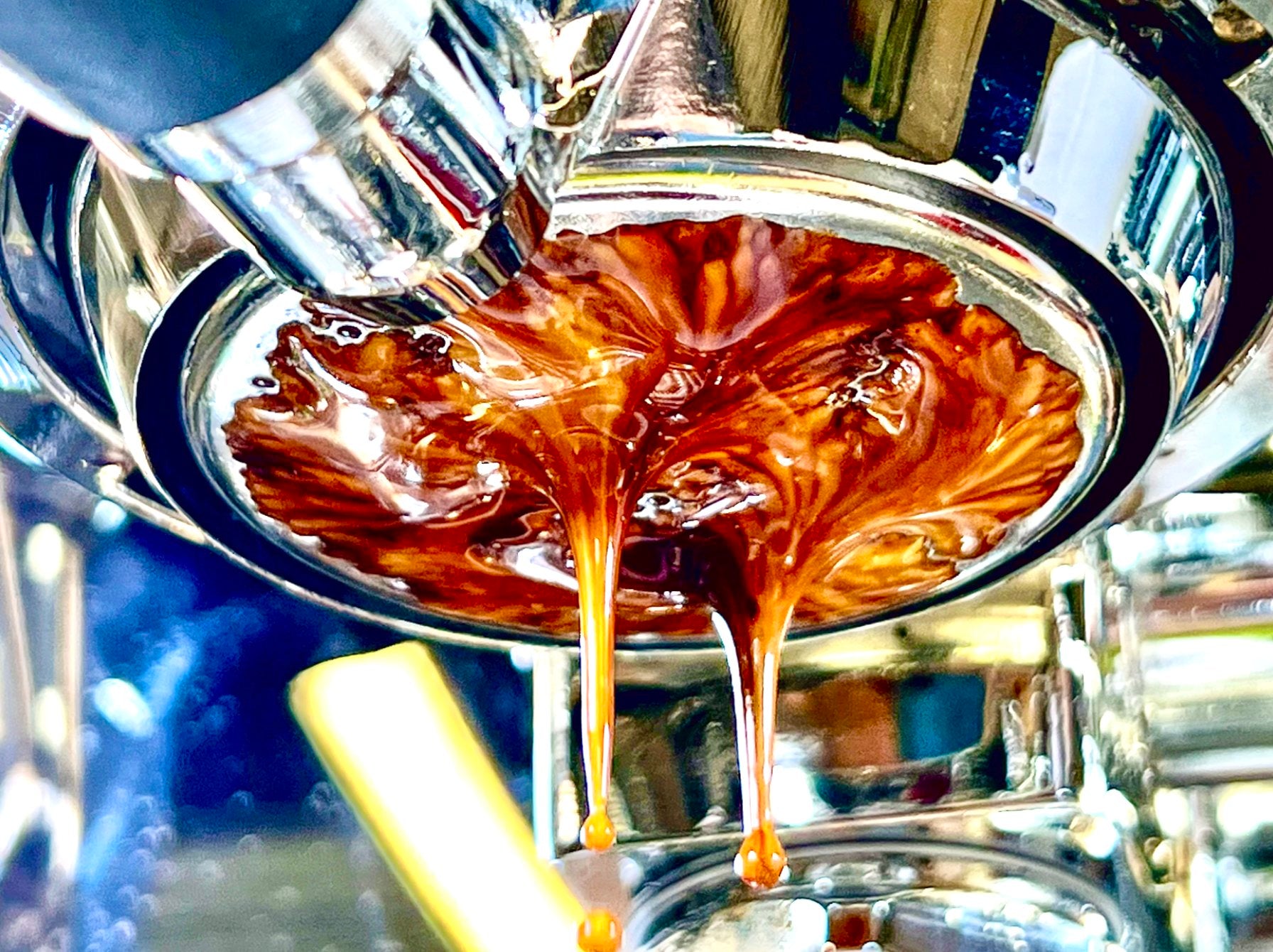
Use the same coffee, dose, grind setting, and beverage weight for several shots. Compare flavor and shot-to-shot consistency. A bottomless portafilter can reveal spraying or uneven flow, but a tidy-looking extraction is not proof that the coffee tastes good.
If results remain inconsistent, work through espresso channeling causes rather than adding more preparation steps without a clear purpose.