Commercial Espresso Machines by Type
Find the machine for your everyday espresso ritual.
Choosing your equipment
Compare commercial espresso machine types by group count, shot control and operating requirements. Use the guide to shortlist one-group, two-group, three-group, compact and automatic options, then verify the exact configuration against your site and rush demand.
Explore the complete Commercial Espresso Machines by Type buying guide
Commercial espresso machine finder
Shop commercial espresso machines by group count, workflow and operating needs
Start with your busiest hour, staffing model, milk-drink demand, counter space and available utilities. Then narrow the catalog by 1-group, 2-group or 3-group capacity; semi-automatic, volumetric or super-automatic workflow; or practical needs such as a compact footprint, 110V configuration, coffee cart setup or high-volume service.
Capacity
Shop by group count
Group count affects simultaneous barista access, but steam recovery and workflow matter just as much.

Single barista
1-Group Machines
Lower-volume cafés, restaurants, bakeries and space-conscious mobile bars.
Shop 1-group →
Most cafés
2-Group Machines
Compact and full-size choices for two-barista workflow and steady rushes.
Shop 2-group →
Multi-barista rushes
3-Group Machines
High-volume cafés and venues with the staffing and counter space to use a third group.
Shop 3-group →
Shot workflow
Shop by automation style
Choose how much of the extraction the barista controls and how much repeatability the machine provides.

Hands-on control
Semi-Automatic
Barista-controlled shot starts and stops for trained, craft-focused teams.
Shop semi-automatic →
Programmable doses
Volumetric
Automatic shot-volume stopping for consistency and faster multitasking during a rush.
Shop volumetric →
Bean to cup
Super-Automatic
Automated grinding, dosing and brewing for foodservice, hospitality and offices.
Shop super-automatic →
Space, power and demand
Shop by operating need
These collections help answer common build-out questions before the brand or model decision.

Space saving
Compact Machines
Smaller footprints for tight counters, kiosks and mobile builds.
Shop compact →
Available 110V options
110V Machines
Models with at least one 110V or 120V configuration; amperage still must be verified.
Shop 110V →
Mobile coffee
Cart & Trailer Machines
Space- and utility-conscious choices for mobile espresso businesses.
Shop mobile setups →
Heavy rushes
High-Volume Machines
Full-size two- and three-group platforms for concentrated demand.
Shop high-volume →Quick comparison: which commercial espresso machine category fits?
| Category | Good starting point for | Verify before ordering |
|---|---|---|
| 1-group | One barista, moderate espresso demand, limited counter width | Steam recovery and whether the busiest queue exceeds one-group capacity |
| 2-group | Most full-service cafés and two-barista workflows | Compact vs. full size, boiler design and peak milk-drink demand |
| 3-group | Busy venues and staffed bars with simultaneous production | Counter length, utility load and whether the third group will actually be used |
| Volumetric | Teams that need repeatable programmed shot volumes | Recipe controls, training, cleaning and model-specific programming |
| Super-automatic | Restaurants, hotels and offices prioritizing simple operation | Milk system, drink menu, daily capacity, cleaning labor and service coverage |
| Compact / 110V / mobile | Tight bars, kiosks, carts and trailers | Exact dimensions, amperage, total electrical load, water and wastewater plan |
| High-volume | Concentrated rushes, drive-throughs and multi-barista bars | Peak-hour drinks, steam demand, grinder capacity and local technical support |
Semi-automatic vs. volumetric vs. super-automatic
Semi-automatic models in this guide use manual shot start-and-stop control. They reward an attentive, trained barista and fit shops that want a hands-on extraction workflow.
Volumetric machines stop a shot at a programmed water volume. The barista still grinds, doses and tamps, but can steam milk or stage the next drink while the machine manages shot volume.
Super-automatic machines automate grinding, dosing and brewing, and some automate milk. They reduce the training burden but add different cleaning, ingredient-management and service considerations.
Important notes for 110V machines, coffee carts and trailers
A 110V label does not guarantee compatibility with an ordinary household outlet. Some configurations require a dedicated 20-amp circuit, and lower electrical input can affect recovery during back-to-back milk drinks. Match the exact model and voltage configuration to the build.
For a cart or trailer, calculate the complete simultaneous electrical load—not only the espresso machine—and confirm potable water, pump pressure, filtration, drainage, gray-water storage, ventilation, operating weight and local health-code requirements.
Always use the selected model’s current specification sheet. Have qualified trades confirm the circuit, plumbing and installation before purchasing equipment or cutting the counter.
Commercial espresso machine category FAQs
Is a 2-group machine the right default for a coffee shop?
It is a common starting point because it supports two-barista workflow, but the right choice depends on peak-hour drinks, milk demand, counter space, electrical service and the grinder. A compact 2-group can solve a space problem without matching every full-size machine’s steam capacity.
Can one product appear in more than one category?
Yes. A product page can contain multiple configurations—for example, 1-group and 2-group or semi-automatic and volumetric—so it belongs in every category represented by a purchasable configuration.
Does 110V mean no special electrical work?
No. Confirm voltage, amperage, plug, dedicated-circuit requirements and total site load with the exact specification sheet and a licensed electrician.
Should I size the machine by daily drinks?
Use the busiest hour first. Two shops with the same daily total can need very different equipment if one serves most orders in a short morning rush.
Buying guide & FAQs
36 products


Victoria Arduino Eagle Tempo Digit Commercial


 Sold Out


Victoria Arduino Athena Leva Commercial Lever

Victoria Arduino E1 Prima & Prima Pros

Victoria Arduino Black Eagle Maverick Commercial

Victoria Arduino Eagle One Commercial
Let customers speak for us
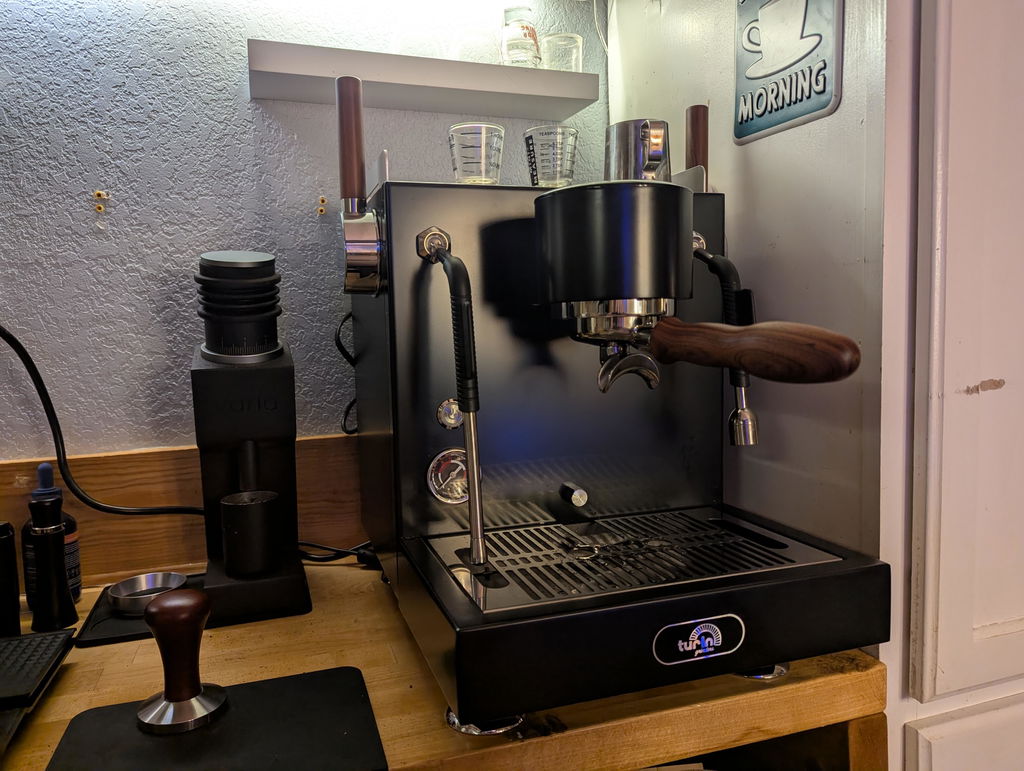
We love our Turin Gallatin!!
Machine was shipped ver quickly and the quality has surprised both my wife and I. I have been working in the coffee industry for over 10 years and wanted something to use at home that would give more space for experimentation and for making tasty drinks. This does that with flying colors!!
Ben Crawford

Turin Gallatin V HX Espresso Machine with PID
Incredible value
First of all, there is not a lot of content or discussion about this machine in comparison to others. If you do a bunch of research from various places online you can get a real understanding of the value of this machine at the price point. This machine solves 2 direct problems with budget home machines. 1: direct plumbing and drain. The included pressure reducer/check valve makes this pump way above it's weight automatically. 2: thermoblock for brewing, steam boiler for milk steaming. No other machine has this configuration, and I have no idea why. Because of the very easily accessible OPV it also defeats an additional problem with spending under $1,500. You usually have to choose between a cheaper rotary or gear pump or a vibratory pump that produces way too much pressure. And while this unit ships with the pressure too high, backing off the valve is very easy. The machine also feels incredibly sturdy, even with commercial machines clocking on the portafilter you can move the whole machine on the counter, but not this one. Solid as a rock. Steam performance is incredible, dry steam because no heat exchanging. Hot water tap is my only gripe, just like every machine that sends water from the boiler, it flash boils and makes a hot mess. A cold blending valve might be a good mod when the warranty expires. Overall the espresso features with the programmable pre infusion, volumetrics from the flowmeter are all you really need to match machines 4x it's cost. I will say that the group head heating mechanism is not the most impressive thing, but it is better than nothing and I like the energy efficiency of the machine overall. It is my favorite espresso out of all the places I go to work on espresso machines in the field and I don't think you can do any better for under a $grand.
Mike @US Roast

Turin MC3 Espresso Machine
Great service every time I have a question
Great service every time I have a question, need service, or need advice.
Yevgeniy Tabarovskiy
Espresso Outlet LLC
Great Roaster
This is a great coffee roaster to consider
Anonymous

Kaleido M2 LITE 500g Coffee Roaster (Artisan System)
Very satisfied with this grinder
Very satisfied with this grinder. Easy to use and clean. Highly recommend it!
Maria Quesada

Turin DC63 Conical Coffee Grinder for Espresso
Quick Mill Vetrano EVO DB: An Absolutely Incredible Espresso Machine!
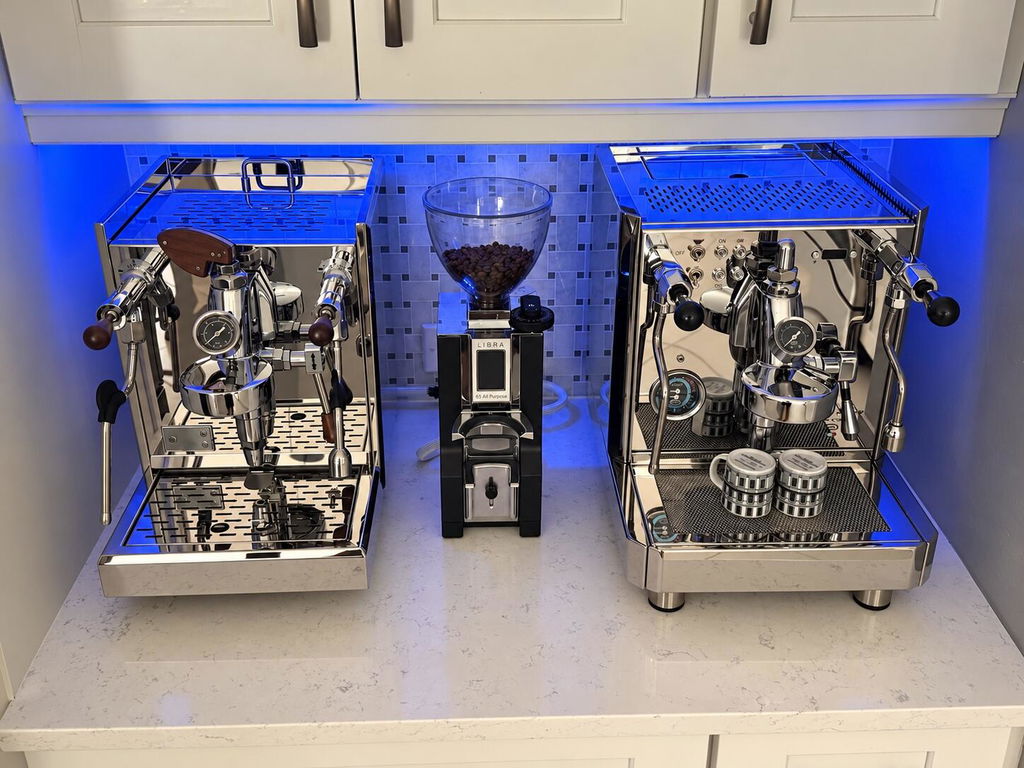
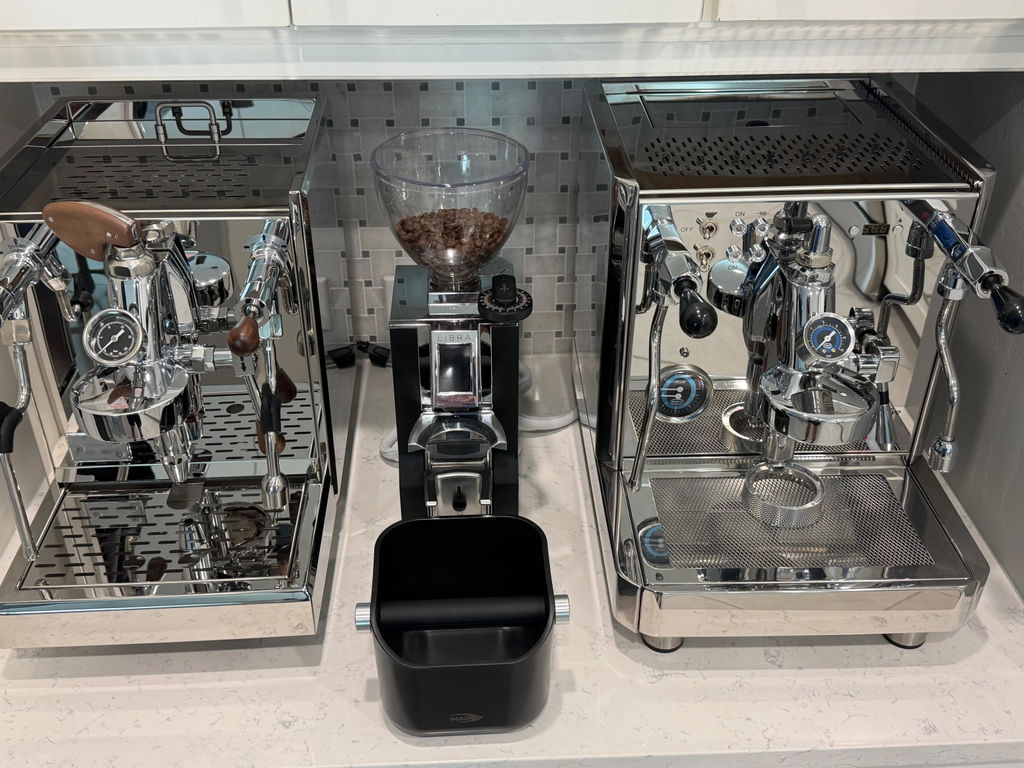
This is our second espresso machine purchased from Espresso Outlet, and we couldn’t be happier! Our first was a Turin Gallatin, which is an incredible machine in its own right, but the Quick Mill Vetrano EVO DB has really impressed me.
The build quality is outstanding, the stainless steel construction is beautiful, and the machine feels incredibly solid and well-engineered. The rotary pump is exceptionally quiet, the dual boilers provide excellent temperature stability, and the E61 group head delivers fantastic espresso. It’s a true prosumer machine that looks just as impressive as it performs.
A special thanks to Barrett Ellis at Espresso Outlet for helping make this purchase happen. His customer service and willingness to go the extra mile were greatly appreciated.
If you’re considering the Quick Mill Vetrano EVO DB, I highly recommend it. It’s a beautiful, powerful, professional-quality machine that makes every morning feel like having your own personal coffee shop.
Five stars for the Quick Mill and Espresso Outlet! ☕
Jeffrey Schroeder

Quick Mill Vetrano 2B Evo Espresso Machine
Excellent after-sales support!
Joe always responds to any questions and requests promptly and professionally. I'm very happy with his company's service, and they're my favorite espresso machine / bean grinder supplier!
Phil Panas
Espresso Outlet LLC
Wow! This espresso exceeded my expectations.
I use a DeLonghi espresso maker and purchased this already ground I believe the dark roast for espresso. I found this espresso to be very bold, rich, and tasted the flavor profile described- chocolate and caramel notes. The bag came within five days of my order, I felt the espresso was very fresh. Loved it! Will order again (it also paired well with sugar and a biscotti, haha). Thanks.
Mar

RedEye Espresso Blend Coffee
Delay in the shipment
How do I get the shipment tracking code? Where is the request?
Faisal AlRasheedi
Espresso Outlet LLC
Grinder works great
Grinder works great. It has really improved my espresso.
Anonymous
Espresso Outlet LLC

Very pleased
Very pleased. The team is very supportive when help is needed
Ismael Sosa
Espresso Outlet LLC
Fantastic grinder and fits well with my espresso workflow
Sam

Turin DF54 v4.1 Single Dose Flat Burr Grinder

Good fit for my DF64
Good fit for my DF64. Looks good too.
Mark Cotter

58mm Black Metal Dosing Cup for the Turin DF54, DF64, and DF83 Grinder