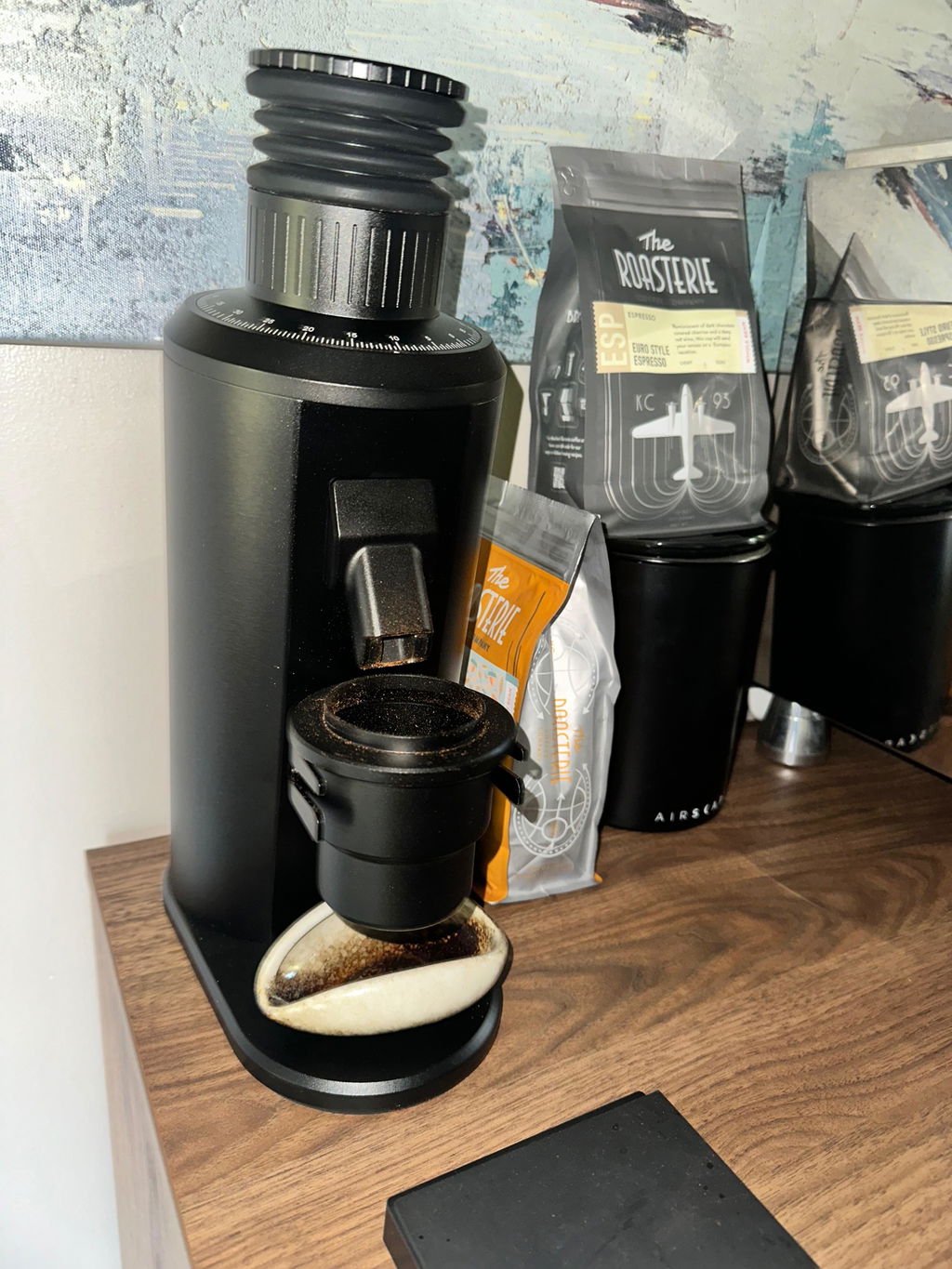
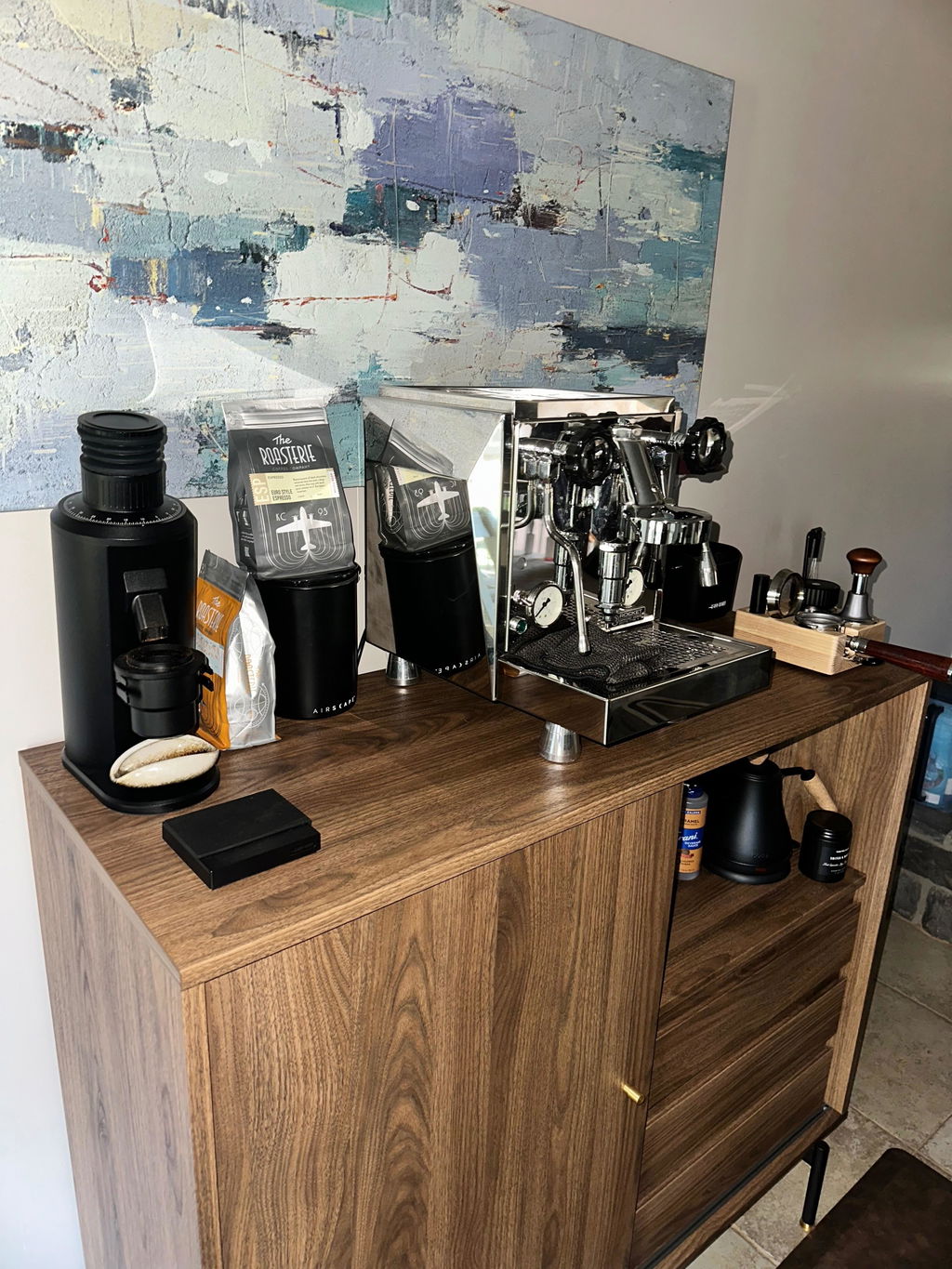
Filter Coffee & Pour-Over Grinders
Precision grinders for your daily coffee ritual.
Choosing your equipment
Filter coffee grinders serve pour-over, automatic drip, AeroPress, French press, cold brew and batch brewing. This collection includes portable hand grinders, compact single-dose electrics, variable-speed flat-burr platforms and high-volume bulk grinders. Some models also cover espresso, making them useful for multi-method coffee bars.
For filter coffee, compare burr geometry, grind-range repeatability, fines production, retention and dosing capacity. Explore hand grinders, single-dose grinders, flat-burr grinders or all home coffee grinders.
Read the filter coffee grinder buying guide
How to Choose a Grinder for Pour-Over and Drip Coffee
The best filter grinder produces a useful particle distribution at your brew settings and makes dose changes and cleaning easy.
Match the grinder to the brew method
Pour-over commonly uses medium-fine to medium settings, automatic drip spans medium ranges, French press uses coarser settings, and cold brew can require both coarse grind and larger dose capacity. AeroPress recipes vary widely. Labels are only starting points because grinders and brewers use different scales.
Choose enough adjustment range for your methods and enough capacity for the largest batch. A compact hand grinder can suit one cup; a bulk grinder is better for bags, airpots or repeated batches.
Particle distribution and fines
All grinders create particles of different sizes. Excessive fines can slow drawdown or increase bitterness, while too many coarse particles can reduce extraction. Burr geometry, alignment, feed and coffee affect distribution. A visually uniform grind is useful but taste and brew behavior remain the final test.
Do not chase one universal setting. Adjust finer when coffee tastes weak or sour and the brew flows quickly; adjust coarser when drawdown is excessive or the cup tastes harsh, while keeping ratio and technique stable.
Flat versus conical burrs for filter coffee
Flat burrs are often selected for clarity-oriented brewed coffee, especially with brew-focused or multipurpose geometries. Conical burrs can provide excellent filter results in compact hand and electric grinders. The specific burr matters more than shape alone.
The Turin DF54, DF64 family, DF83V, Mazzer Philos and Wendougee Milo Play provide flat-burr routes. Turin H40, H63 and SK40 offer conical options. Compare taste goal, footprint and workflow.
Manual versus electric
Hand grinders are quiet and portable and can provide strong burr quality per dollar. Filter settings usually require less effort than espresso, but grinding a large batch still takes time. Check capacity and ergonomics.
Electric single-dose grinders improve speed and suit repeated brews. Bulk grinders such as the Compak R8 Eco and R120 Eco are intended for much higher throughput. Choose duty cycle and capacity to match use.
Single-purpose versus espresso-capable
A grinder optimized for brewed coffee may prioritize coarse-range consistency and clarity. A crossover grinder adds espresso capability but must offer very fine adjustment and predictable movement between ranges. Switching works best with clear markings and low exchange.
If you make both methods daily, note settings and purge modestly after large changes. Two dedicated grinders may eventually be more efficient, but one versatile single-dose model is practical for many homes.
Burr options and flavor goals
Brew-focused and multipurpose burr geometries can emphasize separation and clarity, while other burrs retain more body and blended sweetness. Roast level, water and brewer also shape the result. Select an included burr that supports your main method before planning upgrades.
For Turin 64mm models, Espresso Outlet offers applicable DLC brew, SSP multipurpose and cast-style options alongside espresso-focused burrs. Compatibility must be confirmed by exact model.
Retention, static and grounds transfer
Old coffee trapped in the chute can affect delicate filter flavors. Low-retention paths and consistent bellows use help when changing beans. Static may cause grounds to cling or scatter, particularly in dry conditions.
Weigh input and output over several doses. If the manufacturer allows a light water mist, use only a minimal amount; moisture is not appropriate for every grinder and excessive water can cause buildup.
Current filter grinder shortlist
For travel and small doses, compare the Turin H40 V2 and H63. For compact electric use, consider the Turin DF54 and SK40. The DF64 Gen 2.7 adds a 64mm burr platform, while the DF64V, CF64V and DF83V add variable speed. Premium options include the Mazzer Philos and Wendougee Milo Play.
For large-volume grinding, compare the Compak R8 Eco and R120 Eco by capacity and duty cycle. Confirm that a grinder’s electrical and commercial requirements match the installation.
Cleaning and brew consistency
Brush the chute and accessible burr chamber when grounds or oils accumulate. Unplug before disassembly, protect burr surfaces from water and follow the manual. Dark oily coffee may require more frequent attention.
Track dose, water, temperature, grind and brew time when dialing in. Consistent preparation reveals whether the grinder setting or another variable caused a change.
Filter coffee grinder FAQs
Frequently Asked Questions About Filter Coffee Grinders
What grind size should I use for pour-over?
Start around medium-fine to medium and adjust by taste, drawdown and brewer design.
Do I need a special grinder for drip coffee?
A grinder with a stable medium range and suitable capacity is sufficient; brew-focused burrs can offer further refinement.
Are flat burrs better for filter coffee?
Not universally. Specific burr geometry and grinder design matter more than shape alone.
Can an espresso grinder make filter coffee?
Some can. Confirm coarse range, burr suitability and how easily it returns to espresso settings.
Is a hand grinder practical for filter coffee?
Yes, especially for one or two cups. Large batches require more time and capacity.
What causes too many fines?
Coffee, burr geometry, alignment, feed and wear can contribute. Evaluate brew behavior before assuming a defect.
Should I use a water mist on beans?
Only if the manufacturer allows it, and use very little. Excess moisture can cause buildup or corrosion.
What size grinder do I need for batch brew?
Choose capacity and duty cycle for the largest dose and number of batches, not burr diameter alone.
How often should I clean a filter grinder?
Clean based on volume and oil buildup, especially when stale aroma or inconsistent output appears.
Can one grinder handle cold brew and espresso?
Some versatile models can, but the large setting change may require notes and a small purge.
Buying guide & FAQs
16 products


 Sold Out


Turin DF64V Gen 3 Grinder with Ion Generator - Variable Speed
64 mm flat burrs
Single dose


Turin DF64V Gen 3 - 220V - Grinder with Ion Generator - Variable Speed (EU 220V Plug)
64 mm flat burrs
Single dose


Let customers speak for us
I spent a LOT of hours researching to find the grinder that I felt would best fit my needs and I
I spent a LOT of hours researching to find the grinder that I felt would best fit my needs and I am SO happy I decided on this one. I absolutely LOVE my Turin DF54 grinder as it’s nothing but top quality at a ridiculously reasonable price! I must admit, it took me a bit to find that perfect grind setting, but once I did … perfection! The only thing that makes me a tad nervous is when it comes time to clean the burr blade (which of course I haven’t needed to do just yet). But good to know there are videos/visuals to go by to help me through the process. So, yes, THANK you Turin/Espresso outlet for making this grinder available. Extremely pleased! 💛🙌🏼💫🙏🏼✨☕️
Dana Chalamet

Turin DF54 v4.1 Single Dose Flat Burr Grinder
Product delivered on time as
Product delivered on time as promised
Abdallah Shanti
Espresso Outlet LLC
Ease of use! Great grind every time. Fairly quiet. Feels like a solid piece of equipment at 10#. Making great Espresso shots!! Switches between grind settings with ease for different styles. Bellows ensures minimal retention. Open box deal was amazing. Looks like new!
Steven

OPEN BOX Turin DF54 Single Dose Flat Burr Grinder
Roasts great and taste great!! You can really taste the cinnamon.
You can really taste the cinnamon. A true 10 out of 10!
Louis

Cinnamon Roll Diego Bermudez Green Coffee
Punches well above its price
I love my Turin Legato V2!! I was initially torn between it and the Gemilai Ele but went with the V2 because of the additional water flow, along with OPV setting. It literally has just about everything I want in an advance espresso machine in a small package at an amazing value - pulls perfect shots! The only slight downside is that the drip tray is small so emptying it daily is a must. If Turin makes a version 3, please keep all the same settings and options but give it a bigger drip tray/workflow, longer steam wand, and make it prettier. It's basically touching on perfect. Thanks!
Alex

Turin™ Legato™ V2 Espresso Machine
3-week review
3-week review. Quality burr grinder. Consistently able to get X g in and X g out at the right grind.
Alexandr Palamari
Turin DF54 v4.1 Single Dose Flat Burr Grinder
Amazing grinder!
Amazing grinder. beautiful in every way, very powerful and does exactly what its intended for. very happy with this purchase
Si Bissell

Turin DF64 Gen 2.7 Single Dose Coffee Grinder
Absolutely gorgeous machine, and so easy to plug and play. Was very surprised and extremely pleased to receive a flawless unit even as an open box. Thank you so much!
Claire

OPEN BOX Turin™ Legato™ Espresso Machine v2
Great website and fast delivery on the DF54
Great website and fast delivery on the DF54. Love the new machine, thank you!
Anonymous
Turin DF54 v4.1 Single Dose Flat Burr Grinder
Love it! No regrets!
I ordered a grinder and truly love it! No regrets at all. I look forward to using it every day!
Nicole P.
Turin DF54 v4.1 Single Dose Flat Burr Grinder
A Fantastic Burr Grinder
I did a lot of research before I purchased this burr grinder and I am extremely impressed and happy with it!
Patty K
Turin DF54 v4.1 Single Dose Flat Burr Grinder
This is a serious improvement on the original DF 83
This is a serious improvement on the original DF 83.
David Grant

Turin DF83V v3 Variable Speed Coffee / Espresso Grinder
Mint Condition open box grinder !
I purchased an open-box Turin SK40, and I was extremely impressed when it arrived in what appeared to be brand-new condition. The grinder is solid, substantial, modern-looking, and surprisingly quiet. It grinds beautifully and has exceeded my expectations.
I’m very impressed with both the grinder and my overall experience with Espresso Outlet LLC. As a new customer, I couldn’t be happier with the great pricing, fast shipping, and responsive customer service. I’ll definitely be purchasing my coffee equipment and supplies from them in the future.
Thank you, Espresso Outlet LLC, for a great experience!
John Ricardo

OPEN BOX Turin™ SK40™ Single Dose Stepless Grinder
Turin Axis makes superior espresso than pump machines
I have recently entered the world of “fully manual espresso”, with the Turin Axis and the Weber HG-2 Mk2 manual grinder. Going manual has significantly improved the espresso I make and has almost eliminated “throw away shots” while dialing in grind size. My modded flow control Breville Dual Boiler has become an expensive milk steamer. Why? It’s all because manual espresso respects the coffee puck and allows it to determine how best to extract coffee goodness from it. The Turin Axis is the perfect manual lever machine for this.
The Turin Axis' quality is excellent. One can feel it in its sturdy construction and the way its moving parts operate seamlessly and smoothly. The Axis’ frame is made with “blackened” aluminum (anodized?) which offers a very sturdy platform to work with.
The Axis’ brew assembly is made entirely of stainless steel so hot brew water and coffee acids, never touch the aluminum. This is important as exposing aluminum to hot water/acids, could leach harmful minerals from it.
The stainless steel brew assembly also plays an important role in the Axis’ thermal stability. The Turin uses a PID controlled heating element to heat the stainless steel brew assembly to a targeted brew temperature. Stainless steel has lower heat conductivity. This helps maintain thermal stability, once the brew assembly reaches the targeted brew temperature. The brew assembly, including cold water in the reservoir, reaches thermal stability in around 10-15 minutes. The brew assembly is relatively small and includes the portafilter collar. Once the brew assembly is heated, the collar becomes too hot to touch, so there is almost no decrease of brew water temperature as it hits the coffee puck.
The best thing about the Axis is the manual control it offers the barista. The coffee puck/grind size determines the brew method. The Axis respects the coffee puck and allows it to determine how best to extract coffee goodness from it. Electronic pump machines do not respect grind size/coffee puck. These machines push out a consistent “static pump pressure”, regardless of grind size (resistance) and puck degradation. Because of this, grind size has to be dialed in to “accommodate” the machine’s static brew pressure.
The Turin Axis respects grind size and the coffee puck. The Axis allows the barista to manually control water’s contact time with the coffee puck in a way that will best extract its coffee goodness. The barista does this by manually controlling lever pressure to match the needs of the coffee puck/grind size. Since using the Turin Axis, I have not thrown out any shots while dialing in grind size. All shots have been acceptable at worst and excellent at best.
Want good espresso every time, without having to dial in? Controlling extraction manually is the only way to do this. Get the Turin Axis manual lever espresso machine!!
Mark Abe, Da Coffee Place

Turin Axis Lever Espresso Machine
Excellent customer service
The first unit I got worked great for a few months until I had difficulty lining up the treads to screw the espresso holder onto the main unit. The owner of the company reached out to me personally to get more information about the problem and then sent out a replacement. Talk about amazing customer service! I'm really blown away!
Shandra Yoshimi

Turin TrekBrew Portable Espresso Machine - Espresso Machine Only