How to Identify Your DF64 Version
“DF64” describes a grinder family, not one unchanged machine. Gen 1 and Gen 2 differ, and production revisions within a generation can change buttons, chutes, declumpers, plasma generators, wiring, or small hardware. Identify the exact grinder before ordering a replacement part.
DF64 Gen 1 versus Gen 2
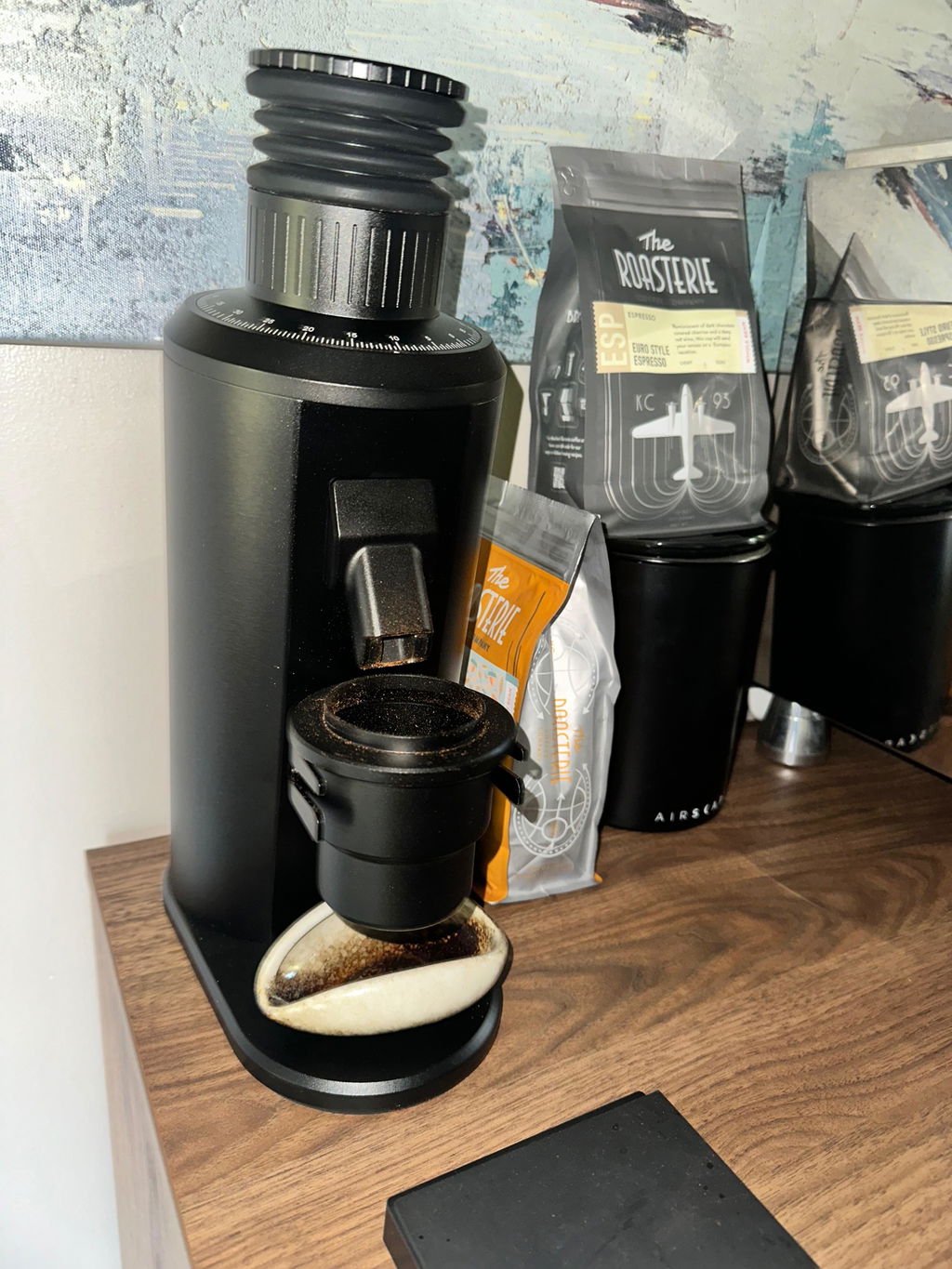
The safest identification uses the product label, original order, and overall configuration together. Gen 2 introduced a redesigned body and workflow, including a revised chute area, updated controls, and anti-static features. A single cosmetic detail is not enough because owners can install aftermarket parts.
Find these identifiers first
- Model label: photograph the label on the base or rear without removing panels.
- Order record: note the product title, purchase date, retailer, and order number.
- Full grinder photos: include the front, side, rear, base label, button, chute, and power connection.
- Voltage: match the part to the grinder's rated voltage and market.
- Revision wording: note any version number printed on the box, manual, product listing, or replacement part.
If the order title says DF64 Gen 2, use the DF64 Gen 2 parts collection as the starting point. For other Turin grinder components, browse the broader Turin grinder parts collection.
Parts that are often version-sensitive
Power button and electrical parts
Button shape alone does not confirm electrical compatibility. Connector style, terminal arrangement, voltage rating, and mounting dimensions must match. Unplug the grinder before inspection and do not bypass a switch.
Chute, declumper, and anti-static parts
The exit assembly changed across generations and revisions. A declumper that physically fits can still affect retention or flow if its thickness and orientation differ. Plasma-generator or ionizer parts also require the correct revision and wiring.
Burr carriers, springs, and wave washers
Upper carriers and their preload components must match the grinder design. Mixing parts can alter alignment, zero point, and adjustment feel. After any approved burr or carrier work, check that the burrs rotate freely before adding coffee.
Bellows, hoppers, forks, and dosing cups
These external accessories are easier to compare, but fit can still differ. Verify collar diameter, mounting points, cup width, and fork geometry rather than relying only on the “DF64” name.
What about 64 mm burrs?
Nominal diameter is only the first requirement. Check mounting-hole pattern, screw clearance, burr thickness, cutting geometry, intended rotation, and whether the carrier provides enough adjustment range.
For an approved swap procedure, this DF64 Gen 2 video shows burr installation and alignment:
Information to send support
Send the label photo, complete grinder photos, order number, voltage, failed part, and a close-up of its connector or mounting points through Espresso Outlet support. Do not disassemble beyond normal cleaning unless instructed. For model-specific operating help, use the DF64 Gen 2 support center.
Revision numbers within DF64 Gen 2
Retail listings may use decimal revision names to describe running production updates. Treat those labels as useful purchasing information, not as proof that every component changed. A later revision can share some parts with an earlier one while using a different declumper, anti-static assembly, button, or accessory. The replacement-part listing should name the supported revisions; if it does not, verify before purchase.
Used or modified grinders need extra verification
A secondhand DF64 may have an aftermarket chute, dial indicator, power button, burr carrier, or bellows. Compare the base machine label and internal mounting interface, not just the visible accessory. Ask the seller for the original parts when possible, and disclose modifications when requesting support so compatibility advice is based on the actual grinder.
FAQ
Are all DF64 Gen 2 parts interchangeable?
No. Some parts span revisions, while others are revision- or voltage-specific. Confirm the listing or ask support.
Can a Gen 2 part fit a Gen 1 grinder?
Sometimes an external accessory can, but internal and electrical parts should never be assumed compatible.
Does purchase date identify the version?
It helps, but old inventory and used sales make it imperfect. Use the label and physical details too.