




How to Choose a Location for a Coffee Shop
Coffee Business Resource Center
A coffee-shop location can look perfect from a parked car. The rent seems manageable, the windows are attractive, and there are plenty of people nearby.
The useful test is what happens when a customer tries to buy coffee there. Can they reach you easily, at the time they want a drink, and leave without turning the stop into a chore?
Start with that journey. Then check whether the space and its costs support the business you plan to run.
Decide which visit the location needs to serve
Name the customer occasion: coffee before work, a meeting with a friend, school drop-off, a workplace break, or a weekend market.
Each gives you different things to observe. A commuter may value easy access more than seating. A customer meeting friends may need somewhere comfortable to stay. A nearby office may produce larger orders, but only on the days people are there.
Match your intended hours to the activity. A site that comes alive at lunchtime may not support a business built around an early morning rush.
Write the idea in a sentence before you visit: “This site should make it easy for nearby shift workers to buy takeaway coffee before work.” You now have a specific claim to investigate.
Visit more than once, at useful times
Spend time at each serious candidate during the hours you intend to trade. Repeat the visit on different relevant days.
Record weather, roadworks, holidays, school schedules, and unusual events. A busy observation during a festival should not quietly become your forecast for a normal week.
Watch the route as well as the number of people. Note where drivers approach from, whether turning is convenient, where people park, and whether the entrance is easy to see.
For pedestrians, follow the path from nearby destinations. A building full of potential customers may have its main entrance on the other side or a difficult crossing between them and the café.
| What to observe | What it can tell you | What it does not prove |
|---|---|---|
| Pedestrians during your intended hours | When nearby activity happens | How many will buy |
| Parking and vehicle access | Whether stopping is practical | That road traffic will convert into orders |
| Neighboring businesses | Possible routines and shared visits | Continued demand from every neighbor |
| Competing coffee options | Existing service, pricing, and customer occasions | That their customers will switch |
| Quiet periods | The work the location needs beyond the rush | That a strong peak will cover the whole day |
Keep the notes consistent across sites. Comparing a sunny Saturday at one address with a wet weekday at another can lead you toward the wrong conclusion.
Use local data as context
The U.S. Census Business Builder provides demographic and economic information for locations and business types. It can help you understand the area around a proposed shop.
Use it alongside observation and conversations. A broad population profile cannot tell you whether parking fills before your customers arrive or whether a large employer provides coffee internally.
Talk to nearby business owners and potential customers. Ask about their routines and current coffee habits, without leading them toward the answer you want.
Consider direct competitors and substitutes: bakeries, convenience stores, workplace coffee, and drinks brought from home. A location needs a reason for customers to choose your offer at that moment.
Find out whether the premises can support the menu
Bring a rough menu and equipment list to the site. Have the appropriate professionals assess the intended use, utilities, drainage, layout, and work required.
A former café is worth investigating, but its previous use doesn't establish that your new menu or layout is approved. Check what equipment is included and what belongs to the landlord or former operator.
Plan accessibility with the designer, including the customer route, ordering, seating, and restrooms as applicable. The DOJ small-business ADA primer explains the importance of reviewing existing facilities and alterations.
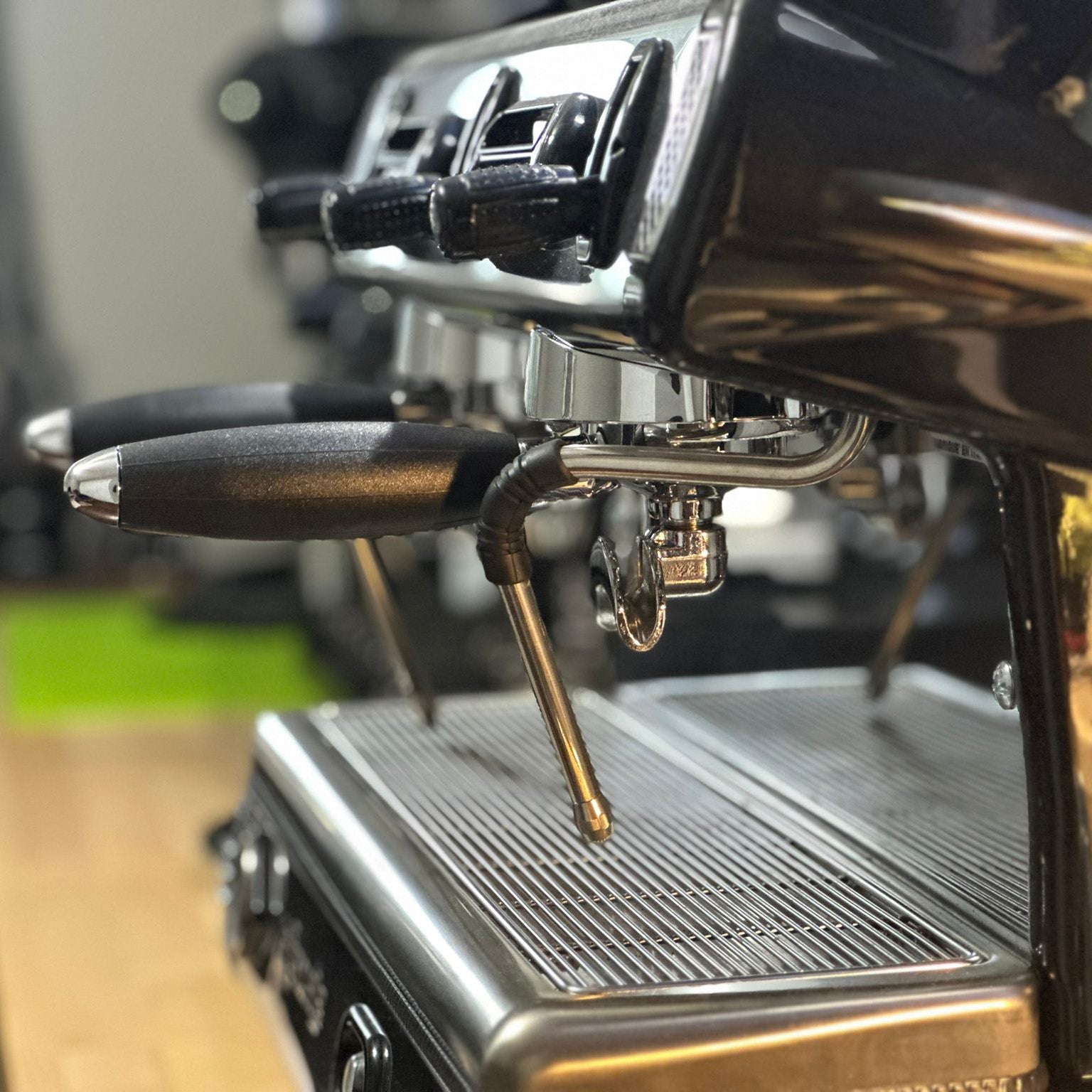
Confirm the exact espresso-machine configuration before treating the site as ready for it. Manufacturer sheets specify power, water, and drain requirements; the presence of an outlet and a sink isn't enough to establish compatibility.
Ask which expensive questions are still unresolved. It is better to investigate those before negotiating around a build cost that may change substantially.
Compare the full occupancy cost
Ask for base rent, additional charges, utilities, insurance responsibilities, maintenance obligations, increases, and deposits. Clarify what is included and how charges are calculated.
Distinguish usable space from the area on which rent is calculated. The NYC Small Business Services commercial lease guide explains rentable versus usable area and additional rent. Those are useful questions to bring to your own lease review.
Include the work needed to occupy the site. A lower monthly rent can be offset by more construction, utility upgrades, or time spent paying rent before opening.
Ask your attorney to review the lease before commitment, including use, renewal, assignment, repairs, and personal obligations. The location decision includes the agreement that lets you stay there.
Ask how much extra business the more expensive site needs
Suppose one location costs an illustrative $1,200 more per month in recurring occupancy expenses. If the average additional order contributes $4 after its transaction-related costs, the site needs 300 additional orders per month just to cover that difference.
At 26 trading days, that is about 12 extra orders per day when rounded up. This is an original comparison example, not a normal café margin or rent benchmark.
The calculation assumes the additional orders don't require extra staffing, equipment, or other fixed expenses. If they do, include those costs and recalculate.
Now compare that requirement with the evidence. Is the second site easier to reach, active for more hours, or likely to support more repeat visits? Can you explain why it might produce the extra orders?
A bigger sales opportunity can justify a higher cost. The point is to make the reasoning visible instead of assuming “better location” explains every increase.
Walk a delivery and an order through the space
Mark the machine, grinders, fridge, sinks, preparation surfaces, storage, and pickup point. Think about the busiest team you intend to use.
Open doors and drawers in the plan. Follow a milk delivery to storage, then follow a drink from payment to pickup. Ask what happens if those movements happen at the same time.
Look for a queue across the entrance, a fridge door that blocks another barista, or stock that can only be reached by interrupting service. These are practical location costs even when they don't appear in the lease.
Consider closing as well. Where does waste go, how are tools washed, and can staff clean behind the equipment? A shop needs to work after the customers have left.
Check host locations and mobile sites just as carefully
For a kiosk, ask who controls opening hours, staff access, signs, utilities, storage, and deliveries. Find out how the arrangement handles closures or changes in the host's business.
For a cart, separate a retail vending site from a catering booking. For vending, review fees, competing coffee, useful attendance periods, and whether you can return. For catering, check load-in, service position, guest flow, utilities, and the host's requirements.
Confirm the local approvals and property permission needed for the arrangement. King County's mobile guidance includes operating-site and support-facility information; your local process determines what you need.
Include travel and setup time in the site's economics. A busy event can still be a weak opportunity if access is difficult and the full day's costs leave little for the business.
Choose from evidence you can explain
Narrow the shortlist to sites that can support the intended use and a funded build. Then compare customer access, trading patterns, recurring costs, and the daily operation.
Write a short reason for choosing the winner and list what must still be confirmed. If an essential question remains unanswered, keep it visible until it is resolved.
Use the commercial customer gallery for layout ideas, and talk with Dylan about equipment requirements while there is still time to adjust the plan.
Sources and further reading
- U.S. Census Bureau, Census Business Builder; checked September 8, 2026.
- U.S. Department of Justice, ADA small-business primer; checked September 8, 2026.
- NYC Small Business Services, Commercial Lease Guide, occupancy-cost questions; accessed September 8, 2026.
- Public Health — Seattle & King County, Mobile food service business permit, local mobile-site example; checked September 8, 2026.