


Coffee Shop, Drive-Thru, Kiosk, Cart,
Coffee Business Resource Center
The best coffee-business format is partly a customer decision and partly a decision about the life you want to run.
A neighborhood café, a commuter drive-thru, and a wedding coffee cart can all serve excellent drinks. They ask you to find customers, organize staff, and spend your working day in different ways.
Choose the format before shopping for the machine or falling in love with a trailer design. Then test whether the customers, costs, and practical setup fit together.
Picture the ordinary working day
Start with when you want to work, what you want to do yourself, and how much of the operation you expect to staff.
A café involves regular opening, closing, purchasing, cleaning, and premises management. A mobile business can involve quoting, booking, preparing, loading, driving, setting up, and packing down around a shorter service period.
Be realistic about selling the service. A good event cart needs clients before it needs a queue. A fixed café needs enough people to choose that location repeatedly.
Write down the customer occasion you want to serve: the commute, a neighborhood visit, a workplace break, a market stop, or a hosted event. That gives the format a job.
Compare the five options
| Format | Customer reason to use it | Work to investigate early |
|---|---|---|
| Coffee shop | A reliable local stop, seating, or a place to meet | Premises costs, daily staffing, layout, and repeat visits |
| Drive-thru | Convenient coffee during a car journey | Road access, queue space, approvals, and quick handoff |
| Kiosk | Coffee where customers already spend time | Host traffic, opening-hour rules, utilities, and storage |
| Coffee cart | A small service at a host site, market, or event | Permissions, booking or vending demand, transport, water, and power |
| Coffee trailer | Mobile service with an enclosed working space | Towing, site access, setup, utilities, storage, and cleaning |
These are useful starting points rather than rankings. A cart with recurring clients may have more predictable trade than a badly located café. A busy-looking venue can still offer very little useful coffee demand.
A coffee shop gives you a permanent place in people's routines
A fixed shop lets customers know where to find you. It also lets you create an experience around seating, the room, food, and regular opening hours.
Those opportunities come with premises and staffing commitments. More seats can mean more space to furnish, clean, heat, and pay for. Longer visits don't necessarily produce more orders.
Study the people who can use the location during your intended hours. A neighborhood café may need demand beyond the morning rush; a takeaway counter can be designed around a narrower occasion if the economics support it.
Look for a layout that handles ordering, pickup, washing, storage, and deliveries as well as the customer area. The DOJ small-business ADA primer is a useful starting point for accessibility discussions with your designer.
A drive-thru depends on access as much as speed
A drive-thru sells convenience. Customers need to see the business, approach it safely and legally, join the queue, receive the order, and leave without a difficult detour.
Before committing to a site, have the relevant professionals and authorities review use, access, circulation, and queue arrangements. A high vehicle count alone doesn't establish a workable drive-thru opportunity.
Test the whole order process. A fast espresso station can still wait on a complicated menu, payment, food preparation, or a customer deciding at the window.
Be careful about adding drinks that require another preparation station. They may sell well, but the workflow and staffing need to support them at the same time as espresso orders.
Compare the installed project and recurring costs, including any site work and building services. A small building doesn't guarantee a small overall investment.
A kiosk works inside someone else's operating environment
A kiosk can benefit from people already visiting an office, hospital, market hall, or other host venue. It can also depend heavily on rules and conditions you don't control.
Visit during the hours you expect to trade. Ask whether the host's customers actually have time, access, and interest in buying your coffee. Establish whether another tenant or internal service already supplies it.
Put the practical arrangement in writing. Confirm opening hours, staff access before the building opens, signage, deliveries, utilities, storage, cleaning, security, and waste collection.
Check how closures, reduced attendance, or changes in the host's business affect you. A kiosk needs a plan for the particular venue, not a general assumption that indoor foot traffic will become sales.
Space is especially important. The visible serving counter may be small, but coffee, milk, cups, cleaning supplies, and staff belongings still need suitable places to go.
A coffee cart can be flexible, but its business model matters
Separate two ways of trading. At a market or public site, you sell drinks to individual customers. In catering, a host hires you to provide an agreed service.
Green Joe's event-booking guide highlights this distinction. It affects how you assess the opportunity, price the job, and forecast receipts.
For vending, investigate attendance at useful times, competing drinks, fees, weather exposure, and the ability to return to the location. For catering, investigate how you'll reach clients and what they need from the package.
Budget the complete day. Setup, travel, stocking, administration, and cleaning need time even if the event service itself is brief. Confirm utilities and access before promising the service.
A cart also needs local approval for its actual menu and arrangement. King County's mobile permitting process shows one example of plans, equipment, support facilities, and inspection being considered together. Check your own jurisdiction before choosing a prebuilt design.
A trailer adds enclosure and transport responsibilities
A trailer may provide more protected working space and storage than an open cart. That can help with organization, but it also changes the equipment, vehicle, and site plan.
Check towing suitability, loaded weight, access, parking, storage, and how equipment is secured with the appropriate professionals. Include the weight and space of water, milk, ice, and supplies rather than considering the empty trailer alone.
Make sure the venues you want to serve can accommodate the unit. Tight entrances, setup locations far from power, and limited arrival windows can affect which bookings are workable.
The interior needs to support the actual team. Mark fridge doors, pitcher movement, storage, washing, and service access in the plan. A wider machine can use space that another essential task needs.
Price the trailer as a working business setup, including utilities, approvals, transport, support facilities, and operating cash.
Match the menu and equipment to the busiest period
Count the drinks that arrive when customers are waiting, not only the total you hope to sell each day.
A small cart can face a concentrated group of wedding guests. A café can have a quieter espresso workload if much of its business is batch coffee or food. Floor area and espresso demand don't move together automatically.
Discuss the mix with your equipment supplier: hot milk drinks, iced drinks, extra shots, decaf, tea, and food. Describe the staff and the service window.
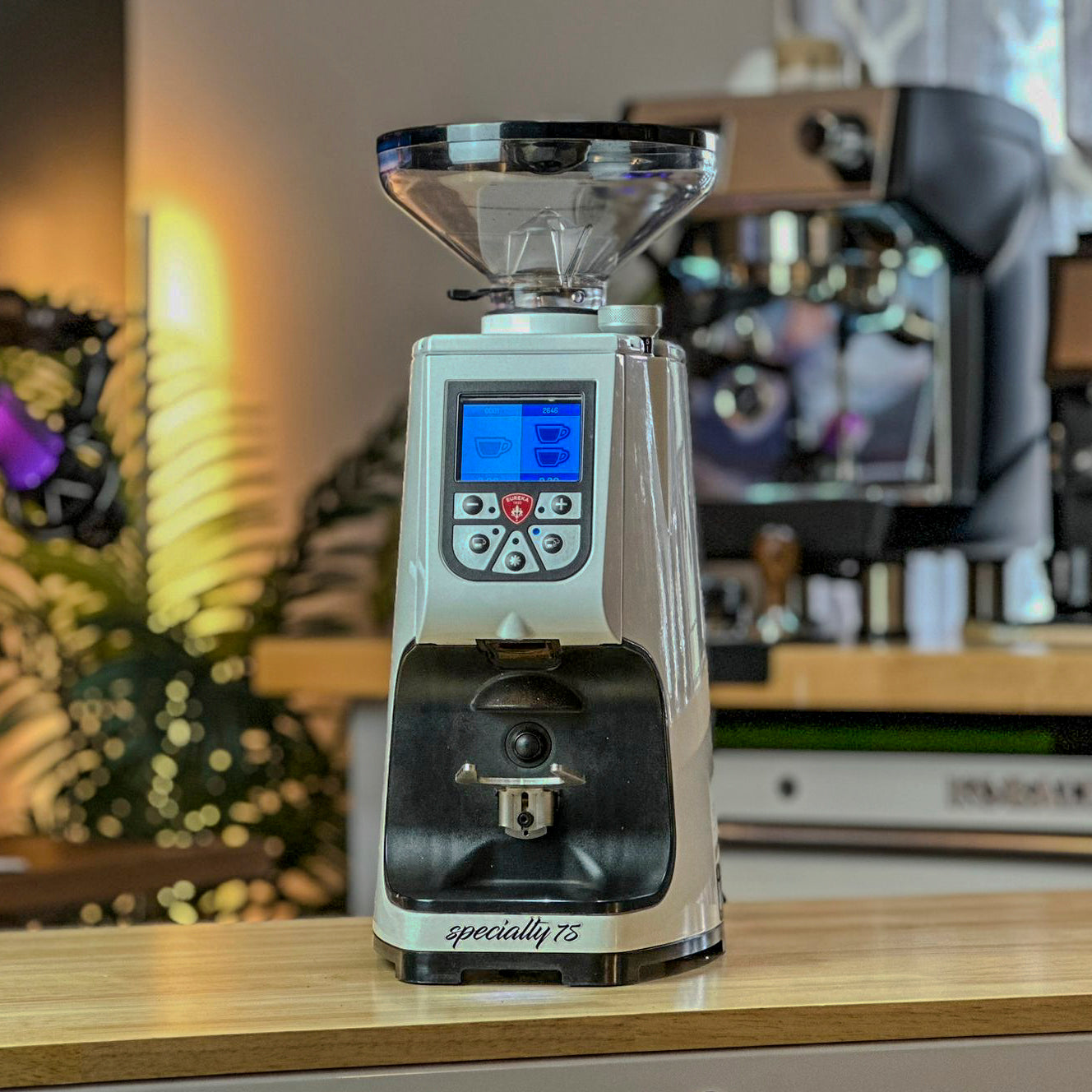
Compare the machine, grinder, refrigeration, water, and handoff as one station. Manufacturer installation sheets, such as those in Simonelli's document archive, help establish the requirements of the exact configuration.
Narrow the choice with real conversations
Choose two formats that fit your customer and preferred working day. For each, identify a real site or type of client, a limited opening menu, and a complete cost estimate.
For a fixed business, observe the location and investigate the premises. For mobile service, speak to hosts and review sample venue requirements. Keep confirmed information separate from possibilities.
Compare the amount of cash required, the recurring obligations, and the work needed to earn the sales. Include owner labor and a slower-sales case. The SBA's planning resources can help organize those basic financial questions.
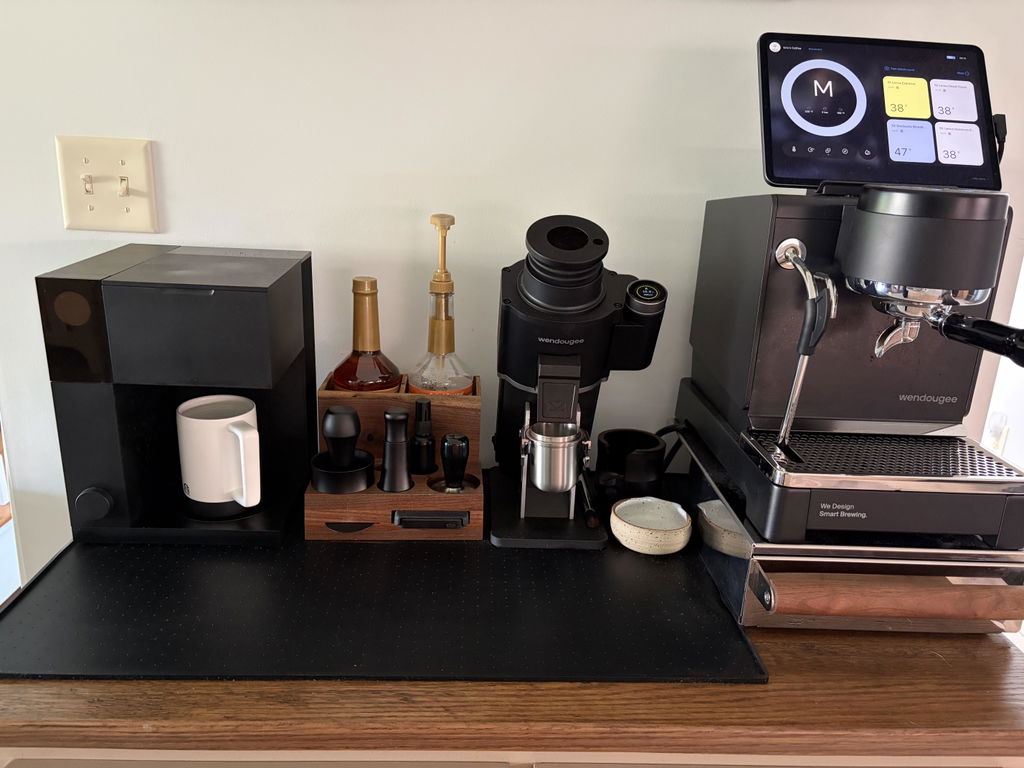
If you want ideas from real operations, browse the commercial customer gallery. Use the photographs to develop layout questions, then check the requirements for your own build.
Once you have a clear format and menu, talk with Dylan about a suitable equipment package. That conversation is more useful when it begins with the work you want the business to do.
Sources and further reading
- Vincent LaVolpa, Green Joe Coffee, How to Book an Event on Your Coffee Truck, August 22, 2019.
- Public Health — Seattle & King County, Mobile food service business permit, local example; checked September 8, 2026.
- U.S. Department of Justice, ADA small-business primer; checked September 8, 2026.
- Simonelli USA, Equipment documents, and SBA, Plan your business; checked September 8, 2026.