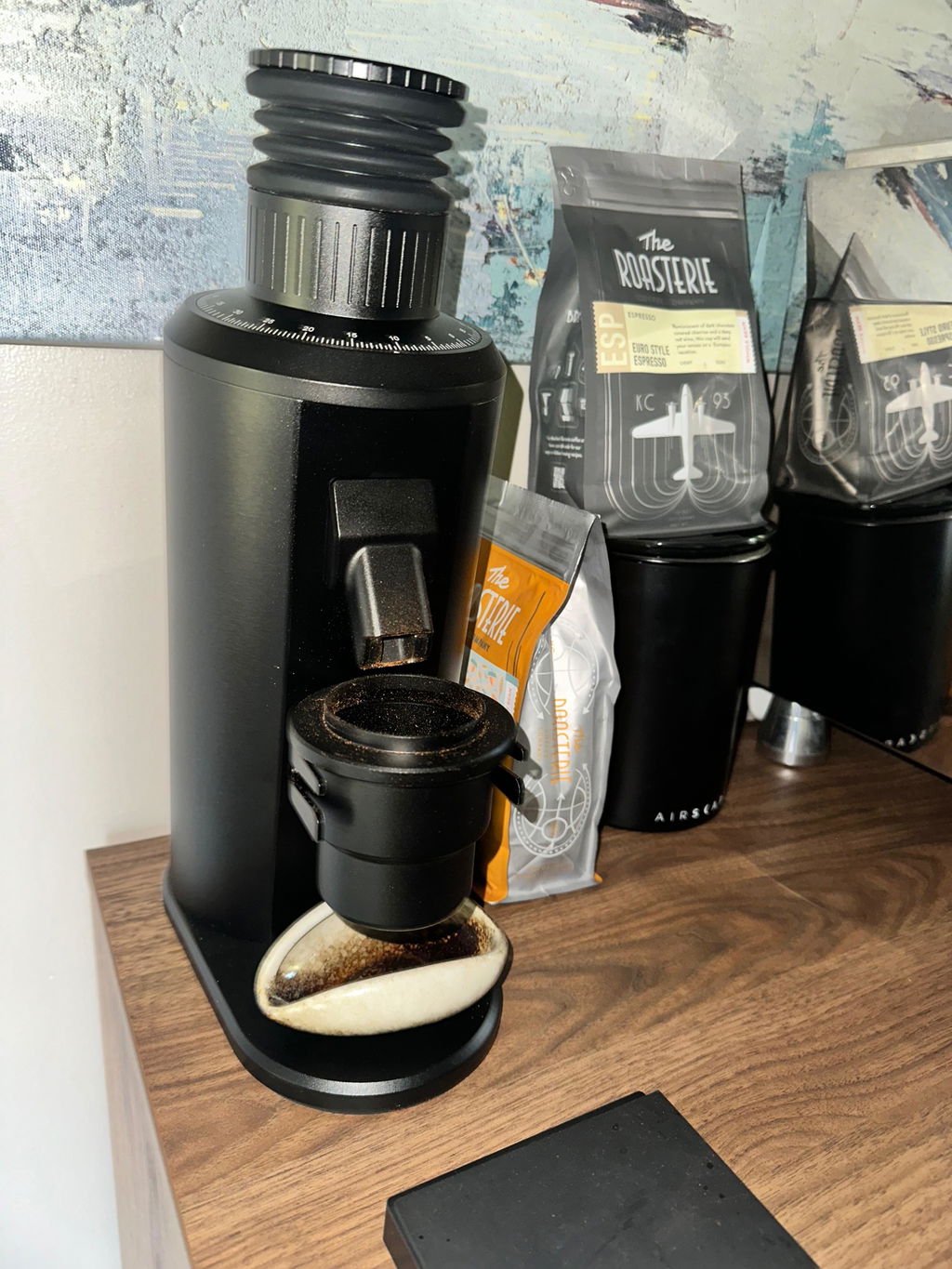
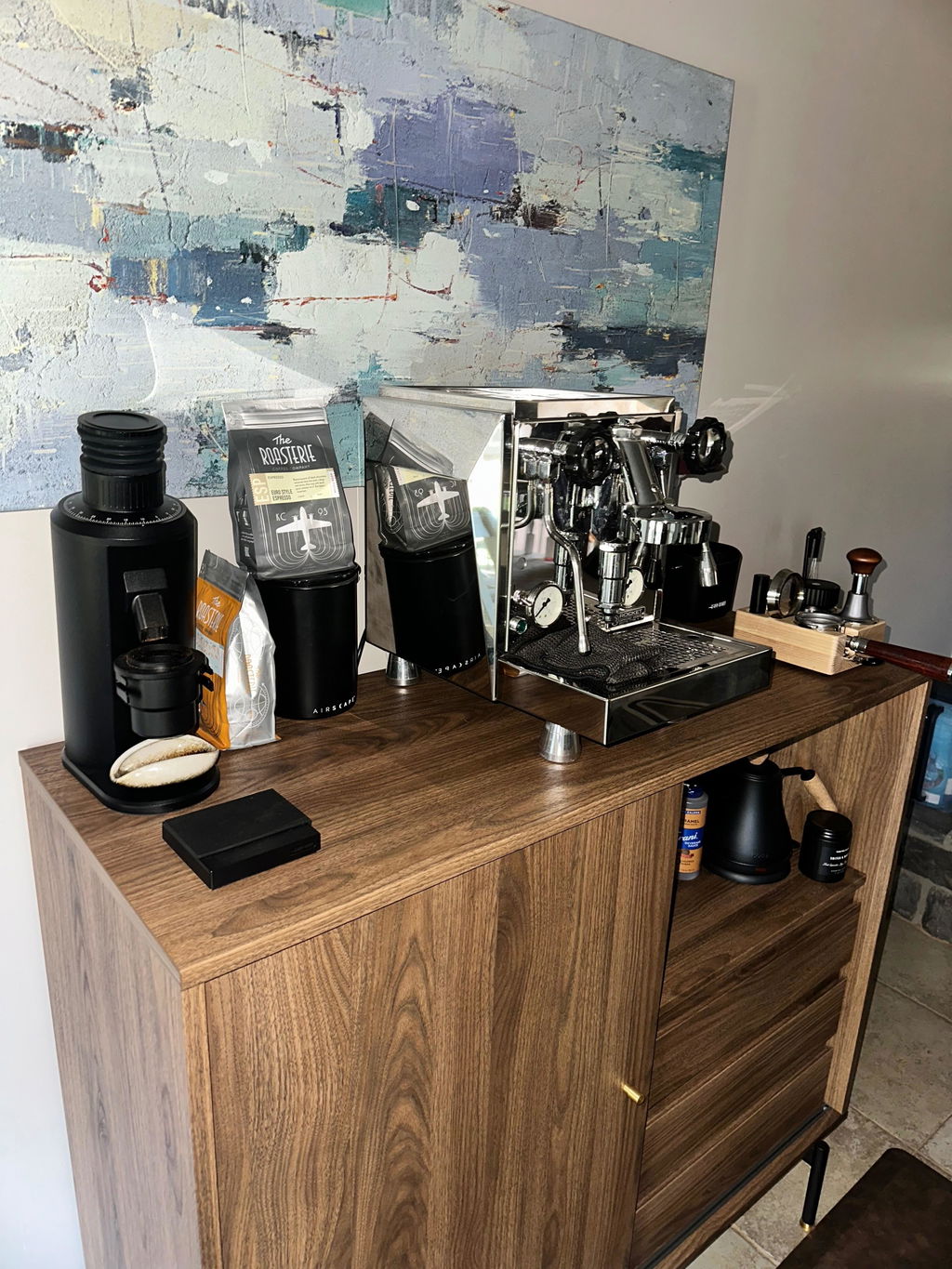
Eureka Grind-by-Weight Grinder Guide
Grind-by-weight technology lets a grinder measure coffee as it dispenses into the portafilter. Eureka offers this workflow in several sizes, including the Mignon Libra 55, Mignon Libra 65 AP, and Atom W 75. The correct model depends on volume, counter space, and how much speed you need.
Why grind by weight?
Timed grinders estimate dose by running the motor for a set duration. As beans age, hopper level changes, or grind size is adjusted, the output can drift. A grind-by-weight grinder monitors mass during the dose and stops near the selected target, reducing the need to continually change a timer.
This workflow is best when one coffee remains in the hopper. Users who change beans every shot will usually prefer a single-dose grinder.
Mignon Libra 55: compact home convenience
The Libra 55 brings weight-based dosing to the compact Mignon format. It is the logical choice for a home bar with limited space and a normal daily volume. Its appeal is not maximum speed; it is removing a weighing step while retaining a relatively small footprint.
Mignon Libra 65 AP: the middle ground
The Libra 65 AP moves into a larger burr class while maintaining the familiar Mignon concept. It suits households that want quicker dosing and more capacity than the 55 mm platform without committing to the size and cost of an Atom-series grinder.
Atom W 75: speed and higher-volume service
The Atom W 75 is the choice for faster grinding, repeated drinks, and a more substantial coffee station. It can make sense for an enthusiastic household, office, or other setting where several doses are prepared in sequence. Its larger body and higher capacity should be planned into the counter layout.
Comparison by use case
| Model | Best fit | Main advantage |
|---|---|---|
| Libra 55 | Typical home use | Compact weight-based dosing |
| Libra 65 AP | Enthusiast home bar | Balance of size and speed |
| Atom W 75 | Higher-volume home or office | Faster, more substantial platform |
What grind by weight cannot fix
Accurate dose does not guarantee even extraction. Grind size, distribution, tamping, basket selection, coffee freshness, and machine temperature remain important. The grinder may also need a compatible portafilter position and an occasional calibration check according to the manual.
Which Eureka should you buy?
Choose the Libra 55 when compact size and everyday convenience matter most. Choose the Libra 65 AP when you want a stronger middle-tier platform. Choose the Atom W 75 when speed and repeated service justify the larger investment. Explore all available models in the Eureka collection.
How weighing changes daily use
Grind-by-weight replaces a timer estimate with live mass measurement. That reduces dose drift after grind changes but does not eliminate calibration. The portafilter must sit correctly, the counter must be stable, and coffee must land in the basket.
The Libra models center this workflow in a compact Mignon body. The Atom W 75 adds faster service and a larger presence. Espresso Outlet’s published Atom 75 review provides size and design context.
Burr classes and volume
Burr size affects throughput and thermal capacity, but start with drink volume. The 55 mm class handles normal household use. The 65 mm supports quicker dosing. The 75 mm Atom is compelling when several drinks are prepared in succession.
Accuracy vs. precision
A grinder can repeatedly stop 0.2 gram from target—precise but offset—or scatter unpredictably. Test ten doses after dialing, not one, and verify with a separate scale.
| User | Starting model | Reason |
|---|---|---|
| Two drinks, limited space | Libra 55 | Compact automation |
| Faster home workflow | Libra 65 AP | Larger burr platform |
| Busy office | Atom W 75 | Speed and capacity |
| Frequent decaf | Consider single dose | Hopper changes require purging |
What grind-by-weight does not solve
It does not prevent channeling, select grind, or stop beverage yield. Use a cup scale, distribute carefully, and adjust by taste.
Frequently asked questions
Will hopper level affect dose?
The load cell compensates better than a timer, though feed behavior can change when nearly empty.
Maintenance
Keep the weighing fork and load-cell area free of grounds, avoid touching the portafilter during dosing, and follow calibration instructions after moving the grinder. Clean the hopper without introducing water into the burr chamber.