



Where to Place the Espresso Machine
Coffee Business Resource Center
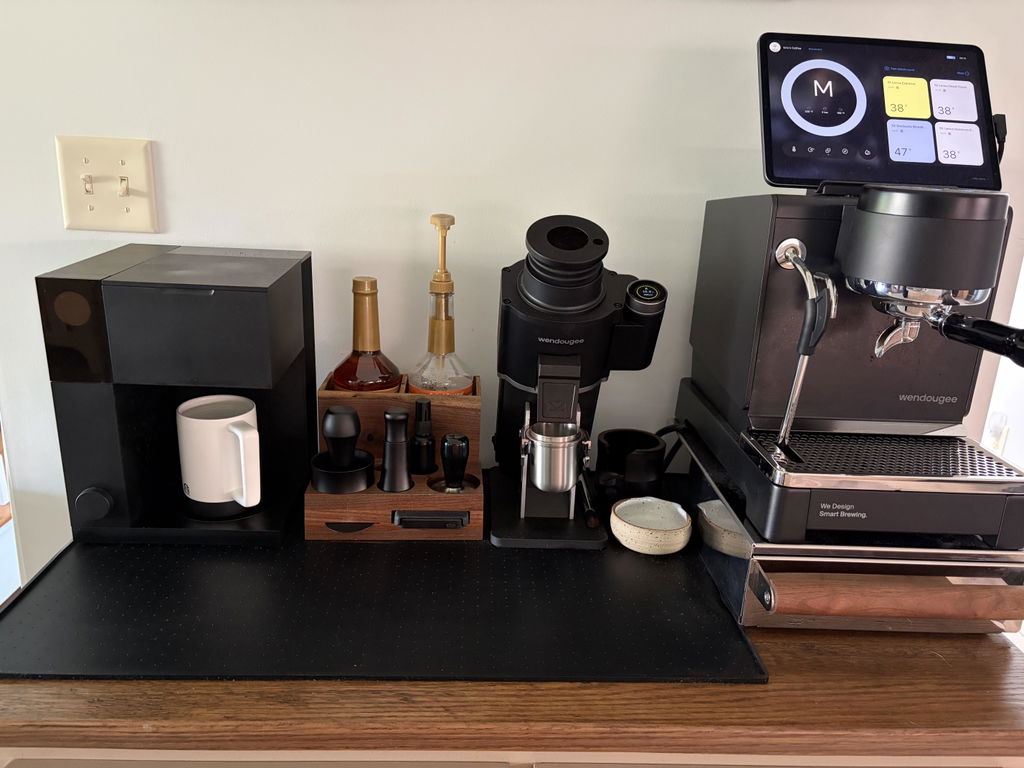
The grinder, machine, rinser, and knock box form a working station. Their best positions depend on the person using them, the direction orders arrive, the milk setup, and the available plumbing.
Avoid starting with a universal left-to-right arrangement. Instead, act out a complete drink and the reset for the next one. Place equipment so those movements are comfortable, clear, and compatible with the installation requirements.
Start with the espresso preparation loop
Follow the portafilter through its normal cycle: removing the spent puck, completing the appropriate cleaning and drying steps, dosing, preparing the puck, brewing, and returning for the next drink.
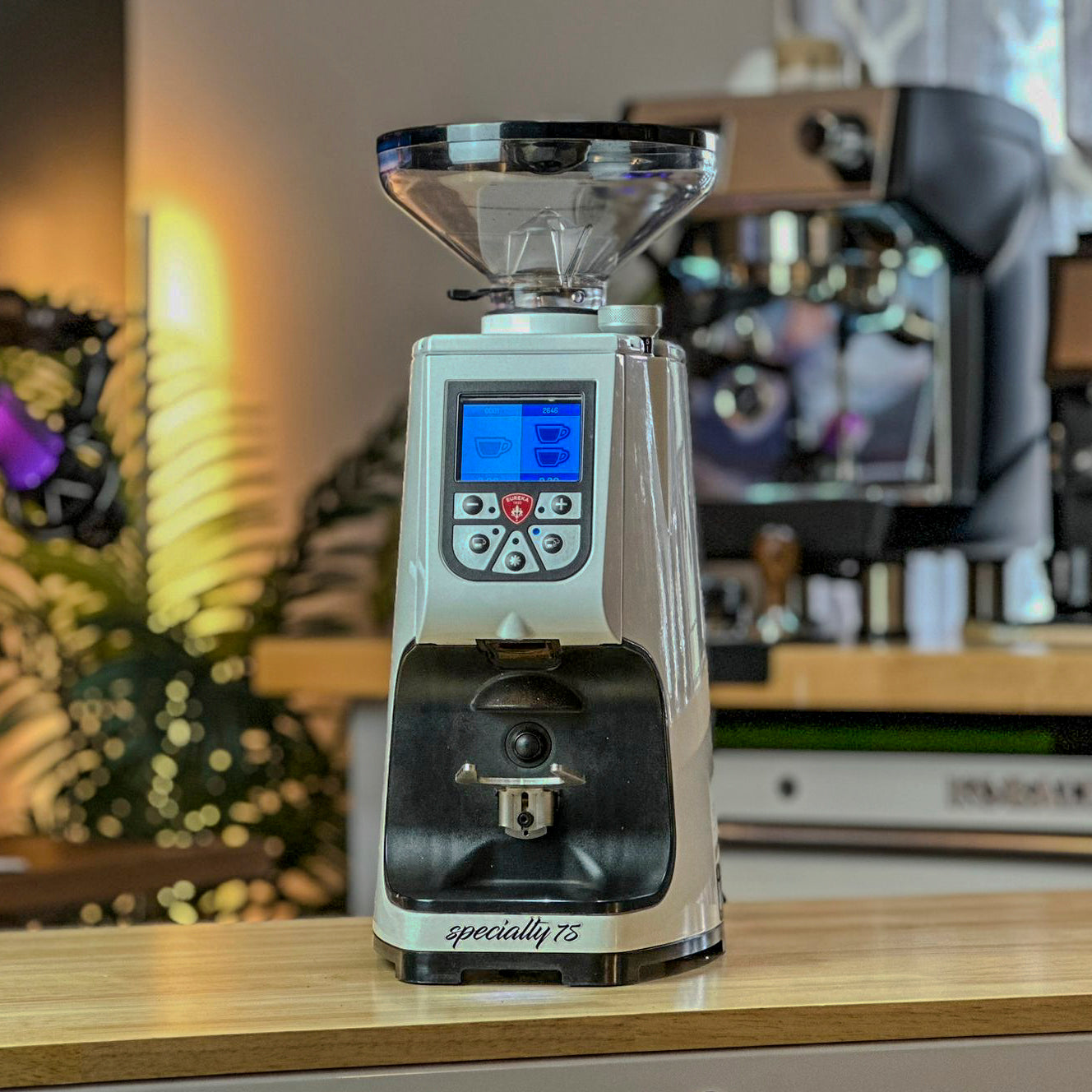
Put the grinder and preparation area where that work can happen without passing through milk handling or finished drinks. Check the actual grinder's dosing position, portafilter support, and adjustment access.
If staff use a dosing cup or a separate scale, include it in the mockup. An arrangement designed around direct dosing may feel different when every dose involves another transfer. Our dosing-cup workflow guide discusses that part of the process.
Choose a machine position that supports both brewing and steaming
Make sure the operator can reach the controls, use the portafilter, see the cup or scale, and move the steam wand as intended. Leave the manufacturer-required installation and service access.
Check the relationship to milk storage. If the barista has to move away from the machine and open a refrigerator behind another worker for every drink, the placement deserves another look.
On a two-person bar, decide who uses each working position. Access to two steam wands is not automatically useful if both workers still need the same narrow space to reach pitchers or milk.
Give the knock box a short, clean route
Place the knock box so spent coffee can be handled without passing over clean cups, open ingredients, or completed drinks. Test the motion with the actual portafilter and knock-box arrangement.
Provide a stable installation suited to the equipment. For a recessed box or chute, check the body and collection arrangement below the counter before cutting the opening.
Try emptying and cleaning it. A convenient knock position can become an awkward design if removing the container requires shutting down the whole station or lifting it past stored food.
Position the rinser for the utensil routine
A pitcher rinser needs more than a convenient spot beside the machine. Consider splash, drainage, access for cleaning, and the route used by pitchers before and after rinsing.
Espresso Parts' instructions for its Barista Basics rinsers include counter placement, supply connections, drainage, and local plumbing-code considerations. Use the instructions for your actual product with the qualified installer; do not copy another model's hole size or connection arrangement. Barista Basics installation information
A quick rinse is not a complete cleaning and sanitizing program. Washington's food rules, for example, require sanitizing food-contact equipment and utensils after cleaning and before use. Follow your local requirements and approved procedure for the utensils you use. Washington sanitizing requirement
Check the relationships, not just the individual positions
| Relationship | A useful working check |
|---|---|
| Grinder to preparation area | Can the operator dose and prepare without crossing another task? |
| Preparation area to group | Can the portafilter move naturally without passing over drinks? |
| Machine to milk storage | Can milk be retrieved while preserving the intended cold-holding routine? |
| Steam position to pitcher routine | Is there room for the pitcher, cleanup, and the next clean utensil? |
| Group to knock box | Is spent coffee handled away from clean preparation and handoff? |
| Rinser to surrounding surfaces | Are splash, drainage, and cleaning access addressed? |
| Finished drink to pickup | Does the cup have an identified destination outside the production work? |
Walk through the table with the equipment at full size. A few inches can matter, but there is no single spacing figure that resolves every machine, worker, and counter combination.
Keep handwashing available
The handwashing station has its own purpose. Do not let cup storage, dirty pitchers, a knock-box bin, or a worker's fixed position make it difficult to use.
Show the sink arrangement and any required separation or splash protection to the local reviewer. Keep the approved configuration intact when adjusting the bar for speed.
On a cart, this needs particular attention because a small surface can be asked to serve several jobs. Plan working stock and reserve stock separately so the handwashing area does not become the overflow shelf.
Test both dominant hands and different staff
Invite the people who will run the station to try the proposed arrangement. Ask what feels awkward during dosing, tamping, steaming, and cleaning. Watch their movements without assuming the owner's preferred direction is the only reasonable one.
CCOHS recommends organizing standing work so tools are within comfortable reach without repeated twisting or bending. Use that as a design principle while adapting the station to the actual tasks and workers. CCOHS standing-work guidance
If staff regularly report discomfort, investigate the setup and obtain appropriate ergonomic advice. Moving one tool may help, but it should not substitute for assessing a repeated problem.
Finalize utilities after the working arrangement is agreed
Once the mockup works, coordinate the exact cutouts, supports, connections, and service space with the builder and installers. Keep one agreed drawing so equipment and plumbing changes do not drift apart.
Check the real installation before opening. Doors, hoses, shelves, and fittings can alter a layout that looked comfortable on paper. Resolve those details while you can still change them without disrupting customers.
Sources and further reading
- Espresso Parts: Barista Basics rinser installation, used for product-specific installation considerations.
- Washington WAC 246-215-04705, an explicitly local sanitizing example.
- CCOHS: Standing-work design.