



Designing an Efficient Two-Barista
Coffee Business Resource Center
Two baristas can make service smoother when each removes work from the other's critical path. They can also slow each other down by reaching into the same spaces and repeatedly asking who is making the next drink.
Design the station and the division of work together. Adding a person to an arrangement built for one does not automatically create a productive two-person bar.
Decide which two-person arrangement you need
One option splits espresso preparation from milk and finishing. Another keeps one person on complete drinks while the second manages ordering, supplies, and handoff. A larger station may support two people each preparing complete orders.
Choose based on the actual constraint. If the barista is repeatedly interrupted by payment and customer questions, a dedicated support role may help more than a second person reaching for the steam wand.
If milk preparation consistently holds up an otherwise organized espresso workflow, a brewing-and-milk split may be worth testing. The station needs to support the resulting handoff and shared equipment use.
Write a starting division of work
Here is an example for a station where ordering is handled elsewhere. It is a proposed workflow to test, not a universal staffing rule.
| Responsibility | Espresso position | Milk and finishing position |
|---|---|---|
| Read the next order | Confirm drink and recipe requirements | Confirm milk, size, and finishing requirements |
| Prepare espresso | Grind, prepare, brew, and check the result | Keep the receiving cup and next step organized |
| Prepare milk | Communicate readiness and any delay | Retrieve, texture, and handle milk under the procedure |
| Finish and identify | Confirm espresso-related changes | Complete the drink and its handoff identification |
| Reset | Restore brewing tools and working area | Complete the pitcher and steam-wand routine |
| Replenish | Follow the agreed trigger or ask for support | Follow the agreed trigger or ask for support |
Clarify who watches shared supplies. A table assigning restocking to “both” is incomplete unless the team knows how one person claims the task.
Design the handoff between the roles
Choose a specific place for the cup and order information. Agree what signals that espresso is ready and what happens if either side needs to pause or remake a component.
Do not let the handoff depend on remembering the last verbal instruction. A modified drink should stay clearly identified through preparation and finishing.
Test a sequence with similar-looking drinks and different milks. Watch whether the milk position can identify the next cup confidently without interrupting the person brewing.
Give each position usable access
Draw the normal standing position for each worker. Then show refrigerator doors, drawers, knock-box access, the rinser, grinder controls, and the route to handwashing.
Look for movements that require one person to step away whenever the other works. If opening the milk drawer blocks espresso preparation, the layout is forcing a negotiation into every drink.
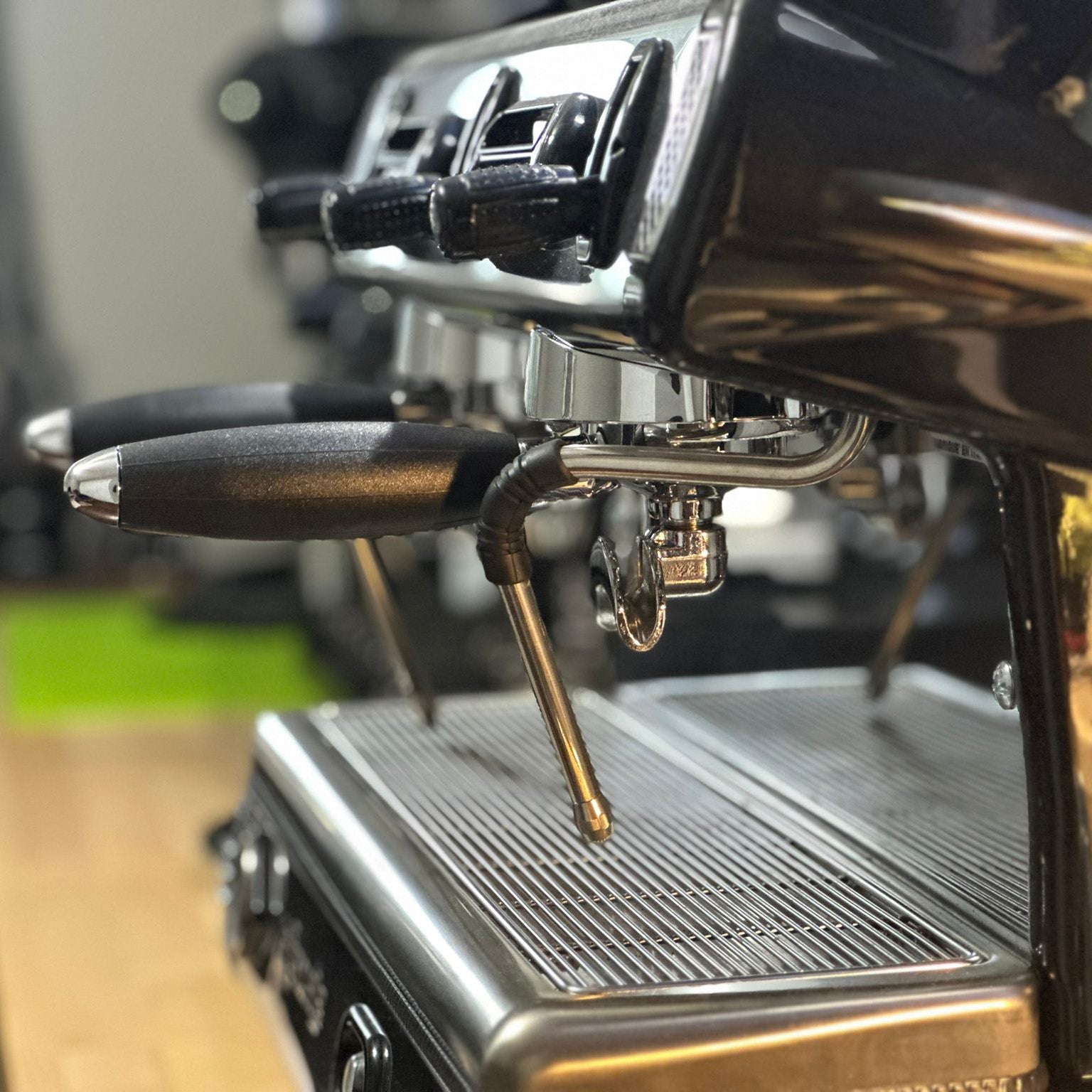
Use the manufacturer's operating and service requirements when locating equipment. A two-group machine provides brewing positions, but its suitability also depends on steam performance, controls, utilities, and the available workspace. Our two-group workflow guide explains those equipment questions.
Keep order information shared and legible
Both positions need the details relevant to their work. Decide whether a shared display, printed ticket, cup label, or another method provides that information without duplicate preparation.
If using a KDS, test routing from all order sources. Square's routing guidance distinguishes which POS devices and online sources send orders to a display; the physical staff arrangement should be reflected in the configuration. Square KDS routing
Choose who marks an item complete. That action should represent a defined stage, not simply whichever worker touches the screen first.
Plan replenishment without a third invisible employee
It is easy to sketch an efficient two-person station while quietly assuming someone else will always fetch milk, replace cups, clear waste, and handle questions.
Write those tasks into the staffing plan. If there is a support person during the rush, define the job. If there is not, establish how the two baristas cover it without leaving an unsafe or confusing operation.
Keep working quantities near their point of use while preserving food controls, ventilation, and access. Store reserves where they can be retrieved without unloading the station.
Test the menu you actually sell
Run a trial with your normal hot and iced drinks, supported modifiers, decaf routine, and realistic ordering pattern. Include cleaning, replenishment, and a changed order.
Measure accepted drinks and customer wait, but also record each collision, repeated question, and interruption. A faster trial with more remakes or frustrated staff is not an improvement worth keeping.
If you compare two role arrangements, keep the conditions reasonably similar. Do not credit the new layout for a trial that simply had fewer complicated drinks.
Make role changes deliberate
Train both people in the jobs they may need to cover, then agree when roles change. Swapping positions in the middle of an unidentified order can create avoidable confusion.
At a shift change, review pending orders, ingredient status, equipment issues, and any temporary menu changes. The station should remain understandable to the next team.
Check whether the second person is helping the business
Compare service, quality, labor, and staff workload under comparable demand. Extra staffing can be valuable because it reduces waits and supports reliable operation, but it does not guarantee a particular increase in sales or output.
For a cart or kiosk, test the physical room especially carefully. If the working envelope only supports one production position, a second person's best role may be ordering and replenishment from a separate, suitable location.