

Coffee Shop Startup Budget
Coffee Business Resource Center
If you have $25,000, $50,000, or $100,000 available, the first question is what kind of coffee business that money can realistically support.
Each amount needs to cover more than equipment. You may need premises or a mobile setup, permits, installation, stock, training, and cash for the weeks when the business is still finding its customers.
The comparisons below are original budgeting exercises. They aren't supplier packages or claims that every city has a coffee shop you can open for these amounts. Use them to see where the tradeoffs appear, then replace the allowances with quotes for your own plan.
Decide what “my budget” includes
Start by listing the money actually available and any conditions on it. Keep expected financing separate until you know when it can be drawn and what it can pay for.
Then write down what the total must cover. Does it include a vehicle? Your living expenses during the launch? Sales tax on equipment? Rent while the space is under construction? Those differences make two apparently identical budgets difficult to compare.
For this exercise, none of the examples includes buying property, building a full cooking kitchen, or buying a tow vehicle. The lower budgets assume particularly limited work and access to suitable existing infrastructure. If your project needs more, add it before deciding that the total fits.
The SBA's startup-cost guidance distinguishes initial expenses from ongoing ones. Make that distinction visible here, especially when deciding how much can go into the espresso station.
See the whole budget in one place
All amounts are illustrative U.S. dollars. The opening-cash figures are placeholders to test against a cash forecast, not recommended reserves.
| Use of money | $25,000 total | $50,000 total | $100,000 total |
|---|---|---|---|
| Site or cart setup and adaptation | $4,000 | $10,000 | $25,000 |
| Equipment, tools, and installation | $11,000 | $20,000 | $32,000 |
| Approvals, insurance, POS, opening stock | $3,000 | $5,000 | $8,000 |
| Training and pre-opening labor | $1,000 | $2,000 | $5,000 |
| Allowance for uncertain project work | $2,000 | $5,000 | $10,000 |
| Cash remaining for operations | $4,000 | $8,000 | $20,000 |
| Total | $25,000 | $50,000 | $100,000 |
The columns balance, but that is only the beginning. A local quote can show that an allowance is too small. A cash forecast can show that the reserve runs out before the business reaches a manageable level of sales.
When that happens, change the project or the funding. Don't make the spreadsheet fit by leaving out something the business needs.
With $25,000, keep the first version tightly focused
At this level, investigate a limited operation with little construction and a short menu. A host arrangement with suitable facilities or a carefully scoped mobile service may be worth exploring. An empty storefront with new plumbing, electrical work, seating, and restrooms is a very different proposition.
For a cart, first establish where it can operate, what support facilities it needs, and how you'll move and store it. The frame price can make a mobile business look inexpensive while leaving out most of the working system.
Ask the health department about your proposed menu and setup before ordering. King County's mobile food business process, for example, involves review of plans and a pre-opening inspection. Your local process may differ, but checking it early helps prevent buying a cart that needs expensive alteration.
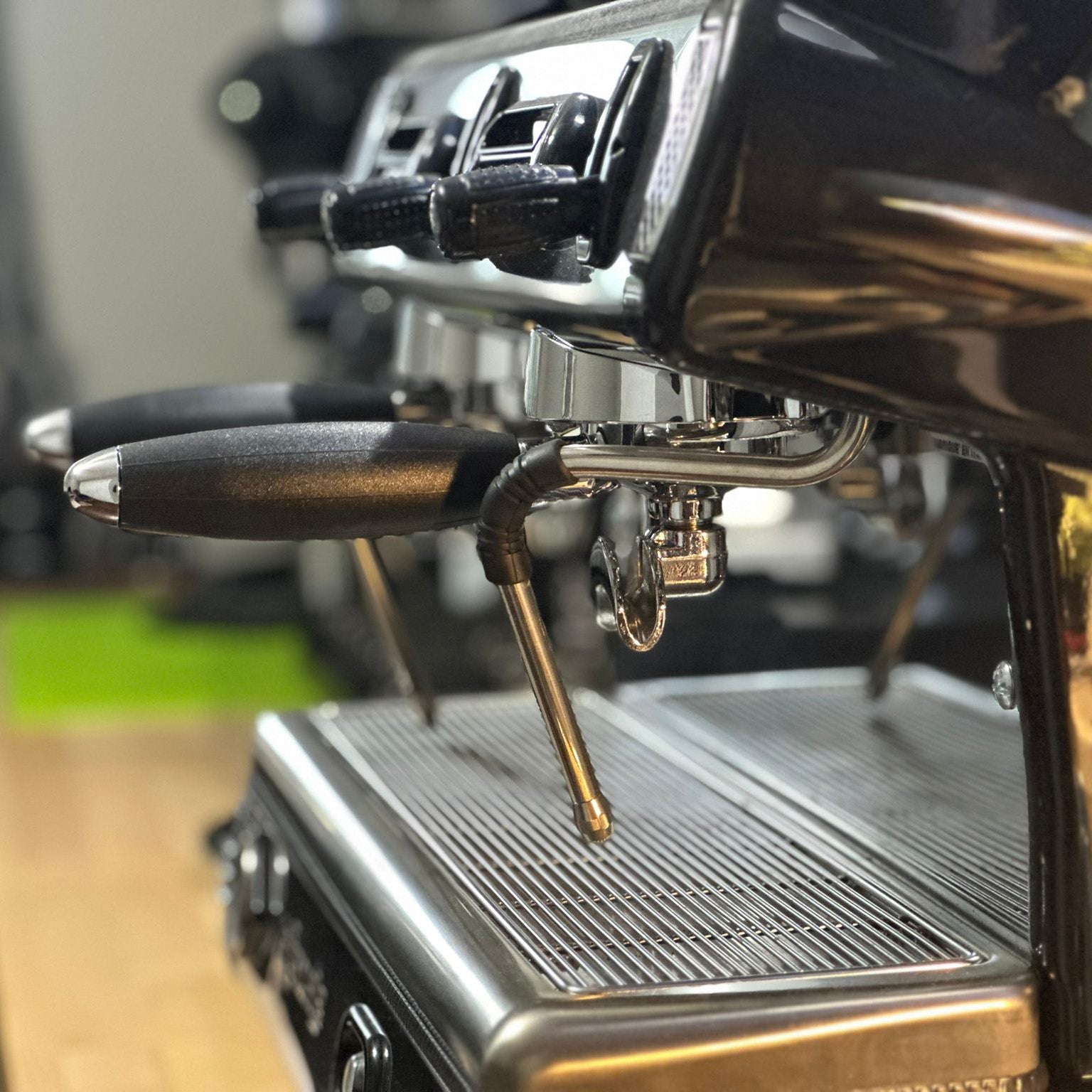
Protect the equipment that makes the offer dependable: an appropriate machine and grinder, required refrigeration and washing arrangements, and suitable power and water. Spend less on the range of drinks or decorative finishes before compromising the core station.
The $11,000 equipment allowance in the example must cover the entire specified package. If your quotes exceed it, consider a different service format, suitable used equipment after inspection, or additional funding. Don't assume a home machine is accepted or warranted for the commercial work you intend.
The $4,000 cash placeholder deserves particular attention. Even an owner-operated business has supplies, insurance, storage or site costs, and household needs. If the forecast calls for more, the $25,000 plan needs to change.
With $50,000, spend on the parts that make service easier
More money gives you more choices, but the site still matters. A small fitted coffee counter and a new trailer with extensive equipment can use the same funds in very different ways.
Price the complete espresso station, including the grinder, water treatment, refrigeration, and installation. Then check what remains for the rest of the business. It's easy to approve one machine upgrade at a time and discover that the supporting equipment has no budget left.
Useful improvements might include a station that is easier to clean, better milk access, a grinder that handles the rush comfortably, or more reliable transport and setup. Their value comes from the job they help you do.
If you're looking at a small existing café space, identify exactly which infrastructure can stay. Moving the espresso bar across the room may erase much of the benefit of taking over a fitted space if utilities must move with it.
For a mobile business, distinguish a beverage package from a complete trailer project. Include the trailer, loading and restraint arrangements, power, water system, refrigeration, storage, and support facilities. If a tow vehicle is also required, it needs its own funding.
Test the illustrative $8,000 operating reserve against actual bill dates. If a commissary payment, insurance renewal, and equipment balance fall in the same quiet period, a monthly average may hide the problem.
With $100,000, choose the extra capacity deliberately
A larger budget can support more site work, equipment, staff preparation, or cash protection. It does not automatically make every new café build affordable.
Before spending the extra money, identify what the business gains. Does a larger bar let two people work without crossing? Does another brewing position address a measured queue? Does more refrigeration support the delivery schedule? Does added seating suit the customers you expect?
Keep the cost of a wider menu visible. Breakfast food can bring preparation, storage, washing, waste, and staffing needs beyond the appliance used to heat it. Ask what the menu changes in the premises and approval plan.
Use a timed service rehearsal or a supplier demonstration to evaluate equipment improvements. A third group is valuable when the team can use it productively; it won't fix a queue held up at payment or milk finishing.
The $20,000 cash line in the example may be too much or too little for a particular operation. Its adequacy depends on the forecast. Compare delayed opening and slower sales before deciding that unused cash should become another feature on the bar.
What can wait, and what should be ready at opening?
Separate future ideas from the offer you are selling on day one. You might delay a second specialty coffee, blended drinks, retail shelving, or decorative upgrades. Make sure the initial menu is still appealing without them.
Keep required facilities, appropriate installation, basic training, and essential working stock in the opening plan. These aren't optional extras simply because they are less visible to customers.
If you expect to add something later, discuss the space and utilities now. Leaving room for a future brewer may be inexpensive during design. Moving a finished sink or counter later can be much more involved.
Test the plan against an ordinary month
Use recipes and likely order sizes to estimate the money left after ingredients, packaging, and payment costs. Compare that contribution with ongoing bills and the staffing you need. Keep loan cash payments and owner withdrawals visible in the separate cash forecast.
For a shop, investigate whether the location can plausibly produce the required orders during your planned hours. For a cart, separate retail vending sales from host-paid catering bookings. One depends on individual purchases; the other depends on selling and delivering an agreed event package.
Include your time in either model. A two-hour booking can involve preparation, transport, setup, cleaning, and administration well beyond the service window. An owner-operated café also needs cover for breaks, illness, and days away.
If the business only works when every market is busy or every trading day hits the optimistic forecast, revisit the format before increasing the equipment order.
Turn the chosen budget into actual quotes
Take the column closest to your available funding and replace the largest guesses first. That usually means the site or mobile build, the complete equipment package, and the opening cash requirement.
Ask for dated, itemized proposals. Record exclusions, payment terms, and the exact configuration. Confirm that the machine, utilities, and menu still match when a substitution is suggested.
If you can't fit a coherent first version within the budget, you have useful options: narrow the concept, find a more suitable site, postpone a nonessential phase, or secure appropriate funding. A smaller business you can operate well is a sound starting point.
Talk through the equipment portion with Dylan, bringing the total budget and the amount that must remain for everything else.
Sources and further reading
- U.S. Small Business Administration, Plan your business, startup-cost framework; checked September 8, 2026. All budget allocations above are original illustrations.
- Public Health — Seattle & King County, Mobile food service business permit and planning guide, local permitting example; checked September 8, 2026.
- Simonelli USA, Equipment documents archive, installation information for exact machine configurations; checked September 8, 2026.