Mad Catter Shantawene Sidamo Ethiopia Natural Coffee
- Green Coffee and Roasted Coffee does not qualify for free shipping. Shipping costs are set by our roaster partners. Coffee orders are shipped directly from the roaster partner.
- In stock, ready to ship
- Backordered, shipping soon
Shantawene Sidamo Ethiopia Natural Coffee: profile and selection
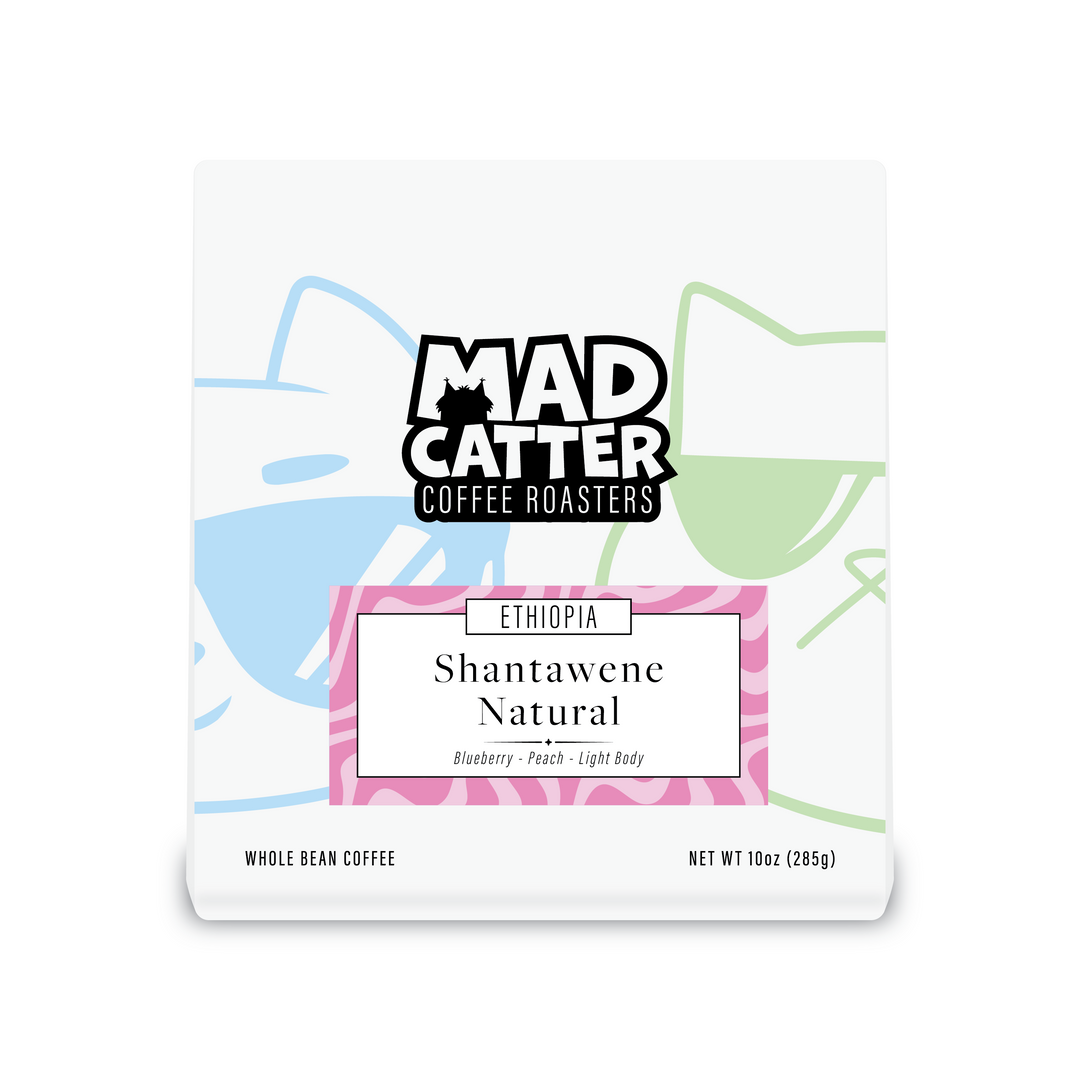
Blueberry and peach are the tasting references attached to Mad Catter’s Shantawene coffee from Sidamo, Ethiopia. The listed light roast and natural process make this a fruit-focused option within the roaster’s range. Shantawene is the named origin on the bag; it should not be confused with a different Ethiopian coffee simply because both share a country.
This page preserves the roaster’s documented origin, process, roast, tasting, format and story details without filling gaps with assumptions. The factual profile below is the scope of the current product record.
Current selections include 10 oz or 5 lb. Confirm the exact size, grind, caffeine choice and flavor when applicable before ordering.
Coffee profile
| Roaster | Mad Catter Coffee Roasters |
|---|---|
| Named origin | Shantawene, Sidamo, Ethiopia |
| Roast | Light |
| Process | Natural |
| Tasting notes | Blueberry and peach |
| Cup description | Clean, smooth and bright |
| Sizes | 10 oz or 5 lb |
| Preparation menu | Whole bean; French press, pour-over, drip, cold brew or espresso grind |
Brew for Light coffee
For pour-over, start with 20 grams of coffee and 320 grams of filtered water around 200–203°F. Use a medium grind, wet the bed evenly and keep the pouring pattern consistent. Taste the hot cup and again as it cools.
If the coffee is sharply sour and thin, grind finer or add modest agitation. If the finish is dry and drawdown stalls, move coarser. Track time as diagnostic information, but do not force every dripper toward one universal drawdown.
Lighter roast development can reduce solubility compared with a dark roast. Establish a clean extraction before changing brew ratio to alter strength, especially when comparing coffees across origins or processes.
Use a scale for dose and water. Beverage yield, drawdown and total contact time are diagnostic measurements rather than goals by themselves. Evaluate body, acidity, clarity and finish together, then make the smallest useful adjustment.
Whole-bean customers can use a consistent grinder such as the Turin DF54 grinder for controlled adjustments. Prepared grounds work best when the supplied texture matches the brewer.
How to choose and evaluate this coffee
Try 15 g coffee and 250 g water in a small paper-filter brewer. Give the slurry an even wetting and avoid large changes in pouring style between attempts. Taste the finished cup warm and again a few minutes later to see whether berry or stone-fruit character becomes more distinct.
Tasting notes describe sensory impressions unless the listing explicitly identifies added flavor. They are not a complete ingredient, allergen or nutrition statement; consult current packaging when those details determine the purchase.
Use filtered water that tastes clean on its own. Water chemistry affects perceived acidity, sweetness and extraction, so keep the same water source while dialing in before deciding that a coffee or flavor profile is unsuitable.
Freshness, storage and repeatability
Record the coffee dose, water weight, grinder setting and total contact time for the first few brews. A short brew log is more useful than changing several variables from memory and makes later reordering easier.
Taste the finished beverage in the cup and serving style you actually use. A profile that seems delicate black may work differently with milk, while a roast-forward coffee may become more balanced after modest dilution.
Compare Mad Catter Nicaragua Finca Idealista Microlot Coffee for another option from Mad Catter Coffee Roasters. Browse the Specialty Coffee collection for additional origins, roasts, processes and flavored coffees.
Frequently asked questions
What coffee is documented on this page?
Blueberry and peach are the tasting references attached to Mad Catter’s Shantawene coffee from Sidamo, Ethiopia. The listed light roast and natural process make this a fruit-focused option within the roaster’s range. Shantawene is the named origin on the bag; it should not be confused with a different Ethiopian coffee simply because both share a country.
What roast level is listed?
Light
Which sizes or formats are available?
10 oz or 5 lb
Are the tasting notes added flavors?
No added flavor is stated. Named notes are sensory descriptions unless the product record explicitly says otherwise.
What origin is stated?
Shantawene, Sidamo, Ethiopia
What information should not be assumed?
Details not shown in the factual profile are not inferred. Confirm the current package label if an unpublished farm, cultivar, process, ingredient or certification is essential.
Ordering and shipping
This coffee ships directly from the roaster partner. Roasted coffee does not qualify for free shipping; shipping charges are set by the partner. Coffee orders are not eligible for returns or cancellations, so review the exact variant in the cart before checkout.
When the shipment arrives, retain the roaster label and record the selected format with the first brew. That detail makes recipe adjustments and reordering more reliable than relying on the product name alone.
Green Coffee and Roasted Coffee does not qualify for free shipping. Shipping costs are set by our roaster partners. Coffee orders are shipped directly from the roaster partner.