


How to Train Baristas for Speed Without
Coffee Business Resource Center
The fastest useful barista is the one who hands over the correct, well-made drink with the station ready for the next order. Moving quickly while creating remakes or leaving every cleanup task for later is not the same result.
Train the sequence first, then improve the time. Give employees a stable station, clear recipes, and a way to know what happens next. Speed often improves when uncertainty and unnecessary movement are removed.
Measure the whole service, including quality and reset, rather than rewarding the quickest isolated shot.
Establish the quality standard before timing
Define the house recipe, acceptable finished drink, correct milk and size, presentation, and handoff identification. Teach the required hygiene and cleaning steps as part of the routine rather than optional work for quiet moments.
Have the trainee demonstrate each core drink consistently. If the result varies, coach the preparation before adding queue pressure. Timing an unstable process can teach employees to repeat mistakes faster.
Agree how a failed drink is handled. Staff should know when to stop, remake, and ask the lead. A training target must not discourage them from reporting a wrong milk or a quality problem.
Observe where time goes
Watch a normal sequence and separate active preparation, equipment waiting, searching, walking, order clarification, and recovery from mistakes. Look for the repeated interruption rather than assuming the person needs to work harder.
The BC food-service management text identifies menu complexity, layout, equipment, and staffing as factors affecting performance. In a café, that means the owner should examine the work system along with the employee's technique.
If cups are in the wrong place or modifiers arrive unclearly, fix that before setting a stricter time target. If a machine requires waiting during the real menu mix, document the equipment constraint rather than coaching the barista to ignore it.
Teach one repeatable routine at a time
Demonstrate the sequence slowly enough to explain the decisions: identify the order, prepare ingredients and cup, make espresso, prepare milk, assemble, verify, hand off, and reset as appropriate to your workflow.
Then repeat at normal service pace. Let the trainee practice and explain what they are checking. Correct one meaningful issue at a time so they can feel the difference in the next attempt.
Teach task overlap only where it is safe and reliable. Some waiting periods can accommodate another task; other steps require attention at a specific moment. Do not teach staff to walk away from a task that the equipment instructions or safe handling require them to supervise.
Build pressure gradually
| Practice stage | Example exercise | What to check before progressing |
|---|---|---|
| One drink | Repeat the main latte recipe | Correct measurements, quality, and reset |
| Mixed pair | Two compatible orders with clear identification | No milk, size, or handoff confusion |
| Small queue | Several different core-menu tickets | Stable sequence and required cleaning maintained |
| Representative rush | Realistic order mix with replenishment | Finished quality, queue time, and teamwork |
| Exception | Remake, unavailable item, or equipment delay | Calm recovery and correct escalation |
Choose the number of repetitions from observed readiness. The stages are a coaching structure, not a promise that every employee progresses at the same rate.
For a cart, practice at the actual workstation dimensions with the supplies packed as they will be at the event. A spacious training counter can hide reaching and storage problems.
Give two-person teams clear ownership
Define who reads the ticket, starts each drink, handles milk, finishes, and hands off. Teach short, consistent communication for changes and exceptions. Avoid both employees starting the same order or assuming the other person prepared a modifier.
Practice role changes and breaks. The team should know how the station changes when one person steps away, including whether the menu or order acceptance needs to adjust.
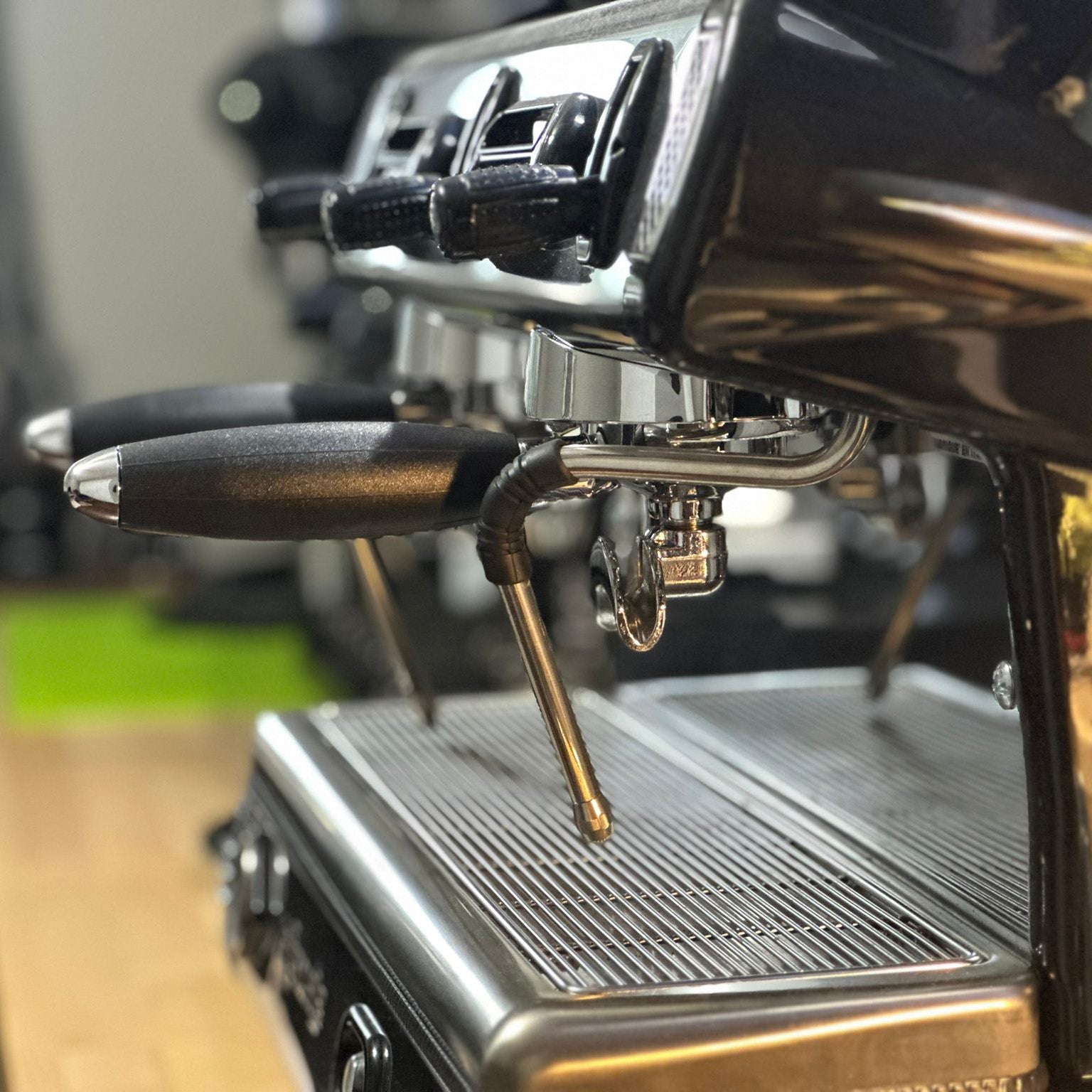
Use our commercial espresso workflow guide when reviewing equipment and station roles. A larger machine does not eliminate unclear ownership between employees.
Measure improvement with quality included
Use comparable order sets and record total elapsed time, correct completed drinks, remakes, and unfinished work. If the second trial ends with a pile of dirty tools that the first trial cleaned, the times are not comparable.
For a hypothetical example, a team completes twenty representative drinks in eighteen minutes with two remakes. After improving ticket identification and cup placement, it completes the same set in seventeen minutes with no remakes and the same reset completed.
That is a useful trial result. It does not prove the team can sustain the implied hourly rate for an entire day. Add replenishment, breaks, equipment recovery, and realistic arrival variation to the operating plan.
Do not rank employees using unlike shifts. A person handling complicated orders and training a new colleague is doing different work from someone serving a short menu with full support.
Coach the process without creating fear
Give feedback tied to an observed action: “The milk choice was not checked before steaming” is actionable. “You are too slow” is not a useful instruction.
Ask the employee what was unclear or difficult. Sometimes the solution is practice; sometimes it is a missing tool, a confusing recipe, or a workload beyond one person's capacity.
Recognize accurate recovery as a skill. A barista who catches a mistake before handoff protects the customer experience. Use the incident to improve the process rather than rewarding an unreported error with a faster time.
Keep training connected to the menu
Repeat focused practice when recipes, cup sizes, equipment, or staffing roles change. New seasonal drinks can introduce extra steps that disrupt an otherwise reliable routine.
Use short sessions addressing a real observed problem. Record the change and check it during the next comparable shift. Once the issue is resolved, move to the next meaningful constraint instead of continuing to chase seconds that do not affect service.
Bring measured equipment constraints to Dylan and the commercial equipment team when evaluating whether training, layout, or equipment is the next useful improvement.
Sources and further reading
- BC Cook Articulation Committee: working-performance factors — workload, layout, and training considerations.
- Espresso Outlet: commercial espresso workflow — the equipment's role in the complete station.
Practice stages and timing examples are hypothetical. Sources reviewed September 9, 2026.