


One-Group vs. Two-Group vs. Three-Group
Coffee Business Resource Center
The number of group heads tells you how many places a machine has to brew espresso. It doesn't tell you how many finished drinks your café can hand over in an hour.
That distinction matters when you are choosing between one, two, and three groups. You are buying brewing positions inside a complete production system: grinder, barista, steam, milk storage, cups, and handoff.
The best choice is the group count your service can use, with enough room and supporting capacity to keep the whole bar working.
What counts as a group?
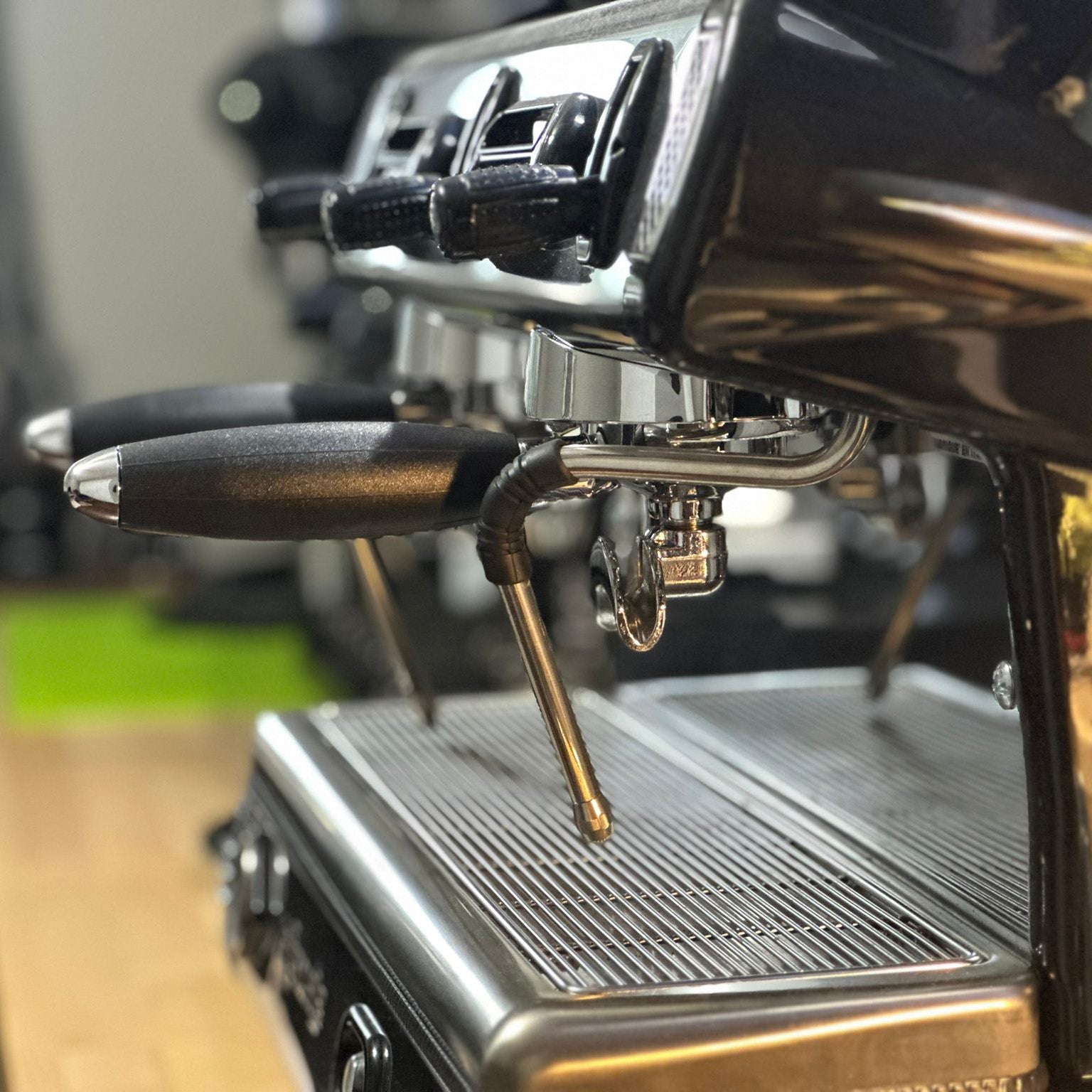
A group is the brewing position where the portafilter locks into the machine. One group can perform one extraction at a time.
A double basket may hold the coffee dose used for a double espresso recipe. A two-spout portafilter can split that extraction between cups when appropriate. Neither creates a second independent group.
When discussing capacity, describe actual extractions and recipes. “Shots” can mean different things to different people, especially when cup sizes or extra espresso are involved.
For example, a menu drink made from one double-basket extraction occupies one group for that brewing cycle. A recipe requiring two separately prepared extractions uses two cycles, whether they happen together on two groups or one after the other.
Where one group can make sense
A one-group machine can be worth considering for a compact counter, a secondary coffee offer, or an operation whose peak demand has been tested against the setup.
Its smaller footprint may leave valuable room for the grinder, milk handling, or handoff. That can improve the complete station when space is tight.
The tradeoff is that every espresso extraction must wait for the same brewing position. An extra-dose order, remake, or cluster of drinks can occupy it while other orders arrive.
Assess the entire menu and intended service pattern. A quiet weekday average is not enough to decide whether one group can handle a weekend market or a short event break.
Also check what the specific machine needs for steam, water, and power. “One group” is not a promise of plug-anywhere portability.
What two groups add
Two groups let extractions overlap. A barista can prepare the next dose while another extraction runs, and a team has more flexibility when several espresso drinks arrive together.
This can be useful even when only one person works at the machine. It depends on how preparation, brewing, steaming, and finishing fit together.
With two people, station layout and communication become more important. Decide who doses, who starts extractions, who handles milk, and how completed components reach the right cup.
Two groups won't automatically double output. If both groups spend time empty because grinding is slow, or espresso waits for milk, the limiting task is elsewhere.
Compact and full-size two-group machines can also differ in more than width. Compare their exact heating configuration, steam arrangement, controls, and installation requirements.
When a third group earns its space
A third group gives the team another place to brew. It deserves consideration when a realistic rush regularly leaves prepared work waiting for an available group.
It may also help a service with frequent multiple-extraction orders or overlapping tasks, provided the team can use the extra position effectively.
The cost includes more than the purchase price. A wider machine occupies counter that might otherwise support a grinder, milk station, or finishing area. The installation requirements may also change.
Watch the working sequence before upgrading. If a third group mostly sits unused during the very rush you bought it for, it hasn't addressed the main constraint.
A real example of the footprint differences
The table below uses Simonelli's published U.S. Appia Life installation sheets. It illustrates differences within one manufacturer's range; it is not a capacity comparison between all machines with the same group count.
| Appia Life configuration | Published width | Published rated power |
|---|---|---|
| One group | 16 inches | 1,500 watts |
| Compact two group, 220V version | 22 inches | 3,000 watts |
| Full-size two group | 31 inches | 3,400 watts |
| Three group | 40 inches | 5,000 watts |
Sources: one group, compact two group, full-size two group, and three group.
Width excludes the rest of the working station and required access. Rated watts do not translate directly into a finished-drink rate. Confirm the exact voltage, circuit, connections, and clearances with the installer.
The compact two-group range also has a different 110V configuration. Don't assume every compact machine in a product family has the specification shown here.
Match groups to the milk and grinder work
Watch where unfinished drinks accumulate. If espresso is ready while milk preparation falls behind, another group may create more waiting espresso.
If staff are waiting on grinding or dose preparation while groups sit idle, assess the grinder and preparation routine. If drinks are complete but wait to be handed over, examine the finishing and pickup arrangement.
This is why a machine should be considered alongside the commercial grinder setup, milk storage, and bar layout.
More groups can be useful, but the bar must be able to feed them and finish what they produce.
Think about staffing without assigning one person per group
Group count doesn't need to match employee count. One barista may use two groups efficiently; several employees may work around a machine while handling different jobs.
Make the responsibilities clear. Two people independently starting tasks without a shared order sequence can produce duplicate drinks or leave an order half finished.
Practice the arrangement with mixed orders. Include decaf, alternative milk, an extra extraction, and a drink that uses hot water.
Record complete handoff time and consistency. A fast extraction isn't useful if the customer waits while the team untangles the rest of the order.
A cart has different space and utility consequences
On a cart or trailer, the wider machine also affects the loaded layout, transport, and room to work. Have the builder assess the whole installation.
Verify the available power at the actual trading sites. Include refrigeration, pumps, hot water, grinders, and other electrical loads in the professional assessment.
For an event business, describe how demand arrives. Serving people across a long market session is a different task from serving a group released at once.
Choose a setup around those conditions and the approved operating arrangement. A compact machine is helpful only if its performance and supporting systems fit the service.
Extra groups are not a separate backup machine
Multiple groups on one chassis can share critical components and utilities. A fault elsewhere in the machine or its supply can affect the whole unit.
Ask the supplier how the selected model is supported and what faults may interrupt service. Don't count the third group as a complete redundancy plan.
Keep cleaning and maintenance procedures specific to the model. Staff should follow the manual and know when to stop and call for service.
If continuity is especially important, discuss options for your menu and space with the supplier rather than assuming group count alone provides protection.
Make the final choice from an observed sequence
For an operating café, watch several representative busy periods. For a new shop, create a realistic order sequence and ask for a suitable demonstration.
Count the extractions, note when groups are occupied, and watch the rest of the bar. Include the tasks between extractions, such as removing the portafilter and resetting according to the operating procedure.
Then compare the machines that fit your plan. The right group count should have a clear role in your busiest service, fit the complete counter, and come with utilities and support that work for the business.
Sources and further reading
- Simonelli USA: equipment documents, including the four installation sheets linked above.
- Appia Life Compact 110V installation sheet, showing why the exact configuration matters.
Specifications checked September 8, 2026. Workflow guidance is an operational planning approach, not a manufacturer output guarantee.