Hot Start vs. Cold Start
In grinder discussions, a hot start means turning on the motor before adding beans. A cold start means loading the dose first and then starting the grinder under load. Both can work, but they do not stress the grinder or process the coffee in exactly the same way.
Why many single-dosers hot start
With the burrs already at full speed, beans enter a stable cutting environment. This can reduce the initial motor load and may produce more repeatable grinding. Hot starting is especially common when grinding dense, lightly roasted coffee at espresso settings.
Why someone might cold start
Cold starting contains the full dose before the motor turns, which can simplify workflow and keep beans from bouncing in an open throat. Some manufacturers design their grinders to start under load without difficulty. The manual should always take priority.
What changes in the cup?
The difference may be subtle, but starting method can affect feed behavior, grind time, and the amount of regrinding. Test it with the same coffee, dose, grind setting, and purge routine. If shot flow changes, redial before deciding which tastes better.
Important cautions
- Never force-start a jammed grinder.
- Do not adjust finer while the burr chamber is packed unless the manufacturer permits it.
- Very light roasts create more motor load.
- Use the workflow recommended for your model.
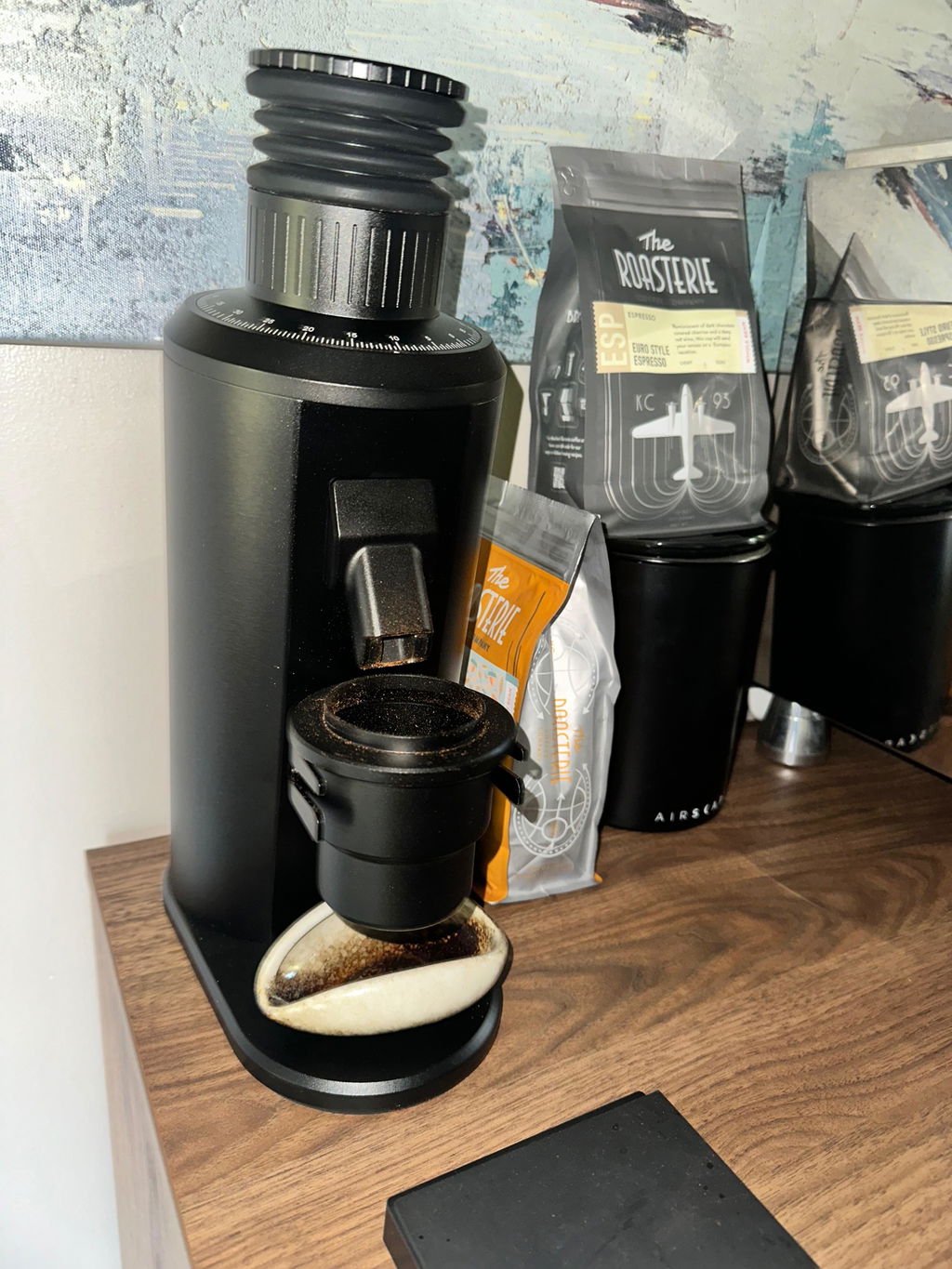
Powerful single-dose grinders such as the Turin DF83 are commonly used with a hot-start workflow for demanding espresso grinds.
Define the two workflows clearly
A hot start means the burrs are already spinning when beans enter the grinding chamber. A cold start means the dose is loaded first and the motor starts with beans resting in or above the burrs. Enthusiasts use both phrases casually, so it helps to specify whether the grinder was empty, whether an anti-popcorn disk or hopper was installed, and how quickly the beans were released.
Neither method is universally best. The result depends on motor torque, burr diameter and geometry, chamber design, bean hardness, dose size, and the manufacturer’s intended workflow. Some single-dose grinders are commonly hot-started to reduce the starting load and establish a consistent burr speed. Other grinders are designed to start under a normal hopper load. The owner’s manual takes priority over community habit.
Mechanical reasons to consider a hot start
When a motor begins with dense light-roast beans wedged at the burr entrance, it must accelerate the rotating assembly while simultaneously breaking coffee. A hot start lets the motor reach operating speed before that load arrives. This can reduce the chance of a stall on demanding coffees and may make the grinding sound and duration more consistent. It can also change the particle distribution because the earliest beans meet burrs at full speed rather than during acceleration.
Hot starting is not a license to pour beans in recklessly. A sudden dump can create popcorning, uneven feed, or a sharp motor-load spike. Use the dosing cup and feed path intended for the grinder. Keep hands and utensils away from moving parts, and never remove safety components just to copy an online technique.
Why a cold start can still make sense
A cold start is simple: load, close the lid, and switch on. It can reduce escaped fragments on grinders prone to popcorning and can work well when the motor and burr set are engineered for loaded starts. It may also be easier to repeat because the entire dose is in a fixed position before grinding begins. With darker, brittle coffees and modest doses, the extra starting load may be insignificant.
The drawback appears when the grinder hesitates, stalls, trips protection, or produces a noticeably different first fraction as it accelerates. If those symptoms occur, stop and consult the manual rather than cycling the power repeatedly. Repeated stalled starts can heat the motor and leave beans tightly packed in the burrs.
How to compare hot and cold starts
- Use the same coffee, dose, grind setting, RPM, and grinder temperature.
- Weigh the output and record total grinding time from motor start to clearing.
- For the hot start, use a consistent delay—such as two seconds—before releasing the dose.
- For the cold start, place the dose in the normal loading position before switching on.
- Brew matched recipes and compare flow, taste, clarity, texture, and finish.
- Repeat each workflow several times; a single shot is easily distorted by puck preparation.
If one method changes espresso shot time, redial it before making a final flavor judgment. The first comparison tells you that the grind distribution or puck resistance changed. The second, at matched flow and yield, tells you which workflow produces the cup you prefer.
Dense light roasts and large burrs
Hard, lightly roasted beans make starting behavior more visible. Large burrs also have greater rotating mass, while the grinder’s motor and drive system determine how comfortably that mass accelerates. A capable platform such as the Turin DF83 Gen 2 is well suited to controlled comparisons.
If a new coffee changes the motor note or begins to stall, do not assume the grind must be coarsened immediately. Confirm that the chamber is clean, the dose is appropriate, no foreign object is present, and the burrs are not adjusted beyond their safe operating range. Dense beans may justify a hot start or slower feed, but a mechanical fault should be ruled out.
Adjustment and jam safety
Many grinders should be running when adjusted finer, especially if beans remain between the burrs. Turning a stopped, loaded grinder substantially finer can trap coffee and prevent restart. If a jam occurs, switch off and unplug the grinder before following its documented clearing procedure. Do not insert tools into a powered grinder. Avoid repeated on-off attempts when the burrs cannot rotate.
Retention, static, and the first grounds out
Starting method can interact with retention. A hot start may blow or eject a small amount of old coffee before the new dose arrives; a cold start may mix that retained material into the first output. Weighing input and output helps identify the effect, but exchange retention can occur even when both masses match. For a deeper explanation, see our guide to zero retention, exchange retention, total retention, and bellows.
Static can also vary with grind duration, humidity, roast, and feed style. If you use RDT, apply the same small amount in both tests. Our RDT guide explains the purpose and the need to keep moisture minimal and controlled.
Frequently asked questions
Does a hot start always create fewer fines?
No. It changes the initial grinding conditions, but the effect depends on burrs, feed, speed, and coffee. Test rather than assume.
Should I hot start a hopper grinder?
Use the workflow specified by its manufacturer. A commercial hopper grinder may be designed to start under a normal bean load.
Can I switch methods while dialing in?
You can, but treat it as a recipe variable. Keep the start method fixed while making grind adjustments or your results will be harder to interpret.