

How Equipment Capacity Affects Labor Cost
Coffee Business Resource Center
Faster equipment can improve a coffee business, but seconds saved at one task do not automatically become payroll savings. They may make the shift easier, shorten the queue, support more orders, or create time for cleaning and customer service.
Those benefits matter. The financial case becomes stronger when you identify which one the purchase will actually produce and measure it in the whole operation.
Start with the step limiting completed drinks, not the appliance with the most impressive speed claim.
Find the constraint before comparing machines
Watch a representative rush from ordering to handoff. Record when staff wait for equipment, when equipment waits for staff, and where unfinished tickets accumulate. Include food, milk choices, payment, and replenishment.
If the espresso machine is often idle while the cashier takes orders, adding brewing groups may not increase output. If milk drinks wait for steam recovery despite consistent staff technique, steam performance deserves closer examination.
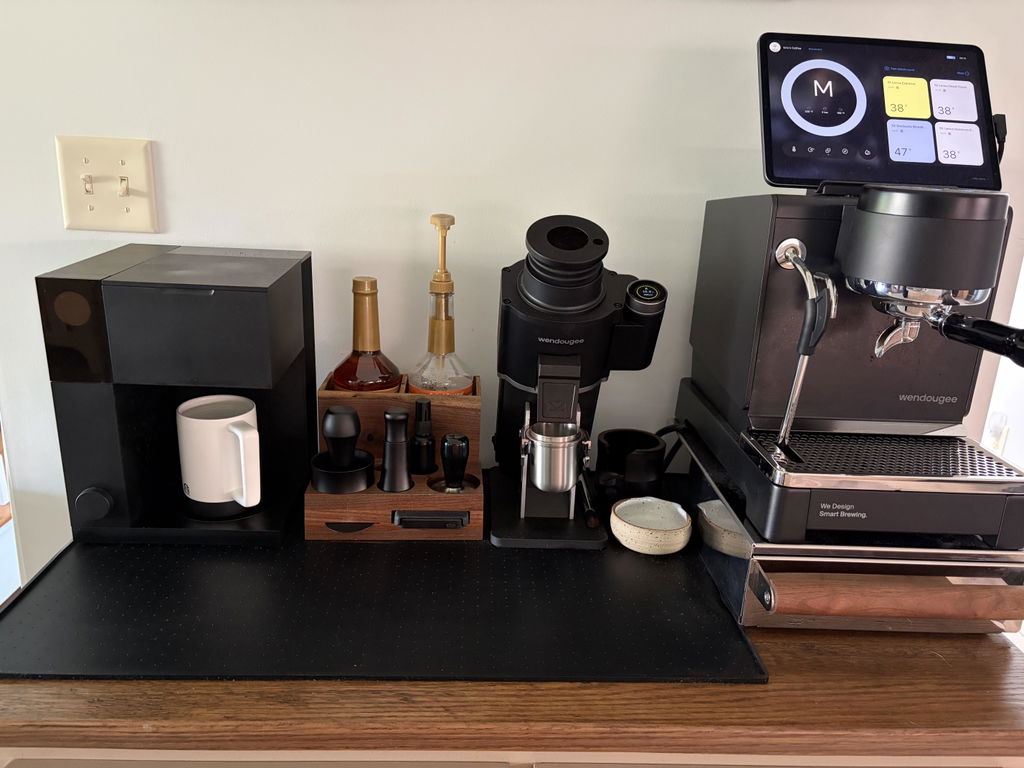
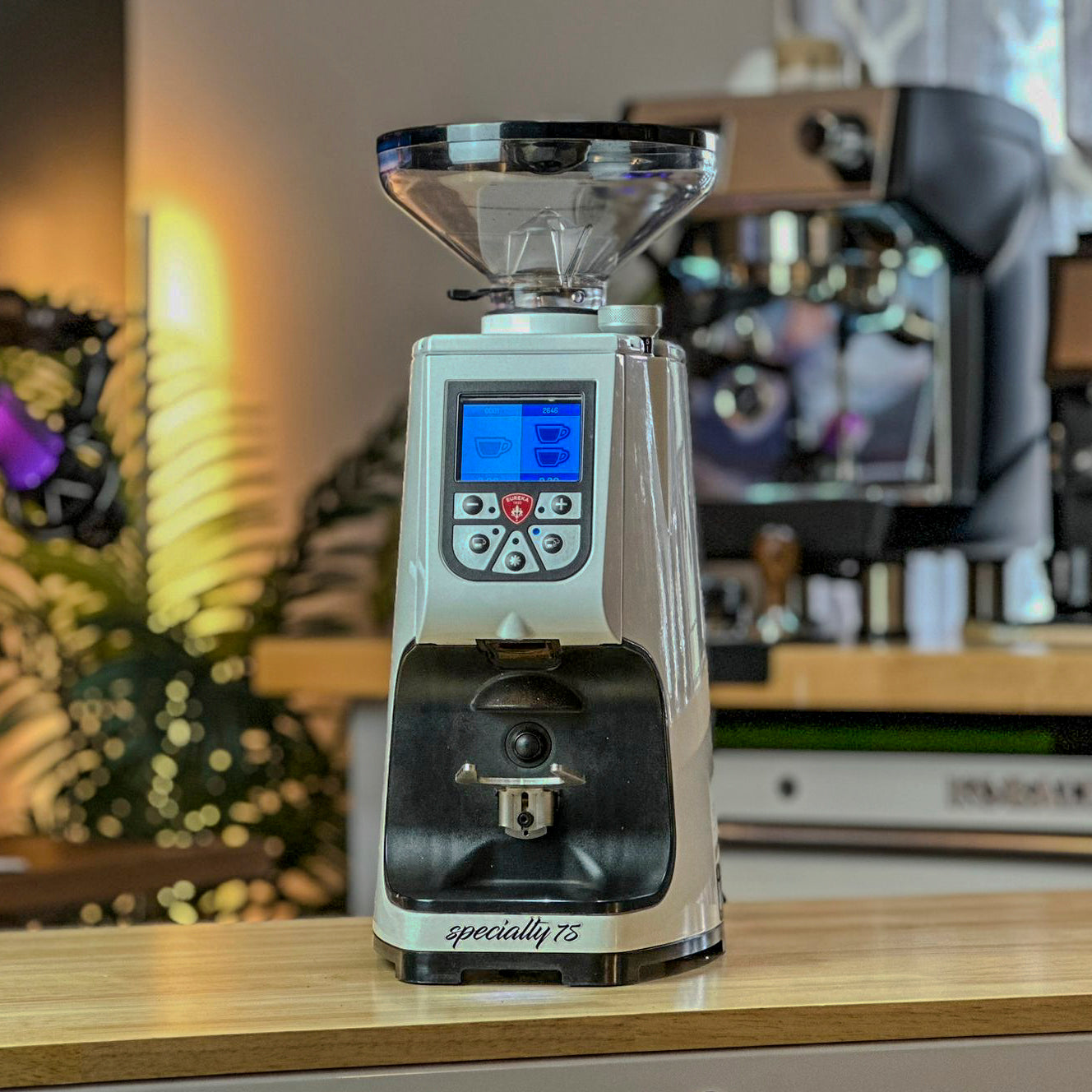
The commercial espresso workflow guide and commercial grinder guide explain why machine layout, controls, grinder duty, and the rest of the station matter together. Use specifications to choose what to test, then measure your actual menu.
Turn a speed difference into usable time
Suppose a hypothetical grinder change saves eight seconds of active handling per drink across 200 drinks in a shift. The arithmetic is 1,600 seconds, or about 26.7 minutes.
That time may be spread through hundreds of small intervals. It is not necessarily a block of twenty-seven minutes you can remove from the schedule. Some grinding may already overlap with another task, in which case the effect on finished-drink time is smaller.
Measure the sequence with both setups, including dosing checks, adjustments, cleanup, and any new handling steps. Count completed drinks meeting the recipe standard, not just successful grinder cycles.
Repeat the test with ordinary staff and a sustained order mix. A short demonstration conducted by an expert can show a feature working without proving the café will achieve the same result throughout service.
Choose the benefit you can support
| Observed improvement | How to value it | What would make the claim weak |
|---|---|---|
| Fewer paid hours genuinely required | Actual removed hours × loaded hourly cost | Schedule stays the same or owner takes over the work |
| More customer orders completed | Additional sales minus associated incremental costs | No evidence of unmet demand |
| Less product waste | Measured reduction × actual unit cost | Savings assumed from a feature without measurement |
| More time for other work | Track the service or operating improvement | Calling all available time a cash saving |
Keep different benefits separate and avoid counting the same capacity twice. If the freed time is used to make additional drinks, it cannot also be removed from that same employee's paid schedule.
Work through two alternative cases
In a labor-saving case, suppose the tested operation can safely remove twenty paid minutes from each of twenty monthly shifts, with the required service and other work still completed. At a hypothetical loaded labor cost of $22 per hour, the saving is about $146.67 per month.
The change must be real: a shorter paid schedule, not unrecorded closing work or unpaid owner coverage. Include applicable payroll and scheduling obligations when implementing a staffing change.
In a separate capacity case, keep the schedule unchanged and complete eight additional drinks per shift because customers were previously abandoning the queue. At $4 contribution per additional drink across twenty shifts, that is $640. If the new equipment creates $80 of extra monthly operating costs, the modeled net benefit is $560.
The second case assumes the demand exists and the additional costs are correctly included. It is not a promise that eight extra sales will appear after installation. Do not add the labor-saving case to it if both depend on the same time window.
Count the costs outside the purchase price
Include freight, installation, utility changes, water treatment, training, accessories, service access, and any setup downtime. Compare maintenance and consumables on the same basis.
The SBA's cost-benefit guidance recommends comparing costs and benefits over a stated period. For coffee equipment, the period should reflect the decision you are making and the costs you can reasonably estimate, with lower-benefit scenarios alongside the main case.
If the improvement moves the bottleneck to milk or handoff, further equipment speed may no longer increase completed orders. Stop extrapolating when another step becomes the limit.
Consider the owner and staff experience honestly
Equipment that reduces awkward handling or repeated manual tasks may make the operation easier to staff and run. Record the observed improvement and staff feedback. Avoid assigning a precise financial return to turnover, injury prevention, or satisfaction without evidence appropriate to the claim.
For a cart, available power, transport dimensions, water, drainage, and setup time can dominate the decision. A machine that performs well in a showroom may not be the right system for the venue arrangement.
Test loading, setup, service, and cleaning as one cycle. Saving time during drinks while adding difficult loading or breakdown work may change the net result.
Verify the benefit after installation
Keep a baseline of order counts, ticket times, paid hours, waste, and quality before the change. Compare similar shifts afterward and note other changes such as prices, promotions, staffing, or weather.
If the expected benefit does not appear, inspect the process before blaming the purchase. Training, station placement, or a different constraint may explain the gap. Revise the forecast using the measured result.
Bring your bottleneck observations and timed trial to Dylan and the commercial equipment team so the discussion starts with the work the equipment needs to perform.
Sources and further reading
- SBA: business-finance and cost-benefit guidance — comparing recurring benefits and costs.
- Espresso Outlet: commercial espresso workflow — system capacity considerations.
- Espresso Outlet: commercial grinder duty and workflow — evaluating grinder performance in service.
Timings, labor rates, sales, and benefits are hypothetical. Sources reviewed September 9, 2026.