




Daily Barista Opening & Closing Checklists
Coffee Business Resource Center
A good checklist catches the things a tired employee can forget. It should not require them to read a training manual while the first customer waits.
Write short actions with a clear completion condition. “Check the fridge” is vague. “Record the required temperature check and act on an out-of-range result” tells staff what they must do and leaves a useful record.
Use the checklist alongside your trained procedures, equipment manuals, and local food-safety requirements. It is a reminder to perform the work correctly, not a replacement for knowing how.
Organize opening in the order it happens
Start with the site and any overnight handoff. Look for reported equipment faults, deliveries, security issues, leaks, or other conditions that affect safe operation. Resolve those before assuming the normal opening sequence is appropriate.
Then complete the required utilities, hygiene, storage, and equipment checks. Allow the equipment to reach its specified ready condition before evaluating coffee. A scheduled opening time does not shorten the machine's startup requirements.
Prepare the service station, verify the current recipes, and taste the opening drinks. Confirm that the register and ordering channels show what is actually available. The bar should be ready for the first complete order, including its lid, modifier, and handoff.
Use a compact shift checklist
Adapt this example to your equipment, assigned roles, and approved procedures. Add the specific records or limits your operation requires rather than copying generic values.
| When | Action | Completion check |
|---|---|---|
| Opening | Read the prior shift's handoff and inspect the work area | Faults and unresolved issues assigned to the lead |
| Opening | Complete required hygiene, water, and food-storage checks | Facilities usable; required readings recorded and acceptable |
| Opening | Start equipment under its operator instructions | Correct ready state, no unresolved fault indication |
| Opening | Confirm recipe, dose, yield, and finished drink quality | Current recipe available and opening sample accepted |
| Opening | Count service stock and test ordering and handoff | Menu availability matches supplies and equipment |
| Closing | Account for remaining food and ingredients | Stored, labeled, rotated, or discarded under the procedure |
| Closing | Complete equipment and food-contact cleaning | Required cycles and cleaning records completed |
| Closing | Reconcile sales, waste, shortages, and faults | Records complete; tomorrow's lead receives the handoff |
| Closing | Apply the approved shutdown and security routine | Correct equipment remains powered; site or cart secured |
Add a date, employee initials, and a place for exceptions. An unchecked task should produce a follow-up action rather than disappear at the bottom of the sheet.
Separate a checklist item from its procedure
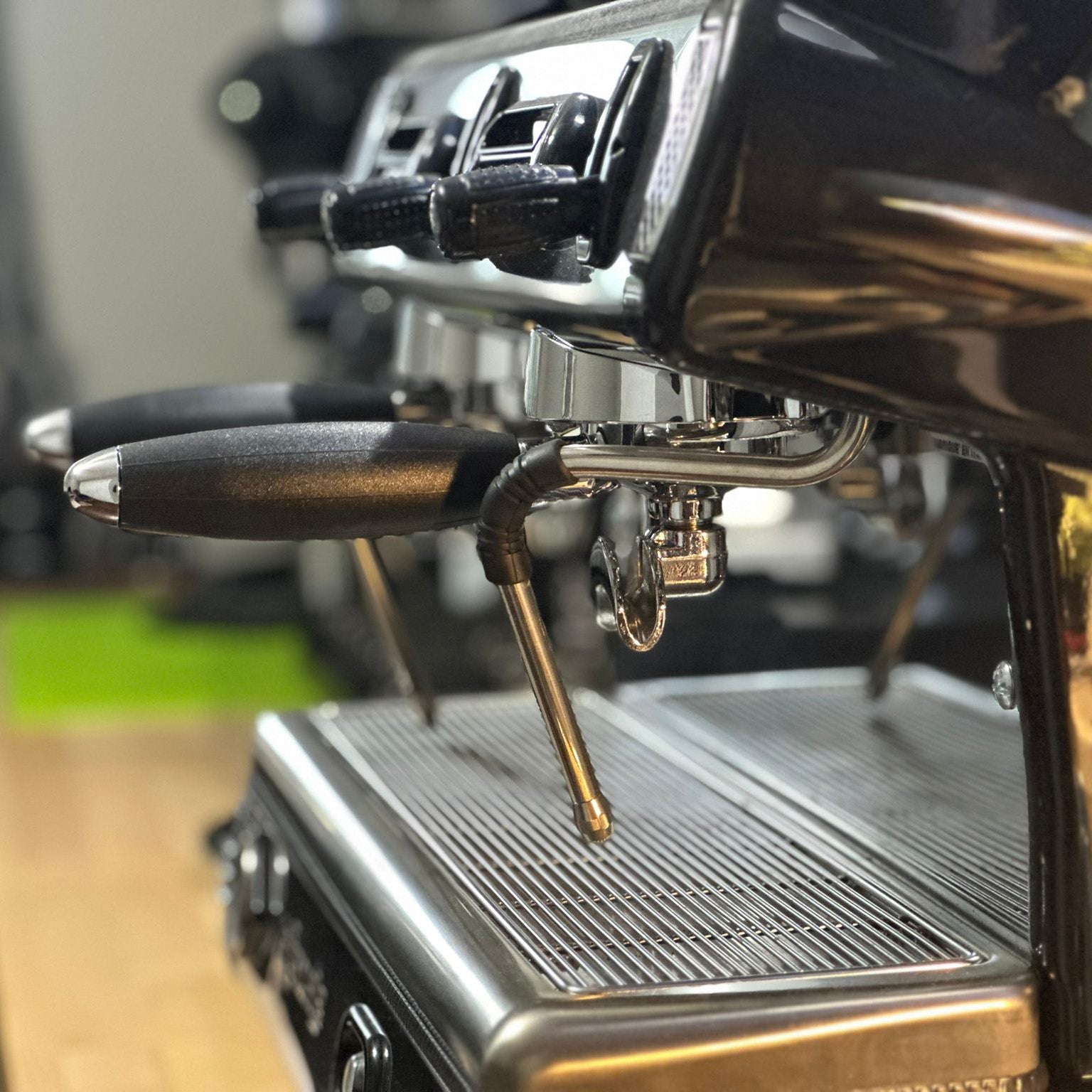
The checklist might say “complete espresso-machine cleaning.” The associated procedure should identify the machine, approved product, operator steps, required rinsing, and verification before the next service.
Use the current manufacturer documentation. For example, the Linea Classic S manual separates operating, cleaning, and maintenance instructions. Your checklist should point staff to the relevant procedure for the exact model, not contain a generic sequence assumed to suit every machine.
Do the same for sanitizer preparation, milk handling, and illness reporting. The FDA's employee health policy tool is a planning resource, with the applicable state, local, tribal, or territorial rules governing the operation.
Keep procedures where employees can find them without leaving a task in an unsafe state. Train the procedure first, then use the checklist to confirm it happened.
Make closing protect tomorrow's service
Set a realistic paid closing schedule that includes cleaning, product handling, records, and security. If staff must choose between finishing the list and leaving on time, the schedule or workload needs attention.
Do not start closing critical service equipment so early that customers can still order drinks you can no longer make. Set an orderly cutoff and update the relevant ordering channels when availability changes.
Count remaining usable stock in the same units used for ordering. Record shortages and incoming deliveries. A note saying “low on milk” is less useful than identifying the product, usable quantity, and next expected delivery.
Record waste and remakes before the details are forgotten. Keep the entry short enough to complete honestly and specific enough to support a decision later.
Avoid a blanket power-off instruction
The closing procedure should name which equipment is shut down, which uses a manufacturer-approved standby or scheduling function, and which must remain operating. Refrigeration protecting stored food generally needs its required power and monitoring arrangement to continue.
Follow the equipment and site instructions for water and electrical shutdown. Do not improvise isolation steps around an unresolved fault. Staff should know when to stop and contact the responsible person.
For a cart, the plan must cover stored product after the event, equipment condition for transport, water and waste handling, and the next preparation location. “Unplug everything and load up” does not establish that those tasks are complete.
Give exceptions a clear owner
Write who can decide that a failed check is resolved and who authorizes service after a significant fault or food-safety issue. An employee should not have to guess whether a warning can be ignored because opening is five minutes away.
Use a brief handoff format: issue, action already taken, current status, responsible person, and next step. For example, “decaf grinder unavailable; decaf removed from all menus; lead contacting service before tomorrow” is more useful than “grinder problem.”
Do not use initials as a substitute for verification. The lead can spot-check the important outcomes, such as a clean ready station, accurate stock count, or documented temperature action.
Review the list after real shifts
Walk through opening and closing with the team. Remove duplicate items, add repeated omissions, and move steps into the order that matches the work. Keep the current version dated.
If the list becomes several pages of repeated instructions, separate the training detail from the shift reminders. The list should remain readable while preserving the checks that protect service and product.
Use the Coffee Business Resource Center as a starting point for building your own operating documents around the equipment and menu you actually use.
Sources and further reading
- La Marzocco: Linea Classic S manual — example of model-specific operating and cleaning procedures.
- FDA: employee health policy tool — policy development and local-code scope.
The checklist is an adaptable management example. Sources reviewed September 9, 2026.