




Do Commercial Espresso Machines Need
Coffee Business Resource Center
Most fixed commercial espresso installations need a planned way to discharge wastewater. Whether that requires a particular floor drain, a floor sink, or another approved arrangement depends on the machine and the local plumbing requirements.
Do not assume there must always be a drain directly beneath the machine. Do not assume a nearby sink makes the installation ready, either. The useful next step is to have the machine's instructions and the proposed site reviewed together.
Separate the machine's drain from the building fixture
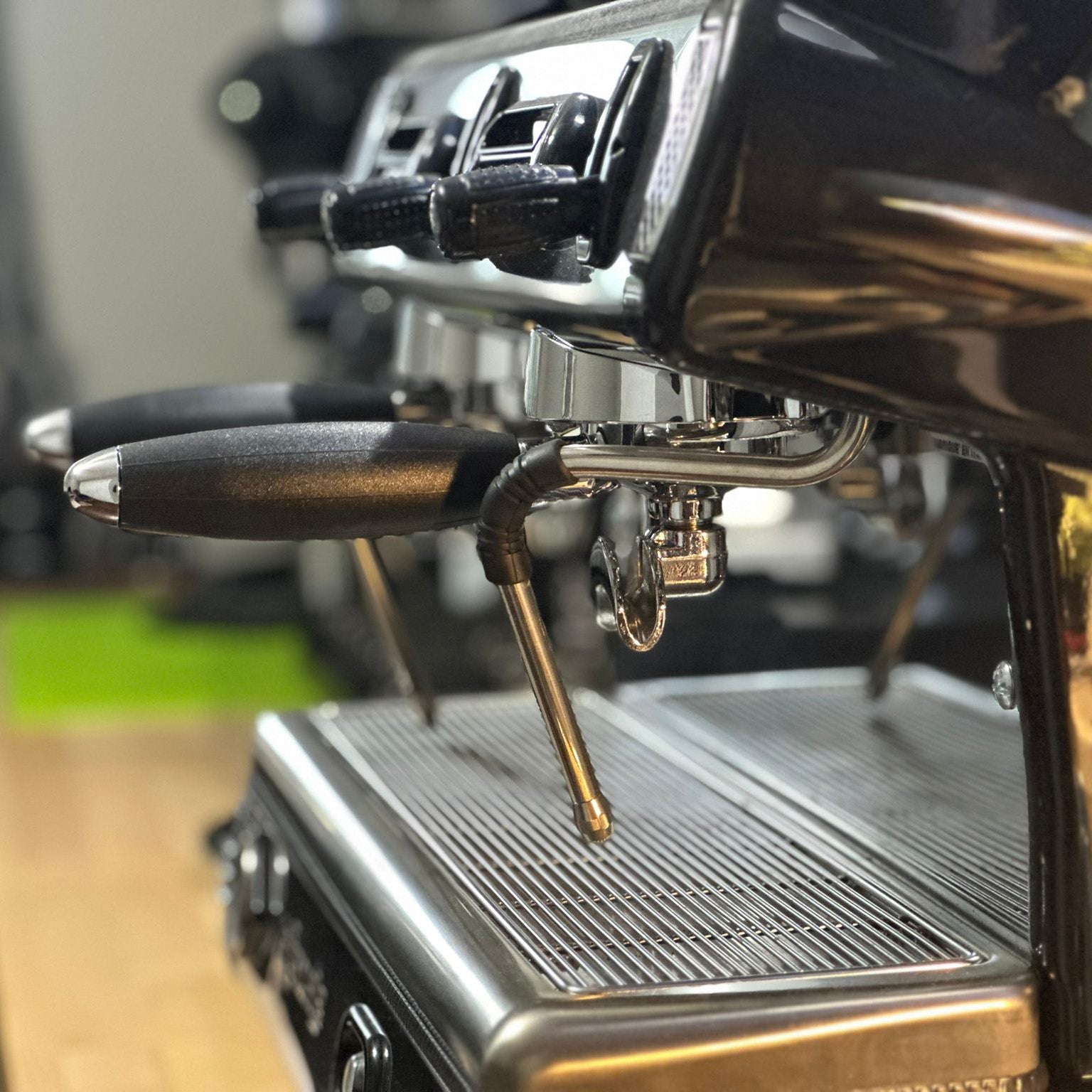
The espresso machine collects discharge through its tray or drain arrangement. A drain line carries that water toward an approved receiving point. The receiving fixture and its connection to the building drainage are another part of the installation.
That distinction matters when someone says, “There is already a floor drain.” You still need to know whether its location, capacity, condition, and permitted use suit the proposed equipment.
Ask the plumber to identify the complete route on the drawing. The equipment technician should confirm that the machine-side arrangement follows the applicable instructions.
Know what a floor sink and floor drain mean
A floor sink is a type of receptor that may receive indirect equipment waste. A floor drain is commonly used to collect water at floor level. The terms are sometimes used loosely in conversation, which can conceal an important design difference.
| Term in the installation discussion | What to clarify |
|---|---|
| Machine drain line | Approved material, route, slope, and connection for the model |
| Floor sink or other receptor | Whether it is the approved receiving fixture for the equipment |
| Floor drain | Its intended use and whether it serves the proposed arrangement |
| Air gap | The required physical separation where specified |
| Air break | A different arrangement; do not treat the term as interchangeable with air gap |
| Drain pump | Whether the equipment, discharge, and local installation allow it |
Our air-gap explanation is useful background. Have the plumber and local reviewer determine the actual required arrangement rather than copying a photograph from another café.
Read the exact machine's site requirements
Manufacturers can specify a drain type, distance, and other installation conditions. Those requirements belong in the contractor's quote before work starts.
Simonelli's Appia Life Compact 220V sheet, for example, specifies an open gravity drain with a minimum 1.25-inch internal diameter within four feet of the machine. That is a requirement from one document, not a universal dimension for all espresso installations.
Send the current model-specific sheet to the plumber and installer. If the proposed site cannot meet it, ask the equipment supplier and local reviewer about an accepted alternative before changing the plan.
Check the route, not just the straight-line distance
A receptor can be close to the bar but difficult to reach with a suitable drain route. Refrigerators, drawer banks, structural members, and changes in elevation all matter.
Have the installer trace the actual path from the machine outlet through the finished counter and cabinetry. A gravity line should not depend on an uphill section or a hose squeezed behind a refrigerator.
Leave access for inspection and cleaning. The team should be able to see whether the drain is blocked or leaking without dismantling the entire bar.
Ask about drainage before signing the lease
If the space has never been a food business, drainage can be part of a larger build-out. Ask the plumber to assess the existing system and price the work required for your proposed equipment and layout.
If the space was previously a café, do not treat the old arrangement as automatic approval for the new business. Equipment, menu, layout, condition, and applicable review requirements can differ.
Clarify the landlord's permission, responsibility for building work, and how the schedule affects opening. A machine that fits the counter can still become a poor choice if the drain work is unresolved until delivery week.
Understand what a removable tray does and does not solve
Some equipment is designed to collect wastewater in a removable tray for manual emptying. That can be useful in an appropriate setup, but it does not remove the business's other water and wastewater obligations.
Check the exact model and intended commercial application. A reservoir-fed machine can still have a drain requirement, while a model with a removable tray needs a practical emptying routine and an approved place to dispose of the contents.
For a cart, confirm the complete arrangement with the authority reviewing the operation. The King County mobile-food process is one example where espresso carts are part of a formal plan-review process. Your location may use different requirements.
Don't use a bucket as an unreviewed workaround
A loose container under a counter may seem to solve the immediate problem, but it can introduce capacity, overflow, handling, and sanitation questions. It also may not be acceptable for the installation.
If a mobile business uses a designed wastewater system, it should be part of the approved plan, with secure connections, adequate capacity, and a disposal routine. That is different from improvising a container after the machine arrives.
Ask how staff will know the system is approaching capacity and what the operating limit is. Running out of wastewater space can stop service even when plenty of fresh water remains.
Treat a drain pump as a system choice
When gravity drainage is difficult, someone may suggest a pump. Have the equipment supplier and plumber determine whether a suitable, approved arrangement exists for that application.
Temperature, discharge characteristics, duty, alarms, access, and the consequences of pump failure all need consideration. A small pump intended for another appliance is not automatically appropriate for espresso-machine discharge.
Price the complete installation and maintenance needs. Sometimes changing the bar position is more practical than introducing another component that must work throughout service.
Check operation before the installer leaves
Have the installer verify normal discharge, the agreed cleaning routine, and any simultaneous equipment demand relevant to the receptor. Watch the finished installation with the cabinets and appliances in place.
Ask the team to identify the drain path and explain how to report slow drainage, leaks, or overflow. Our drip-tray water guide helps distinguish ordinary machine discharge from a problem that needs attention.
Use the layout to choose equipment
Bring a measured sketch and any plumber's findings when you talk with Dylan about commercial equipment. Equipment selection and drainage planning are easier when they happen together.
Sources and further reading
- Simonelli USA: Appia Life Compact 220V site requirements, model-specific drain example.
- King County: mobile food service business permits, a local review example.
- Espresso Outlet's linked air-gap and drip-tray explanations.
Sources checked September 8, 2026. The final drainage arrangement requires the applicable equipment instructions and local review.