


The Most Common Coffee Shop Startup
Coffee Business Resource Center
Coffee-shop startup mistakes often begin as reasonable shortcuts. You find a good deal on a machine, accept a landlord's estimate, or add a few drinks because the ingredients seem inexpensive.
The trouble appears when those decisions meet the rest of the business. The machine needs power the site doesn't have. The build takes longer than expected. A simple-looking drink adds enough steps to slow the whole bar.
The mistakes below are useful to check before opening a shop, cart, or trailer. They aren't a statistical ranking. They're points where a little investigation can prevent an expensive surprise.
Committing to a space before checking the intended use
A former café can be a promising location. Its history doesn't establish that your menu, equipment, construction plans, or ownership change will be approved.
Before committing, describe the business to the appropriate local authorities and have the premises assessed by the professionals responsible for the work. Find out what needs approval, what needs changing, and what remains uncertain.
Bring the proposed equipment schedule, including actual model configurations. “There is plumbing behind the counter” isn't enough to confirm water supply, drainage, or installation requirements.
For mobile businesses, buying an existing cart doesn't remove the need to check local approval. For example, King County requires review for mobile food business ownership changes. Your own jurisdiction may follow a different process.
Budgeting for the equipment price and forgetting the installation
Delivery, positioning, water treatment, electrical work, plumbing, startup, and training can sit outside the machine price. Find out which are included in your quote.
Used equipment needs the same scrutiny, plus a condition assessment and a clear plan for service. A low purchase price can become less attractive once you include repair work and the cost of installing it correctly.
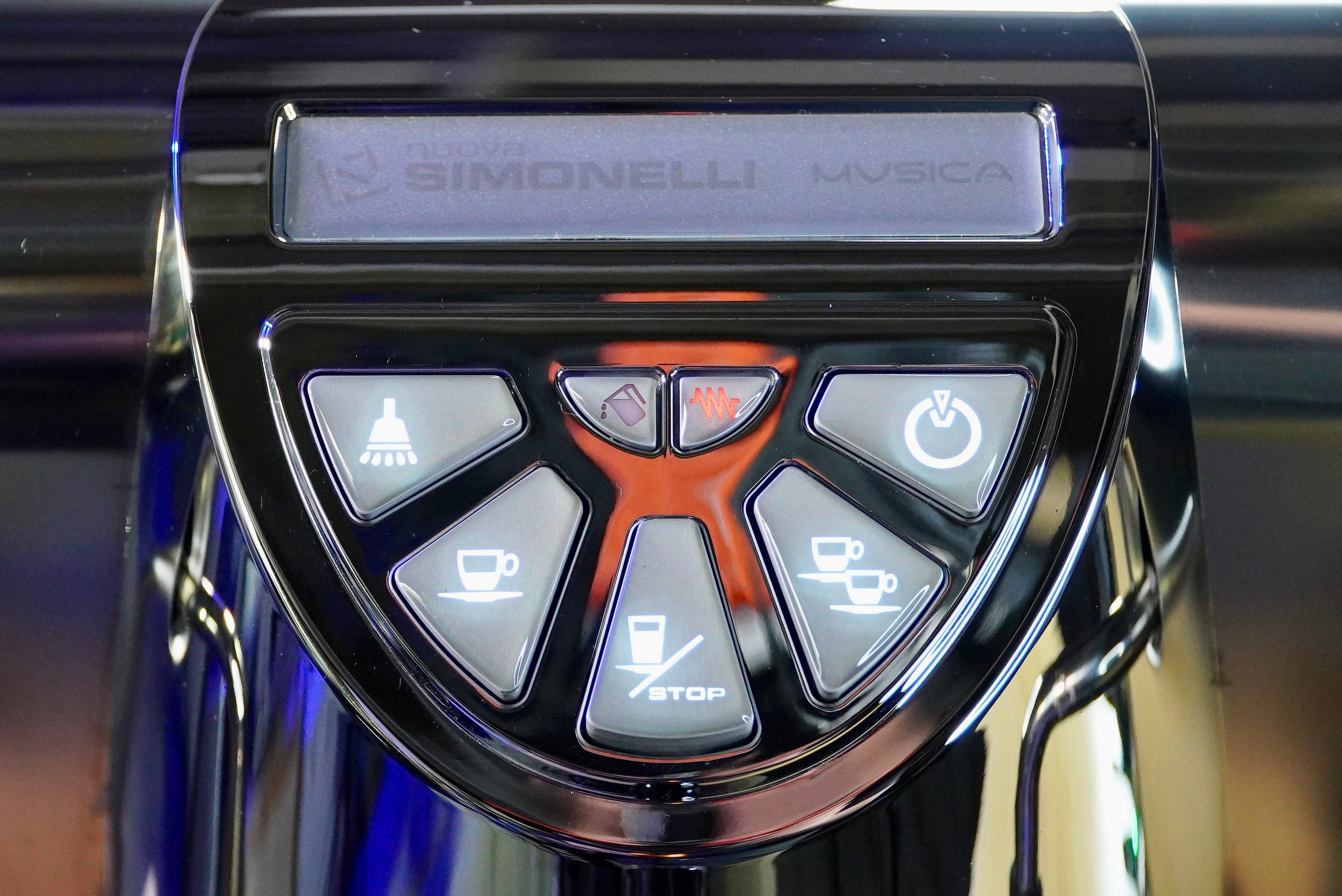
Use the exact manufacturer's installation documents. Simonelli, for example, publishes separate sheets for different Appia Life configurations. A familiar model name doesn't guarantee the same electrical requirements.
Ask one practical question of each quote: “What else has to be paid for before we can safely make drinks with this setup?” Record the answer in the startup budget.
Choosing a machine from daily cup counts
Daily sales are useful for ordering and budgeting, but the machine experiences the orders that arrive together.
A shop selling drinks steadily through the day has a different production problem from a cart serving a crowd during a short break. Milk drinks, extra espresso doses, decaf, and hot-water use also change the work.
Estimate a busy short period and run a realistic demonstration. Watch the grinder, espresso groups, steam, refrigeration access, payment, and handoff.
Buy the espresso machine and grinder setup as parts of one working bar. More group heads won't resolve every delay.
Making the menu complicated before the team is ready
A few extra sizes and flavors can produce many combinations. Each needs a recipe, ingredients, storage, staff knowledge, and a way to enter the order correctly.
Food can add even more work. Before adding an item, follow it from delivery through storage, preparation, service, cleaning, and waste.
Start with a menu you can execute consistently. Use actual customer requests and sales records to decide what deserves a place later.
For a cart, consider what happens when an ingredient runs out away from your base. A menu built around a small number of shared ingredients can be easier to restock, provided it still offers customers a reason to buy.
Treating a busy opening as proof of normal demand
Friends, curiosity, promotion, and one-off events can make opening days unusual. Enjoy the turnout, then separate it from the pattern you need to run the business.
Track sales by day, hour, and product. Look for repeat visits and the quieter periods as well as the strongest rush.
When planning, include a slower-sales case and an opening-delay case. The SBA's planning guidance is a useful framework for organizing startup and operating costs.
Avoid hiring, ordering, or extending hours solely from your busiest early day. Make changes from a pattern you can explain.
Spending the operating cash during the build
It's easy to use the money set aside for payroll to cover one more construction invoice. The pressure disappears for a moment, but the business still needs to pay staff after opening.
Keep the remaining build costs and the operating cash forecast visible together. Include inventory purchases, payroll timing, rent, utilities, debt payments, and the owner's planned cash needs.
If the build grows, make an explicit decision about scope, funding, or timing. Don't let the reserve shrink without changing the plan.
Pricing from beans and milk alone
Ingredient cost matters, but it isn't the whole cost of serving a drink. Packaging, payment fees, waste, labor, occupancy, and other overhead still need to be covered.
Cost the actual recipe and cup size. A larger drink can use more milk or espresso than the smaller version, and alternative ingredients may have different purchase and waste costs.
Use current supplier invoices and your payment agreement. Don't build a permanent price around a promotional ingredient price or a guessed card fee.
Then check the menu in the context of the whole business. A popular item that takes several extra steps may need a different price, recipe, or service arrangement.
Letting small amounts of waste disappear from view
Waste is easier to manage when it has a cause attached to it. Record dial-in coffee, remakes, milk left in pitchers, expired stock, and damaged packaging separately enough to see what needs attention.
As a hypothetical example, an extra 30 milliliters of milk poured away on each of 100 drinks is 3 liters in a day. Repeated over 26 trading days, that's 78 liters. Those figures illustrate the arithmetic, not a typical café's waste rate.
The response should be better portioning and training, with food safety maintained. It should not be pressure to reuse ingredients inappropriately.
Look at waste alongside complaints and drink quality. Cutting a recorded waste number is not progress if it produces poor drinks or unsafe handling.
Expecting one experienced employee to carry the operation
A capable lead is valuable. The business still needs recipes, opening and closing procedures, supplier information, and a workable schedule.
Make sure other staff can find instructions and contact details. Agree on who can change a recipe, place an order, or call a technician.
Include the owner in enough training to understand the work and recognize when support is needed. Don't wait for an absence to discover that only one person knows how to open the shop.
The same applies to a solo cart owner. Document the setup and closing process while it is fresh, so a future employee or relief operator can learn it.
Rehearsing drinks while leaving the rest of the business untested
Practice complete service with the actual menu, point-of-sale system, cups, stock, and staff positions. Include mixed orders and the cleaning and restocking that happen between them.
For a mobile setup, also rehearse loading, travel preparation, setup, approved water and waste handling, breakdown, and cleaning at the base.
Use the practice to find the awkward moments. The following observations give you somewhere specific to start.
| What you notice | What to investigate |
|---|---|
| Espresso is ready while drinks wait to finish | Milk work, ice access, finishing space, and staff roles |
| Staff repeatedly leave the bar | Stock placement, refill quantities, and missing tools |
| Orders reach the wrong customer | Ticket sequence, cup marking, and handoff |
| Closing takes much longer than expected | Cleaning procedures, access, and the work left until the end |
Opening without a service and interruption plan
Find out who supports your equipment, what the warranty covers, and how service is arranged in your area. Keep model details and maintenance records accessible.
Discuss water treatment with the installer using the machine's requirements and the actual water supply. Follow the manufacturer's cleaning and maintenance instructions.
Think through what you would do if the espresso machine, refrigerator, payment connection, or trading location became unavailable. A limited menu may be possible in some situations, but only if it remains safe, approved, and practical.
The aim is to make fewer decisions for the first time while customers are waiting. A clear contact list and a realistic operating plan are useful parts of the opening kit.
Sources and further reading
- SBA: plan your business.
- Simonelli USA: equipment documents, for configuration-specific installation and care.
- King County: mobile food business permits, a local example of approval requirements.
- FDA: Food Code, for the model framework behind locally adopted food-safety rules.
Sources checked September 8, 2026. Examples and operational checks are illustrative; no national failure ranking or universal cost benchmark is claimed.