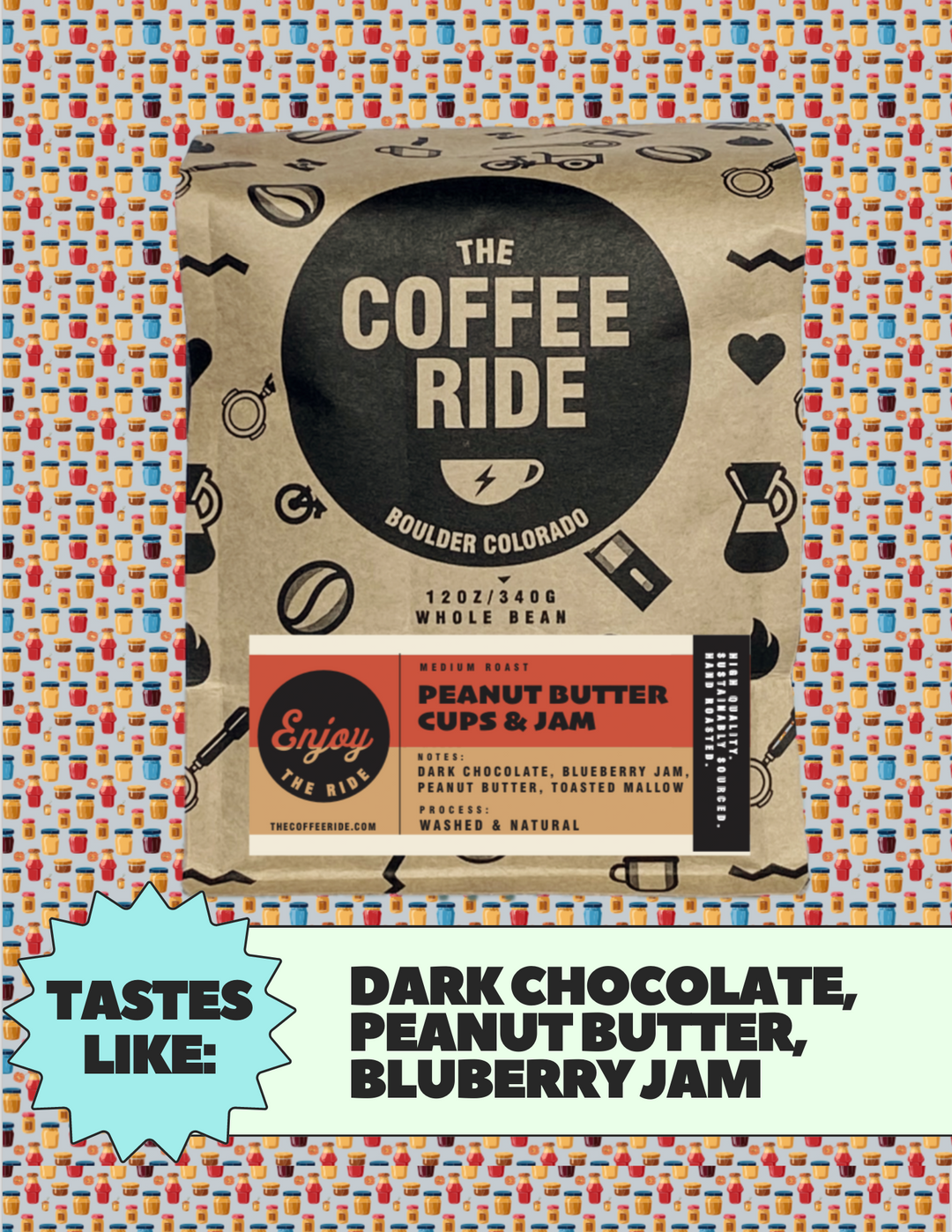
Peanut Butter Cups & Jam Coffee
- Green Coffee and Roasted Coffee does not qualify for free shipping. Shipping costs are set by our roaster partners. Coffee orders are shipped directly from the roaster partner.
- In stock, ready to ship
- Backordered, shipping soon
Peanut Butter Cups & Jam Coffee overview
This limited-run blend starts with Brazilian Peaberry for dark-chocolate weight and toasted-marshmallow character, then adds natural-process Ethiopia Yirgacheffe for a blueberry-jam finish. The roaster presents the references as subtle tasting notes within a balanced coffee rather than an aggressively flavored cup. This page keeps the useful product facts together so you can choose a bag and build a repeatable brew without guessing at undocumented details.
Verified coffee profile
| Roaster / producer | Various smallholders; roasted by The Coffee Ride Coffee Roasting Co. |
|---|---|
| Origin | Brazil and Ethiopia |
| Roast | Medium |
| Process | Washed and natural components |
| Cultivar | Mixed |
| Cup or flavor profile | Dark chocolate, blueberry jam, peanut butter and toasted marshmallow |
| Available formats | 12 oz, 2 lb and 5 lb |
Origin, roast, and cup context
The documented origin, process, and cultivar provide useful context for the cup. They describe where and how this coffee was produced, while the flavor notes remain sensory guides rather than guaranteed ingredients. Water chemistry, grind distribution, dose, and extraction will still change what each brewer perceives.
Roast development shapes solubility and texture, but the label “Medium” is only one part of the cup. A finer grind or longer contact raises extraction; more coffee at the same water amount raises concentration. Keeping those ideas separate makes dialing in faster and more consistent.
Brewing and extraction guidance
Paper filter starting point
Start with 18 g of coffee to 288 g of water, a 1:16 brew ratio. Use a medium grind and water around 90–93°C. Aim for a drawdown near 2:45–3:30, then adjust one variable at a time. If the cup tastes sharp or thin, grind slightly finer; if it becomes dry or bitter, coarsen the grind or shorten contact time.
Managing roast-driven extraction
The documented roast direction is medium. Darker or more developed coffees are usually more soluble, so extreme heat or an overly fine grind can push the finish toward dryness. Start modestly cooler, keep the brew ratio stable, and judge body as well as bitterness. A balanced cup should retain sweetness and structure without tasting ashy.
Formats, freshness, and storage
Available choices are 12 oz, 2 lb and 5 lb. Select the exact size, caffeine option, roast option, and grind shown in the variant menu; not every combination is necessarily offered. For whole bean coffee, grind immediately before brewing. After opening, press out excess air, reseal the package, and store it away from heat, light, moisture, and strong odors.
How to evaluate the first brew
For Peanut Butter Cups & Jam Coffee, begin with a written recipe and change only one variable per brew. Note the coffee dose, water mass, grind setting, water temperature, total contact time, and final beverage yield where applicable. First judge aroma and sweetness, then acidity, body, clarity, and finish. If the cup feels weak but clean, raise concentration slightly; if it tastes under-extracted, change grind or contact time instead. This method keeps sensory feedback tied to a measurable adjustment and makes it easier to reproduce a cup you enjoy.
Frequently asked questions
What does Peanut Butter Cups & Jam Coffee taste like?
Dark chocolate, blueberry jam, peanut butter and toasted marshmallow. These are sensory references; perception changes with water, grind, brew ratio, and extraction.
What roast level is documented?
Medium. Where the supplier does not provide a precise roast level, this page does not infer one from color, packaging, or flavor language.
What origin and process are verified?
Origin: Brazil and Ethiopia. Process: Washed and natural components. “Not specified” means the source record does not document that detail.
Is this suitable for espresso?
It can be tested as espresso, but it is not specifically labeled as an espresso coffee. Start with the brewing methods above and adjust to your equipment.
Should I choose whole bean or ground?
Whole bean is best when you have a suitable grinder and want to dial in immediately before brewing. Choose a listed ground option when convenience is more important; match the grind to your brewer.
How should I store it?
Keep the bag sealed in a cool, dry cabinet away from heat, moisture, and strong odors. Buy a quantity that fits your routine, and avoid refrigerating an opened bag where condensation can affect the coffee.
Explore related coffee equipment
Green Coffee and Roasted Coffee does not qualify for free shipping. Shipping costs are set by our roaster partners. Coffee orders are shipped directly from the roaster partner.