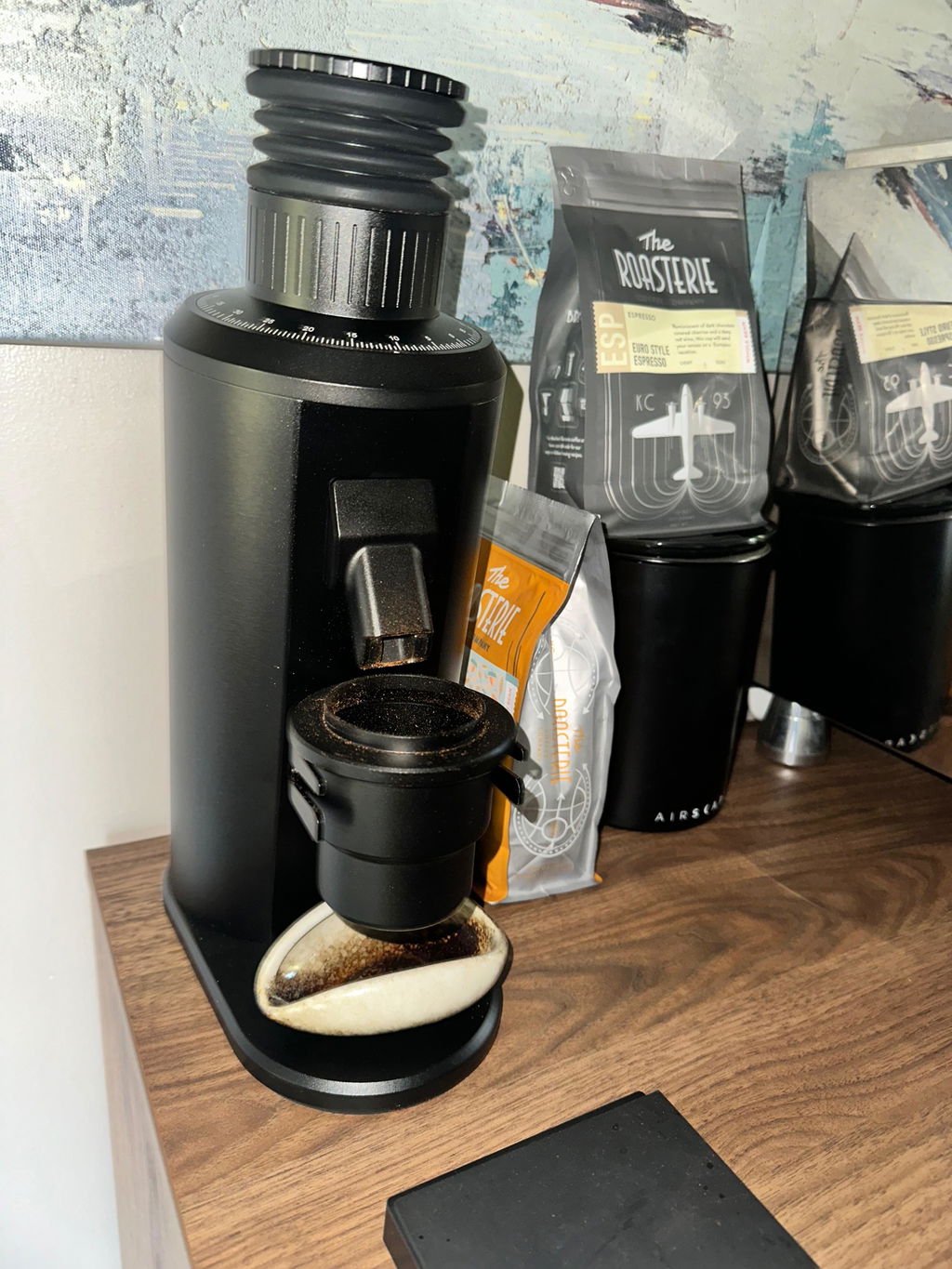
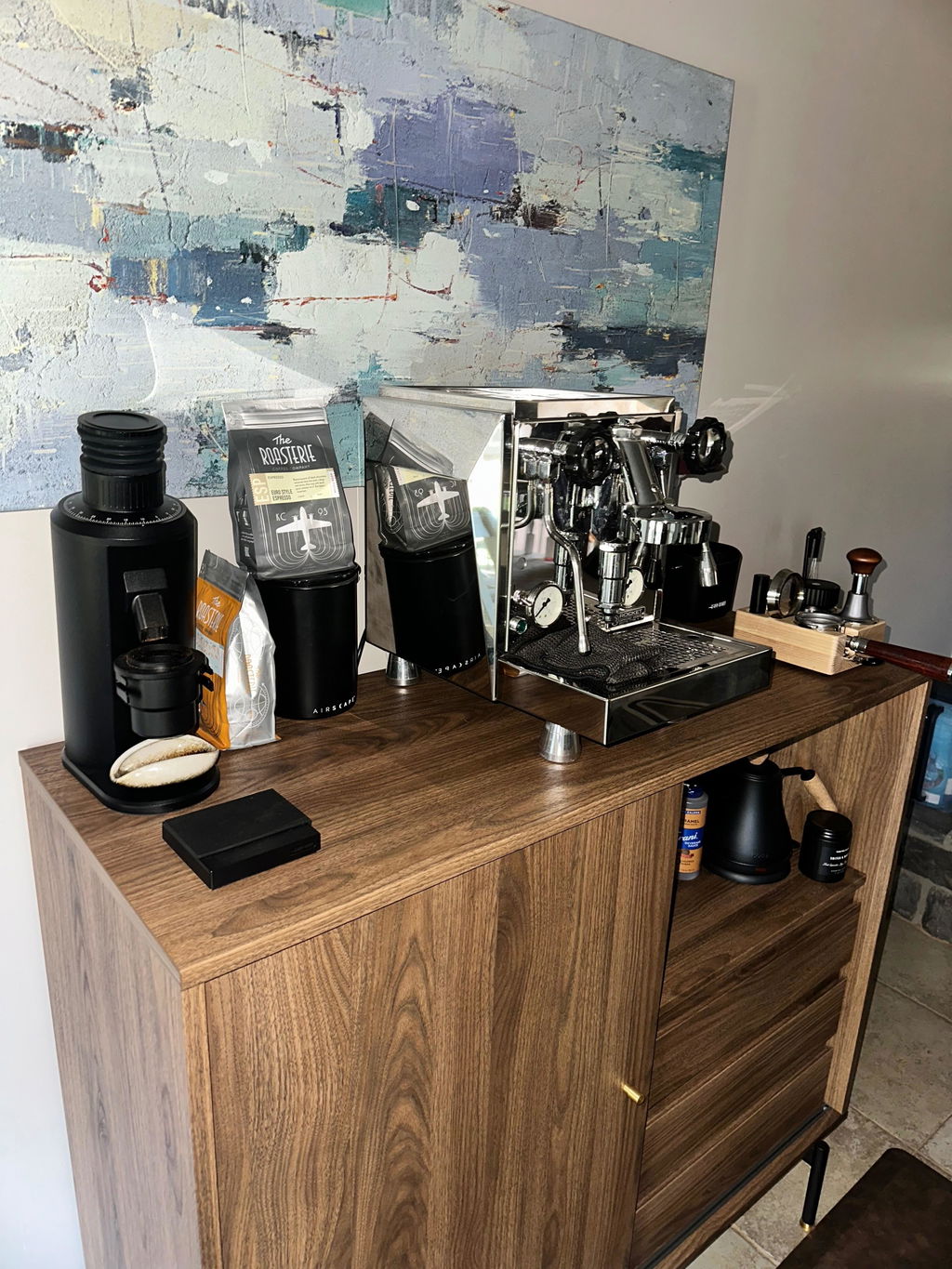
Should You Upgrade Your Espresso Grinder
“Should I upgrade my grinder or my espresso machine first?” is one of the most common questions in home espresso. The standard answer—“buy the better grinder”—is often correct, but it is not automatically correct for every setup. A grinder controls particle size and dose consistency; the machine controls water temperature, pressure, flow, and steam. The right first upgrade is whichever component is currently preventing you from making the coffee you want.
This guide provides a practical way to diagnose the limiting component instead of spending money based on a slogan.
Why the grinder usually has the largest effect on espresso
Espresso requires a fine grind with extremely small adjustments. A small change in particle size can move a shot from a 20-second gusher to a 40-second choke. An espresso-capable grinder must therefore do three things well: create an appropriate particle distribution, hold a repeatable adjustment, and allow changes small enough to dial in by taste.
If a grinder has wide stepped adjustments, excessive retention, unstable burr carriers, or inconsistent timed dosing, a better machine will faithfully expose those problems. The new machine may have a PID and better pressure control, yet shots will still alternate between fast and slow because puck resistance begins with the grind.
Grinder upgrades can also change flavor presentation. Traditional espresso burrs tend to emphasize body and blended sweetness, while clarity-oriented geometries can separate fruit and floral notes. For a deeper explanation, read our SSP burr in-depth review and DF83 stock vs. DLC vs. SSP comparison.
Signs the grinder should be upgraded first
- You cannot make a small enough adjustment between sour-fast and bitter-slow shots.
- Two equal doses at the same setting produce substantially different shot times.
- The grinder retains enough coffee that yesterday’s setting or beans contaminate today’s dose.
- You want to switch frequently between coffees, espresso, and filter brewing.
- Your current machine reaches stable brew temperature and acceptable pressure, but the flavor remains inconsistent.
Before replacing the grinder, confirm that puck preparation is not the real issue. Uneven distribution can make a good grinder look inconsistent. Our WDT guide explains how to distribute grounds before tamping.
When the espresso machine is the actual bottleneck
A capable grinder cannot fix water that is far too hot, too cool, or thermally unstable. It cannot create steam power that the machine does not have. It also cannot add simultaneous brewing and steaming, programmable pre-infusion, flow control, or quiet rotary-pump operation.
Upgrade the machine first when one or more of these limitations dominate your daily use:
- The machine lacks temperature control and requires complicated temperature surfing.
- You make several milk drinks back-to-back and wait excessively between brewing and steaming.
- The brew pressure is badly calibrated and not reasonably adjustable.
- You need a direct water connection or drain for an office or permanent coffee bar.
- The machine is unreliable, leaking, corroded, or difficult to service.
- You want pressure or flow profiling that the current machine cannot provide.
A single-boiler machine can make outstanding espresso, but it asks the user to manage the transition between brew and steam temperatures. A dual boiler such as the Rancilio Silvia Pro X separates those jobs, improving milk-drink speed and temperature repeatability. An E61 dual boiler such as the Quick Mill QM67 Evo adds a different workflow, larger thermal mass, and strong steaming capability.
A diagnostic test before spending money
- Use one coffee for a full week. Freshly changing beans introduces another variable.
- Weigh every dose and yield. Keep dose within 0.1 gram and stop shots at a fixed beverage weight.
- Warm the machine fully. Include the portafilter and cup-contact surfaces.
- Repeat puck prep. Use the same distribution and tamp routine.
- Record five shots. Note dose, yield, time, temperature setting, and taste.
If shot time varies dramatically while dose, yield, and machine routine stay constant, investigate the grinder and puck prep. If shot time is repeatable but flavor changes with machine temperature cycling or recovery, the machine is more likely the constraint. Our article on espresso shot variation and inconsistencies provides additional troubleshooting.
How to divide a complete espresso budget
There is no universal percentage, but spending enough on the grinder to avoid an obvious mismatch is essential. A modest machine paired with a precise grinder usually outperforms an expensive machine paired with an unsuitable grinder. Do not forget the supporting items: a scale, appropriate basket, tamper, water treatment, milk pitcher, and cleaning supplies.
For single dosing, the Turin DF64 Gen 2 offers a 64 mm platform with broad burr-upgrade options. For higher throughput and a larger burr platform, the Turin DF83 is another path. Hopper users may prefer a quiet timed-dosing design such as the Eureka Mignon Specialita.
Practical upgrade order by user type
| User | Likely first upgrade | Reason |
|---|---|---|
| Straight-espresso drinker with entry grinder | Grinder | Particle distribution and micro-adjustment dominate dialing in. |
| Several lattes every morning | Machine, if grinder is already capable | Steam recovery and brew-to-steam workflow become major constraints. |
| Light-roast enthusiast | Grinder, then temperature-stable machine | Light coffee demands capable burrs and higher, repeatable extraction energy. |
| Office or entertaining setup | Evaluate both as a system | Throughput, ease of use, water supply, and recovery matter together. |
| Bean switcher using multiple coffees | Low-retention grinder | Fast purging and repeatable settings simplify frequent changes. |
Frequently asked questions
Will a better grinder improve milk drinks?
Yes. Milk hides some defects, but it also rewards sweetness and concentration. A grinder that produces repeatable, balanced espresso makes a latte taste richer without relying on extra syrup.
Does a PID mean I do not need a grinder upgrade?
No. A PID controls a heating system. It does not control grind distribution or puck resistance. Temperature stability and grind quality solve different problems.
Should I buy the final machine I want or upgrade in stages?
Buy for the workflow you realistically expect during the next several years. A serviceable grinder with standard burr sizes can remain useful through multiple machine upgrades. Likewise, a durable machine can outlast several changes in grinder preference.