




Tiger Striping in Espresso Crema: What Causes the Streaks and What They Do Not Prove
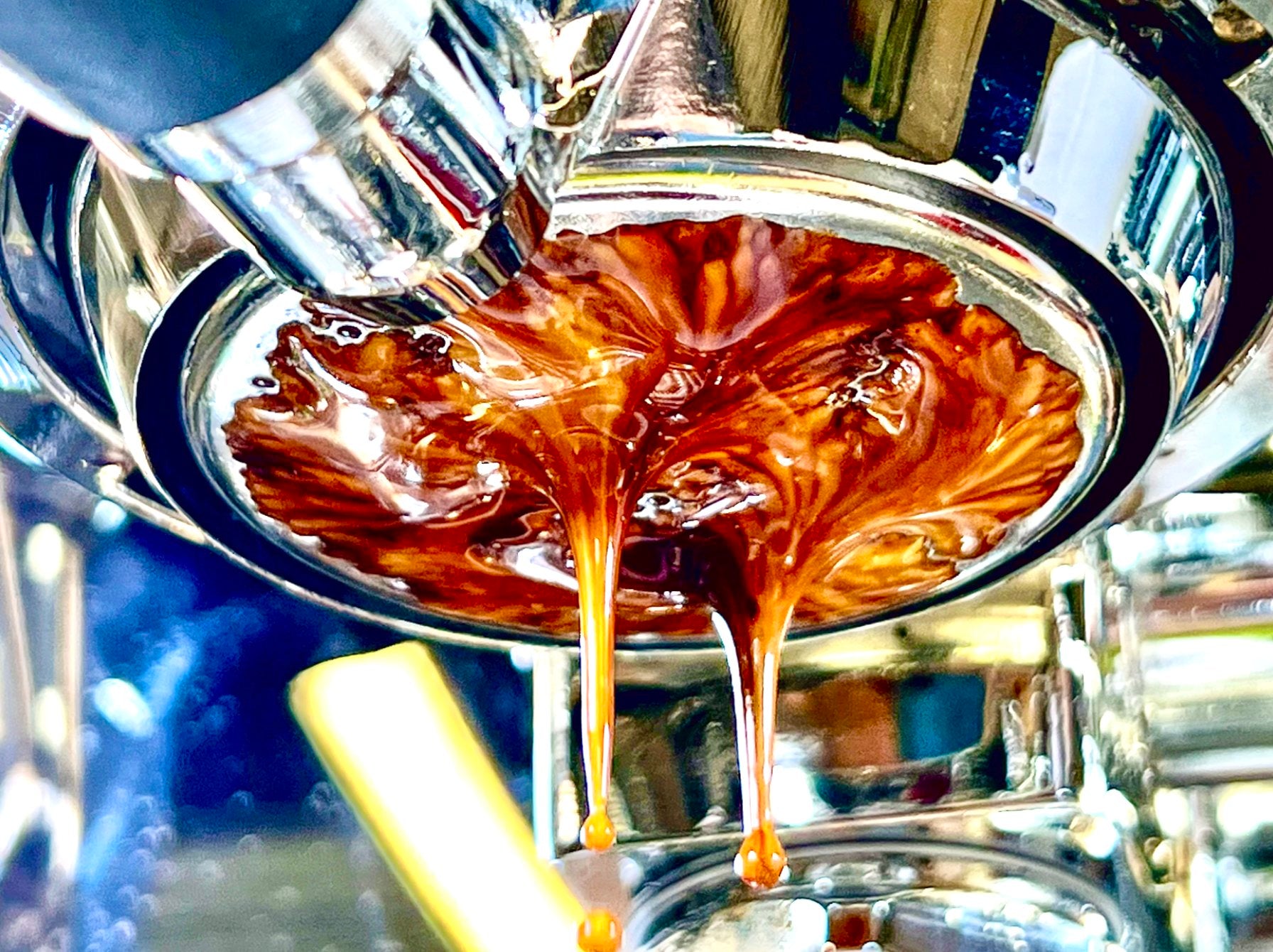
Tiger striping is the alternating dark and lighter streaking sometimes visible in espresso as the shot flows into the cup. The pattern can be visually attractive and is often associated with traditional espresso, but it is not a dependable standalone measure of extraction quality.
Where the stripes come from
Espresso is a changing mixture of dissolved solids, emulsified oils, suspended particles, gases, and crema-forming material. As concentration and flow vary through the shot, darker liquid can fold through lighter crema and create striped patterns.
Fresh coffee often shows more crema
Recently roasted coffee contains more carbon dioxide, which can increase crema volume and make visual patterns more pronounced. That does not mean the freshest possible coffee always tastes best. Coffee may need rest after roasting, especially for espresso, to reduce excessive gas and make extraction more stable.
Roast style affects appearance
Darker or more traditional espresso roasts often produce different crema color and texture than very light specialty roasts. Robusta-containing blends may also create substantial crema. Appearance therefore reflects coffee composition and roast style as well as extraction.
Tiger striping does not prove even extraction
A shot can display attractive stripes and still taste bitter, sour, hollow, or unbalanced. Conversely, a pale-looking modern light-roast espresso may taste excellent. Bottomless-portafilter visuals and crema should be treated as diagnostic clues, not as substitutes for tasting and recipe measurement.
What matters more?
Track dose, beverage yield, grind, shot behavior, and taste. If the shot is sweet, balanced, and repeatable, the absence of tiger striping is not a problem. If it tastes poor, a pretty crema pattern does not rescue it.
For more background, read our published guide to espresso crema and guide to espresso dose, yield, ratio, and time. More terminology is in the glossary.