




Preventive Maintenance vs. Emergency
Coffee Business Resource Center
An emergency repair invoice shows only part of an equipment failure's cost. You may also lose contribution from orders you cannot serve, discard product, pay for extra travel or labor, and spend time rearranging bookings.
Preventive maintenance has a visible price too. The useful comparison is a planned ownership program against the likely consequences of running without one, not a promise that maintenance will eliminate every failure.
Use the actual equipment documentation and your own service history to build the plan.
Start with the manufacturer's schedule
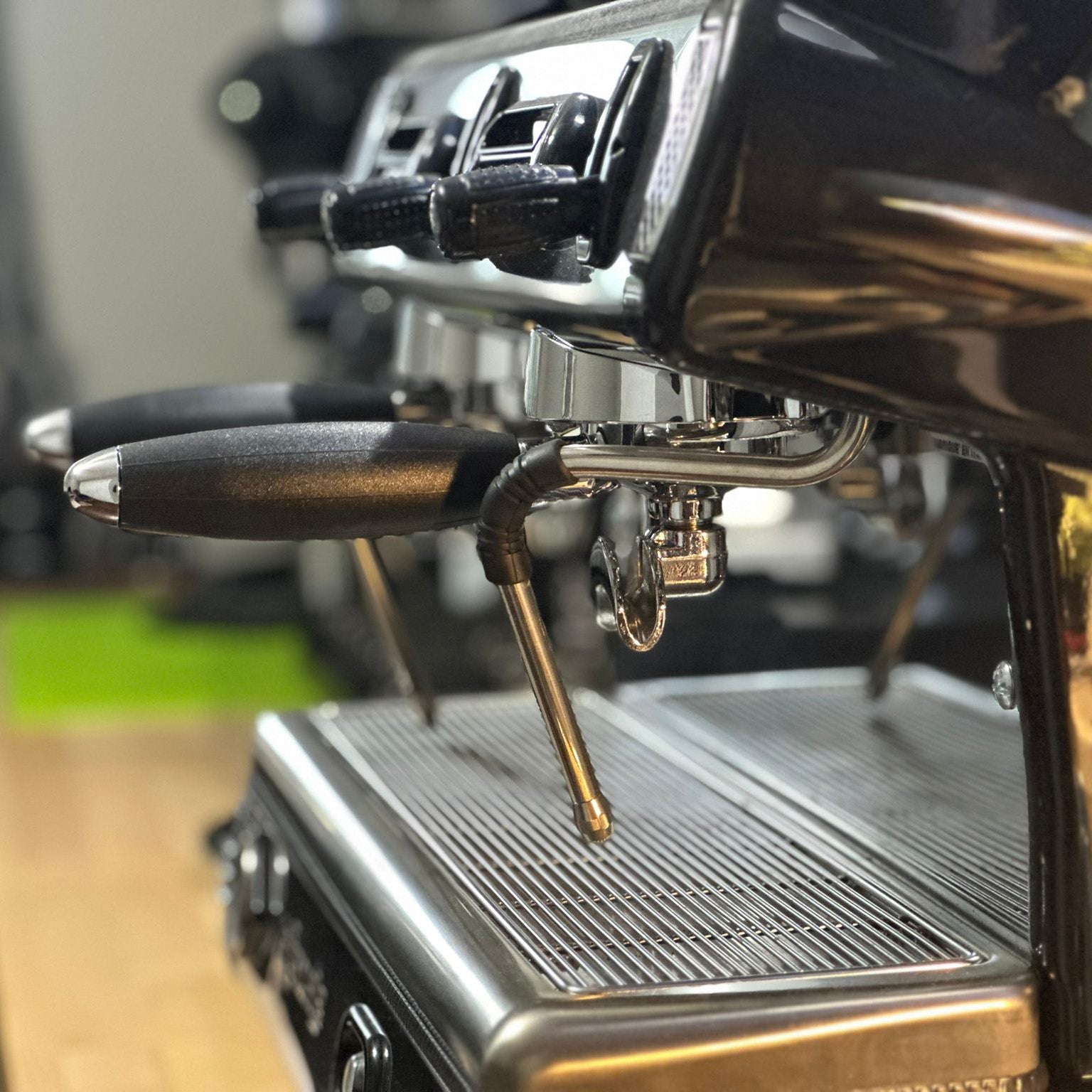
Separate routine operator cleaning from technician maintenance and repair. They serve different purposes. A clean group and steam wand do not prove that internal components, water treatment, electrical connections, and drains are in good condition.
For a concrete example, La Marzocco's Linea PB three- and nine-month checklist, version 2.1 dated May 2026 records water quality and includes specified replacement and inspection work. It is a model-specific technician document, not a universal schedule for every espresso machine.
Ask your qualified service provider to apply the correct current schedule to your model, usage, water conditions, and warranty requirements. Confirm which tasks trained staff may perform and which require a technician. Do not substitute an improvised chemical or general descaling routine for the equipment's instructions.
Build a complete maintenance budget
List planned service visits, labor, travel, model-specific parts, approved cleaning products, water-treatment monitoring and replacement, and any planned downtime. Include the grinder, brewer, refrigeration, and other equipment that the menu depends on.
Ask what the service quote covers. A fixed-price visit may exclude parts, additional faults, travel outside a service area, or work on other equipment. Record the assumptions before comparing providers.
Schedule visits around business needs where possible, but do not postpone required work merely because the machine still produces coffee. Agree how new symptoms should be reported between visits.
Value downtime using contribution
Suppose a hypothetical three-hour interruption prevents sixty orders that would each have contributed $4.00 after costs avoided when those orders are not made. The lost contribution is $240, not the full selling value of all sixty orders.
If some customers buy batch coffee instead, deduct the contribution retained from those substitute sales when estimating the loss. If the orders are only delayed and completed later, do not count them all as permanently lost.
Be careful with labor. If scheduled payroll is paid in both the working and failed scenarios, do not add it again to a lost-contribution figure that already accounts for the comparison properly. Additional call-out labor or overtime caused by the failure is a separate incremental cost.
| Emergency cost in a hypothetical incident | Amount |
|---|---|
| Repair labor and parts | $650 |
| Additional emergency travel charge | $150 |
| Lost contribution from unserved orders | $240 |
| Product discarded because of the incident | $35 |
| Additional paid recovery work | $55 |
| Total modeled incident cost | $1,130 |
These figures illustrate what to record. They are not repair-price averages and do not establish the chance of an incident occurring.
Do not compare a certain fee with an invented failure
A planned maintenance program might cost less than one serious interruption, but that alone does not prove its return. Some failures occur despite maintenance, and some machines operate without a failure during the period being compared.
Use service history, technician findings, usage, and condition to discuss which problems the planned work is intended to detect or reduce. Where likelihood is uncertain, present a range of possible incident costs instead of assigning an unsupported probability.
You can still make a sensible decision without a perfect probability model. The business may prefer a predictable maintenance expense and better knowledge of equipment condition, especially where a failure would cancel a booked event.
Keep emergency reserves in the budget even with a good maintenance program. Preventive work reduces some risks; it does not create a guarantee of uninterrupted service.
Keep a record that helps the next technician
Maintain the equipment model, serial number, installation date, service contact, warranty documents, water-treatment details, cleaning schedule, and repair history. Record dates, symptoms, work performed, parts replaced, and any follow-up recommendation.
When a symptom appears, note what was happening: several milk drinks in succession, a refill, a startup, or a particular group in use. Save error messages or photographs where safe. Do not repeatedly restart faulty equipment to keep serving through an unresolved hazard.
These records help distinguish a recurring fault from an unrelated event. They also make a replacement discussion more useful than “the machine has been expensive lately.”
Prepare a reduced-service plan
Decide what you can safely offer if the main machine is unavailable, given the nature of the failure and the utilities still available. A safe independent batch-brew setup may help in some situations; it is not an alternative when the site's water or power is unsafe.
Mississippi State University's emergency planning guidance for food businesses emphasizes preparation and assigned responsibilities. Apply that to who stops affected service, contacts support, protects product, and communicates with customers or event hosts.
For a cart, check what happens to a booked event if the machine fails during transport or setup. Confirm any backup or rental arrangement in advance. Do not assume a supplier provides a loan unit unless that is an actual agreement.
Discuss equipment suitability and support arrangements with Dylan and the commercial equipment team, and use a qualified provider for the maintenance your model requires.
Sources and further reading
- La Marzocco: Linea PB three- and nine-month maintenance checklist — model-specific technician work and water-quality record.
- Mississippi State University Extension: emergency action plans — planning roles and response procedures.
Incident costs are hypothetical. Sources reviewed September 9, 2026.