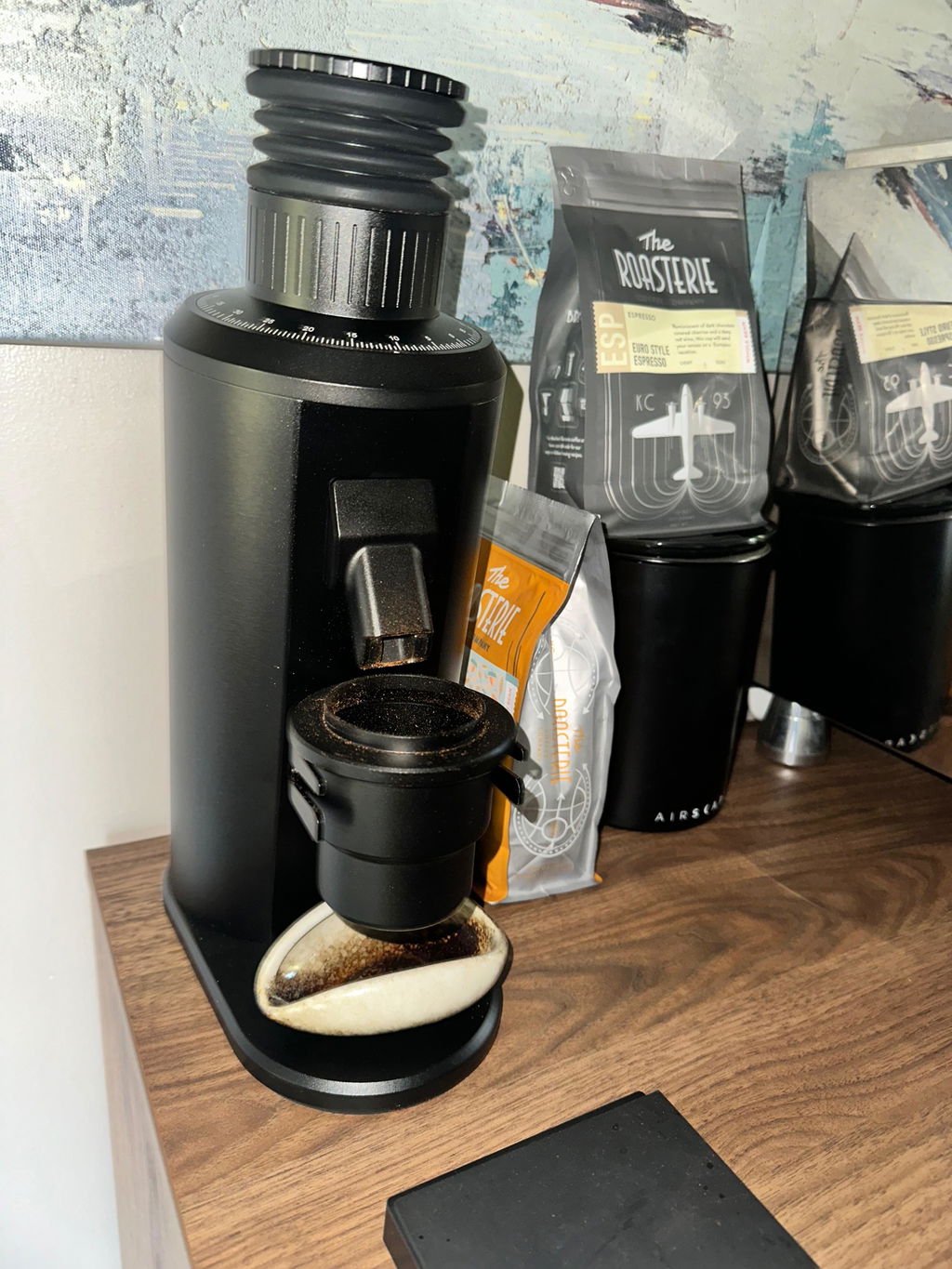
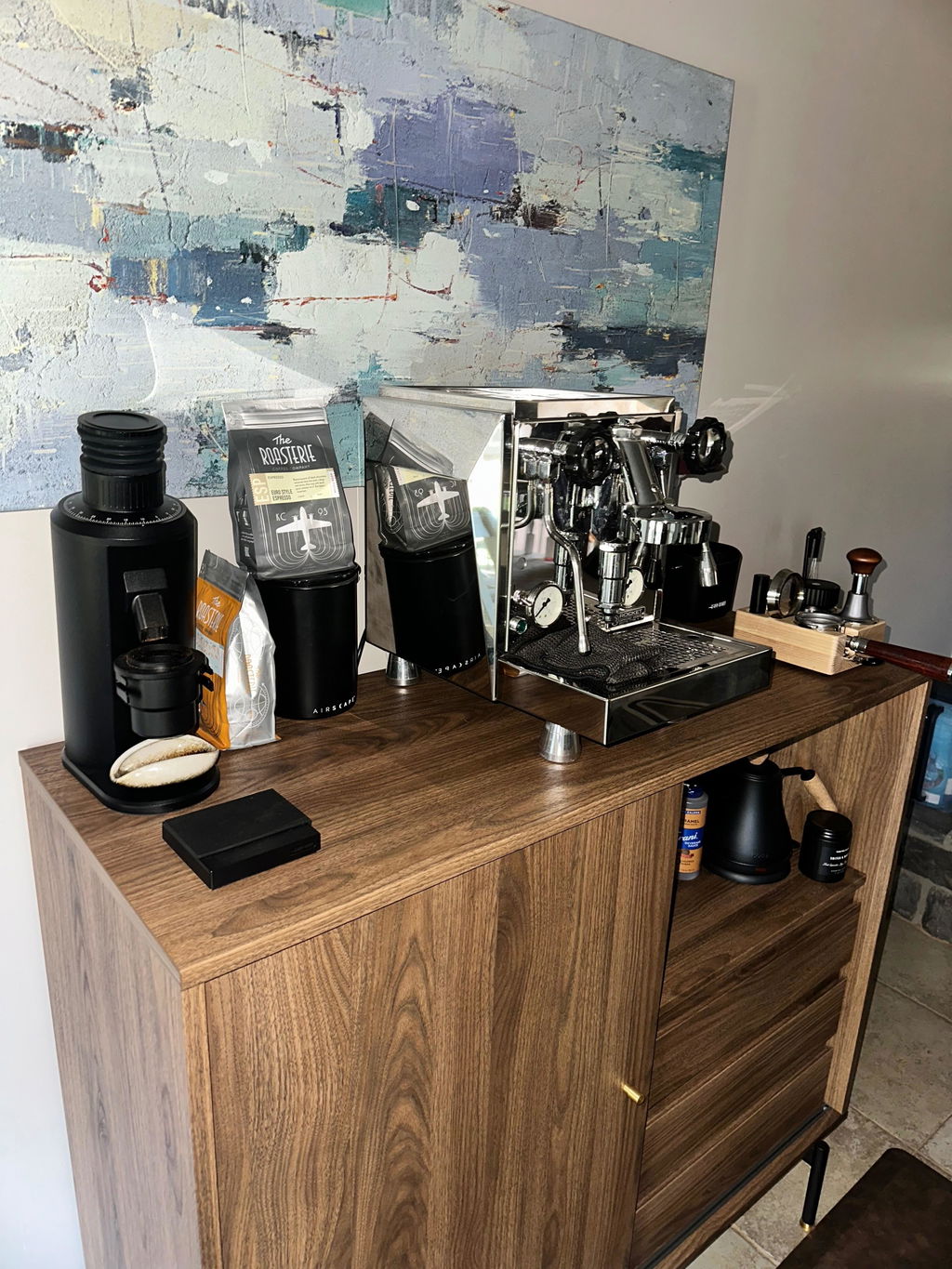
LeverCraft Ultra Grinder: Complete History and Buyer Guide
The LeverCraft Ultra was an ambitious Austin-built 98 mm variable-speed grinder centered on extreme alignment and a compact footprint. It became widely discussed after its 2020 launch and a James Hoffmann review, but current retail and support status are no longer straightforward. A useful 2026 guide must document both its engineering and the risks of buying an orphaned boutique platform.
Editorial disclosure: Espresso Outlet does not sell LeverCraft Coffee grinders. This independent guide compares the brand with grinders we do carry. Availability, production batches, burr options, voltage and warranty coverage can change; information was reviewed in September 2026.
LeverCraft Coffee grinder guide: quick conclusions
- Ultra used 98 mm flat SSP burrs, a powerful servo drive and approximately 100–1500 RPM adjustment.
- Its stainless lower carrier was advertised with less than 0.01 mm runout and each grinder received individual alignment work.
- Later development included blind-burr configurations, making exact generation essential.
- Before buying used, confirm whether LeverCraft still provides parts or service; do not value it like a currently supported retail grinder.
LeverCraft Coffee history
LeverCraft Coffee operated in Austin, Texas, initially known for espresso equipment, service and the LeverCraft Ultra project. Founder Eric Mann designed the grinder around the idea that alignment and carrier stiffness limited the performance of large flat burrs.
The Ultra was announced in 2020 with machined 6061-T6 aluminum, a hardened SUS304 stainless lower carrier and a 98 mm SSP platform. Its narrow tower and external electronics delivered a full-size burr system in less counter width than a commercial EK43.
The grinder attracted international attention, but boutique production and company changes complicated long-term availability. Official product ordering and active support should be verified directly in 2026. Articles and videos remain historical evidence, not proof that new units or every replacement component can be purchased.
Complete current and legacy model directory
LeverCraft essentially produced one grinder platform with meaningful burr and production revisions. This table separates the announced production Ultra, later blind-burr work and prototypes without inventing unrelated models.
| Model or version | Burr system | Workflow and specifications | Status and intended user |
|---|---|---|---|
| LeverCraft Ultra production grinder | 98 mm SSP flat burrs in early standard-mount configurations | 100–1500 RPM servo motor, stepless adjustment, compact single-dose body | Limited/legacy; high-end enthusiast |
| Ultra blind-burr configuration | 98 mm blind flat burrs with dedicated carrier | Revised uninterrupted cutting face and precision mounting | Later limited configuration/development |
| Ultra prototype and review units | Generation-specific 98 mm configurations | Early controls, feed and alignment demonstrations | Prototype/pre-production history |
| LeverCraft alignment and EK43 services | Alignment tools/services rather than a separate grinder | Precision carrier and burr-alignment work | Historical company service |
LeverCraft Ultra production grinder
The original Ultra combined a 1300-watt-class servo system with 98 mm flats and extensive alignment. A magnetic or compact feed system and short chute aimed at low retention.
Its impressive motor rating does not define cup quality. Installed SSP geometry, alignment under load, declumper and feed technique remain central.
Ultra blind-burr configuration
LeverCraft publicized blind burrs near initial production. Removing face screws requires a purpose-built carrier and changes compatibility.
A used listing must show the actual burr face and carrier. Standard SSP and blind configurations should not be priced or serviced as identical.
Ultra prototype and review units
High-profile reviews often covered early or specially prepared machines. Their findings explain the design but may not represent later shipping units.
Ask whether a used grinder was a prototype, review sample or customer-production build. Parts can differ.
LeverCraft alignment and EK43 services
LeverCraft’s alignment expertise informed Ultra and other grinder work. These services are part of brand history but not additional coffee-grinder models.
Do not list an aligned EK43 as a LeverCraft grinder; it remains a Mahlkönig modified or serviced by LeverCraft.
Engineering analysis: burrs, drive and adjustment
Ultra’s most defensible performance claim was mechanical: a stiff, carefully aligned carrier reduces uneven burr gap. Alignment does not mean every grinder produces one narrow particle size, but it lets the burr geometry operate closer to its design.
A servo motor can deliver controlled speed and high torque across a wide range. Extremely low RPM increases cycle time and can alter feed. High RPM changes throughput and heat. Test speed only after the burr gap is dialed.
Blind burrs remove central screw heads from the cutting face but require proprietary mounting. Their usable area and feed differ from standard 98 mm SSP burrs; neither name alone predicts preferred flavor.
LeverCraft Coffee compared with Espresso Outlet grinders
The closest supported alternatives are variable-speed large-flat single dosers. None duplicates Ultra’s exact carrier or motor, but they deliver its core practical functions with current retail support.
| LeverCraft Coffee reference | Comparable grinder | Why compare them | Important difference |
|---|---|---|---|
| Ultra 98 mm variable speed | Turin DF83V | Large flats, variable speed and single dosing | DF83V uses smaller 83 mm burrs but current parts and a much lower price. |
| Ultra clarity role | Turin DF64V | Variable-speed flat-burr experimentation | DF64V uses 64 mm flats and a broad affordable burr ecosystem. |
| Ultra fixed-speed alternative | Turin DF64 Gen 2 | Low-retention single dosing with replaceable flats | DF64 omits variable speed and large 98 mm geometry, simplifying ownership. |
| Commercial large flat | Commercial grinder collection | Current high-throughput grinders and service | Commercial hopper machines sacrifice single-dose purity for serviceability. |
A working Ultra can remain exceptional. The comparison changes once repair risk is priced: DF83V may be the better purchase even if Ultra’s machining is more exotic.
Choosing by coffee and workflow
Traditional espresso
With traditional espresso burrs, Ultra can produce dense texture. Confirm the installed 98 mm geometry.
Modern light-roast espresso
Clarity-focused SSP or blind sets suit modern espresso, but alignment and feed must be maintained.
Filter coffee
Ultra’s speed range and large flats can serve filter; its price and scarcity may justify a separate filter grinder.
Single dosing versus hopper service
It is a strict single-dose design, not the right tool for rapid hopper-fed café service.
A practical grinder test
Marketing claims such as zero retention, commercial grade and espresso capable are not standardized. Weigh five identical doses to 0.1 gram, grind without changing the setting and weigh every output. Record the spread, visible static, grind time and cleanup. This estimates immediate retention and dose repeatability. It does not fully reveal exchange, because old coffee can leave while an equal mass of new coffee remains. Test exchange by following a dark roast with a visibly light roast and inspecting the first output.
For espresso, hold dose and beverage yield constant and prepare three shots at nearby settings. Record time to first drip, total shot time and taste. A useful adjustment system lets the barista move gradually from fast and thin toward balanced without jumping directly to choked. For filter, hold brewer, paper, water and pouring pattern constant, then record drawdown and flavor. Do not change speed, burr gap and dose simultaneously.
Measure workflow separately from flavor. Time loading, grinding, transfer, distribution and cleanup. Note whether the dosing cup fits the basket, whether a hopper closes before removal, whether controls can be reached during grinding and how much coffee must be purged when switching to decaf. A grinder can make excellent grounds but still be wrong for the owner’s daily routine.
Dialing in LeverCraft Coffee
Start at a known RPM and approach burr zero cautiously. Record setting, RPM and burr set together.
Purge after changes and use identical bean-feeding technique. Large flats can respond to feed rate as much as RPM.
If the grinder sounds uneven or shows rub through part of a revolution, stop. Alignment diagnosis requires measurement, not random shimming.
Retention, static and burr seasoning
Ultra was designed for low retention, but the chute, declumper and burr chamber still exchange coffee. Measure with consistent RDT and purge. A clean input/output figure on an individually aligned review sample should not be copied as a guarantee for every used unit.
Retention and exchange are different measurements. Near-equal input and output do not prove that the chamber contains no old coffee. Static also changes with humidity, roast and chaff. Use a consistent technique before comparing grinders. If the manufacturer permits a light RDT mist, apply the same amount each time; excess water can promote corrosion or contaminate electronics.
New burrs often become more stable after normal use, but there is rarely a reason to waste large quantities merely to satisfy an arbitrary internet seasoning number. Clean manufacturing residue as directed, brew coffee, track results and let performance—not a calendar—decide when the burrs have settled.
Cleaning, parts and long-term ownership
Current LeverCraft service availability is the largest ownership uncertainty. Obtain written confirmation before purchase and identify independent technicians willing to work on the servo, controller and carrier.
The external electronics, motor controls, proprietary blind carrier and machined body are not generic appliances. A failed board can immobilize otherwise excellent burrs.
Unplug the grinder or disconnect its battery before opening it. Follow the exact manual, keep steel burrs dry and clean mating surfaces before reassembly. Burr diameter alone does not establish compatibility: thickness, mounting pattern, rotation, carrier clearance and cutting geometry must match. Save specialized tools, original packaging, invoices and configuration records.
Buying used or importing LeverCraft Coffee
Demand a continuous video across RPM, close-up burr and carrier photos, production number, configuration and alignment record. Ask directly about electrical noise, startup faults and replacement electronics.
Original packaging is critical. A precision carrier can be knocked out of alignment in poor shipping. Insure for replacement value only after confirming what replacement actually exists.
Confirm voltage, frequency and warranty before importing. A plug adapter changes connector shape; it does not convert 230 volts to 120 volts. With boutique equipment, return freight and unavailable electronics can dominate ownership cost. Ask in writing who supplies burrs, motors, controllers, batteries, hoppers and proprietary carriers.
LeverCraft Coffee FAQs
Who made the LeverCraft Ultra?
LeverCraft Coffee in Austin, Texas, developed and produced the grinder.
What burr size does Ultra use?
It was built around 98 mm flat burrs, including standard SSP and later blind configurations depending on generation.
What was its RPM range?
Launch specifications described roughly 100–1500 RPM.
How powerful was the motor?
Public launch information described a 1300-watt-class servo motor.
Is Ultra still made?
Current new-production and service availability should be confirmed directly. Do not rely on a historical product announcement.
What made its alignment special?
LeverCraft emphasized a hardened stainless carrier, very low measured runout and individual alignment.
Are all Ultra burrs interchangeable?
No. Standard-mount and blind burr carriers differ; geometry and clearance must be verified.
Ultra or DF83V?
Ultra offers 98 mm boutique engineering; DF83V offers current 83 mm variable-speed performance with easier support.
Can Ultra grind filter coffee?
Yes, depending on burrs, but its primary reputation is high-end espresso and experimental single dosing.
Was the James Hoffmann grinder a standard unit?
It was an early reviewed example. Buyers should identify whether later production changed relevant components.
Can an EK43 technician repair it?
Not automatically. Shared burr diameter does not make servo electronics, carrier or chassis equivalent.
What is the biggest used-buying risk?
Unavailable electronics or service, followed by shipping-related alignment damage.
LeverCraft Coffee buyer checklist
Before ordering, write down the exact burr configuration, power or manual-drive requirement, normal dose, roast style and number of consecutive drinks. Ask the seller to identify every included accessory and demonstrate operation with beans. Compare total landed cost—including freight, tax, replacement burrs and likely return shipping—with the supported alternatives above. Boutique construction is valuable when it solves a defined need; it is not a substitute for a service plan.
After delivery, photograph the rating plate and burr configuration, save the packaging, establish a clean zero reference and record baseline grind times. These simple records make future troubleshooting more objective and protect resale value.
Final verdict
LeverCraft Ultra deserves recognition as an influential American boutique grinder built around alignment, torque and 98 mm burrs. In 2026, however, current support is part of performance. A used Ultra is appropriate only for a buyer who verifies parts and accepts risk; DF83V is the rational supported alternative.
For an alternative with Espresso Outlet support, browse home coffee grinders, review commercial grinders, or contact us with your machine, basket, roast style, daily volume and preferred dosing workflow.
Sources and further reading
- Daily Coffee News Ultra launch report — original specifications and company history
- James Hoffmann: LeverCraft Ultra — independent workflow and performance review
- LeverCraft Coffee archive — company updates and later burr information
Last researched and reviewed: September 2026. Verify the exact shipping model and regional specification before purchase.
The Ultra’s engineering proposition in practical terms
The LeverCraft Ultra paired 98 mm SSP flat burrs with a powerful servo drive and an exceptionally broad published speed range. Its machined 6061-T6 aluminum structure and stainless lower carrier were intended to maintain alignment under load, while the motor architecture supplied ample torque at low RPM. LeverCraft publicized runout below 0.01 mm. That is a machining claim, not a guarantee that every used example remains aligned after shipping, burr swaps or owner service.
The Ultra’s 100–1,500 RPM range made it a laboratory-like platform, but more settings do not automatically create better coffee. Low speed can change feed behavior and particle distribution; high speed can improve throughput and produce another sensory balance. The useful method is controlled comparison: one coffee, dose, burr set and ratio, with speed changed deliberately and grind corrected as needed.
Blind burrs, standard burrs and configuration history
Later Ultra discussion included blind-burr configurations, in which mounting geometry avoids conventional screw holes in the cutting face. Buyers should not assume every Ultra has blind burrs or that every 98 mm replacement fits every carrier. Identify the carrier, burr brand and burr geometry on the actual unit. If the seller cannot document a modification, ask LeverCraft or a qualified grinder technician before ordering parts.
Because the Ultra evolved in small production rather than through a mass-market annual catalog, “complete model list” is best understood as one core Ultra platform with production revisions and options—not a conventional family of many retail models. Articles, videos and social posts establish historical configurations; they do not establish 2026 inventory.
Current availability and support due diligence
As of this guide’s research date, consistent current retail availability was not readily verifiable from a conventional live product catalog. Prospective buyers should contact LeverCraft directly and obtain written confirmation of price, build status, warranty, replacement electronics, burr-carrier support and expected service turnaround. A past announcement or review is not proof that a new order is available today.
For used grinders, request a cold-start and loaded-grinding video across several speeds. Confirm the power supply, local voltage compatibility, adjustment travel, carrier condition and all included accessories. Original packaging is especially important; a precision 98 mm grinder can be damaged by poor immobilization during shipping even when the exterior looks intact.
Who the Ultra still makes sense for
The Ultra remains compelling to an enthusiast who specifically wants a 98 mm variable-speed platform, appreciates small-maker engineering and accepts direct support as part of ownership. It is a weaker fit for someone who values immediate replacement parts, standard retail warranty handling or a predictable off-the-shelf purchase.
Alternatives available from Espresso Outlet
The Turin DF83V is smaller at 83 mm but preserves the most important experimental features: large flat burrs, single dosing and speed control. The Turin DF64V offers the same general workflow with a broad 64 mm burr ecosystem. Neither recreates the Ultra’s servo system or 98 mm scale, but both reduce acquisition risk and simplify parts sourcing.