



Latte-Art Milk Pitchers
A latte-art pitcher is a milk-steaming jug selected not only for steaming capacity but also for pour control. Size, body shape, spout geometry, handle position, and balance all influence how easily a barista can texture milk and place foam on the surface of espresso.
Choose the right size
The pitcher should match the amount of milk being steamed. Milk needs room to expand and circulate, but an oversized pitcher can make it difficult to create a strong whirlpool with a small volume. Common café sizes are roughly 12, 15–17, and 20 ounces, though exact capacity varies.
Spout shape changes control
A narrow, sharper spout can help with fine lines and detailed rosettas. A rounder or wider spout can make broad hearts and tulip pushes easier. Neither is inherently better; experienced baristas can pour many patterns from either style.
Handle, handleless, and balance
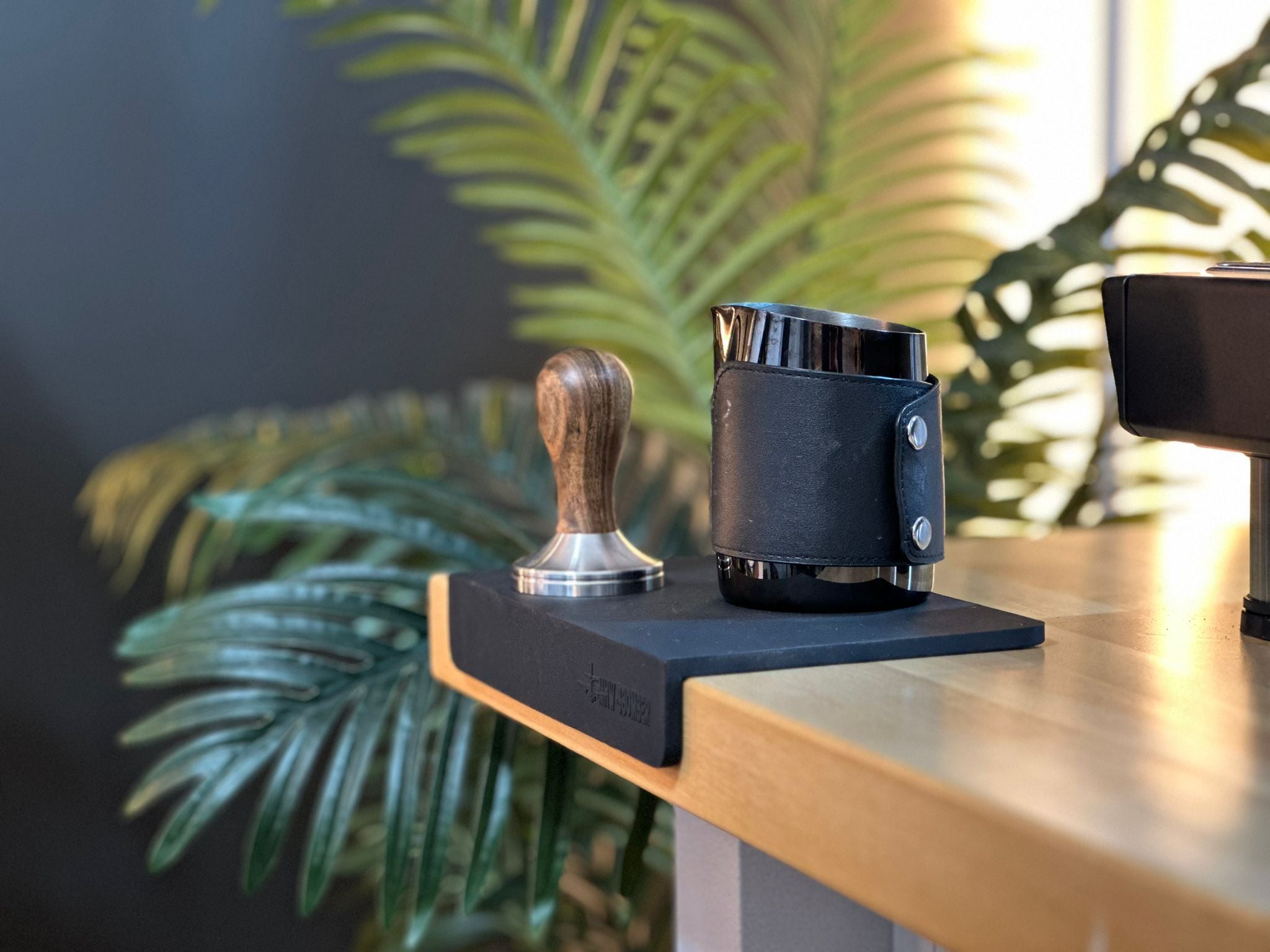
Traditional handles give a repeatable grip and protect fingers from the hot pitcher body. Handleless pitchers allow freer hand positioning but require an insulating sleeve or careful technique. The pitcher should feel balanced when partially full, because wrist control matters during the final close-to-surface phase of a pour.
Pitcher shape and milk rolling
A well-shaped base helps milk circulate after aeration so larger bubbles are incorporated into glossy microfoam. Pitcher choice cannot compensate for poor steam-wand positioning, but a comfortable jug makes consistent technique easier.
For the broader pouring process, see our microfoam guide and the Coffee Glossary.