



E61 Cam Lubrication: Why the Brew Lever
E61 cam lubrication is the maintenance of the cam and valve-contact surfaces inside a traditional E61 brew-group lever mechanism. The cam converts the barista's lever movement into valve movement, and it depends on a thin film of appropriate food-safe lubricant for smooth operation.
What the E61 cam does
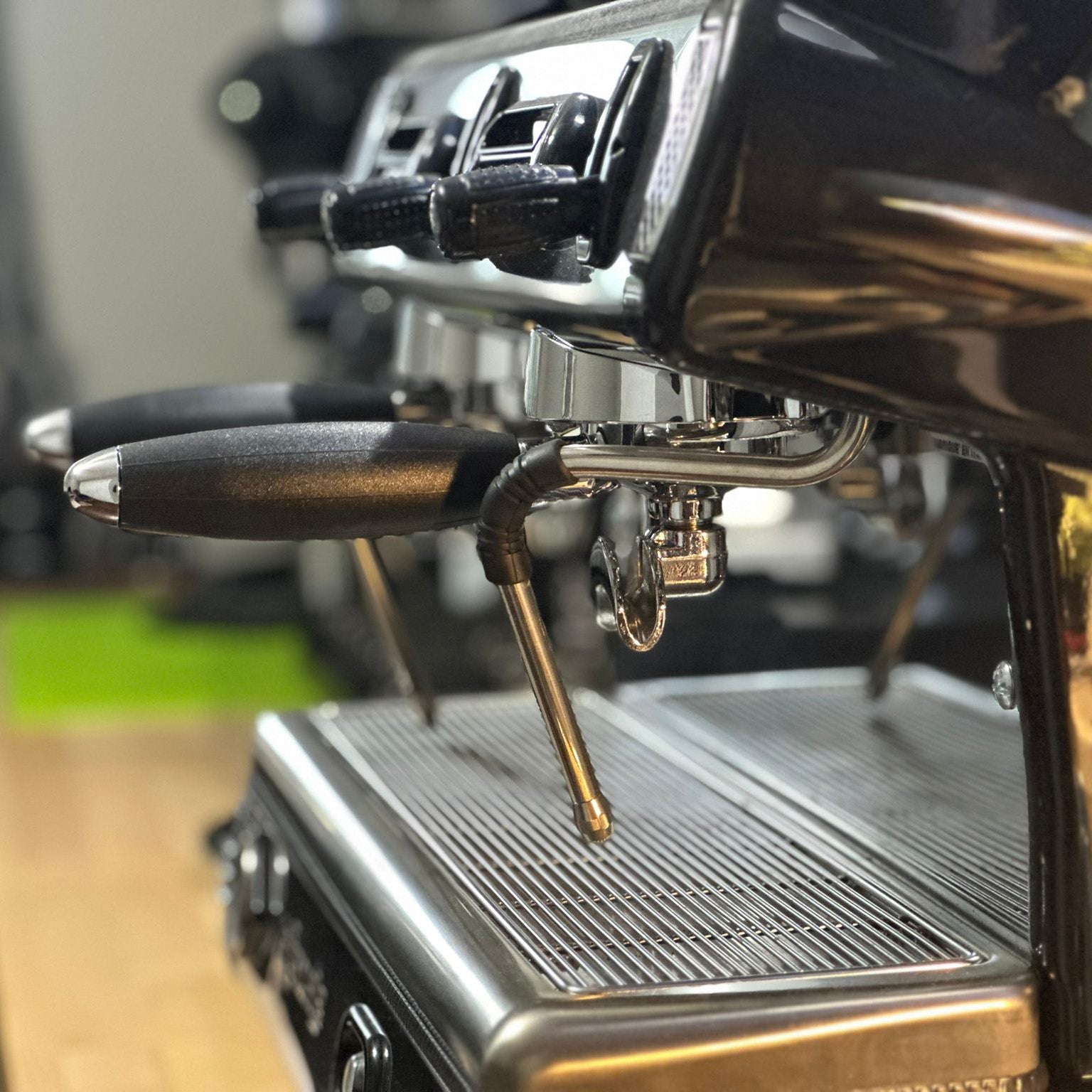
Inside a traditional lever-operated E61 group, the brew lever rotates a cam. As the cam turns, it pushes valve pins that control water entering and exhausting from the group. The familiar mechanical feel of the lever comes partly from those metal contact surfaces and spring-loaded valves.
When lubrication is healthy, lever movement is smooth. When the lubricant is washed away or dries out, the lever may squeak, feel stiff, or develop a rough notchy motion.
Why detergent backflushing affects lubrication
Espresso-machine detergent is designed to remove coffee oils. It can also strip lubricant from the cam and valve-pin contact areas. After a detergent backflush, some E61 groups become noticeably squeaky even though nothing is mechanically broken.
Our published comparison of backflushing vs descaling explains what each cleaning process is intended to remove.
What lubricant should be used?
Use only a lubricant specifically suitable for food-equipment applications and compatible with the seals and temperatures in the espresso machine. Follow the machine manufacturer's maintenance guidance. General-purpose automotive, petroleum, spray, or household lubricants are not appropriate substitutes inside a brew group.
Do not over-lubricate
The goal is a very small amount on the intended cam/contact surfaces—not packing the group with grease. Excess material can attract contamination or migrate where it does not belong. If the lever remains stiff after appropriate lubrication, worn valve pins, seals, springs, cam surfaces, scale, or incorrect assembly may be responsible.
How often is lubrication needed?
There is no universal calendar interval. Usage, detergent-backflush frequency, water, and machine design all matter. A change in lever feel after cleaning is a more useful signal than lubricating frequently for its own sake.
If disassembly is required, disconnect the machine from power, allow hot components to cool, relieve pressure, and follow the manufacturer's service procedure. Owners who are not comfortable working around hot pressurized espresso equipment should have the group serviced professionally.
Browse home espresso machines and explore more definitions in the Coffee, Espresso & Brewing Equipment Glossary.