


Microlot, Nanolot, Community Lot, & Blend
Specialty-coffee bags often say microlot, nanolot, community lot, day lot, single producer, or regional blend. These terms can communicate how coffee was separated and traced, but they are not protected quality grades with universal size limits. A “microlot” from one exporter may be larger than a “community lot” from another.
The useful question is not whether the label sounds exclusive. It is what the lot represents, how it was assembled, and why it was kept separate.
What is a coffee lot?
A lot is a defined quantity of coffee treated as one traceable unit for processing, storage, quality control, or sale. The boundary can be created by farm, plot, cultivar, harvest date, processing method, tank, drying bed, warehouse batch, cup quality, or contract.
Lot identity may change through the supply chain. Cherries from one day become parchment batches; parchment may be combined after grading; export bags receive new identifiers; an importer may separate or combine inventory for customers.
Microlot
A microlot is generally a smaller, intentionally separated lot with distinctive quality, traceability, or processing. “Micro” is relative to the operation. On a large estate, a microlot might fill many export bags. For a tiny farm, the entire harvest may be smaller.
A meaningful microlot label should explain the separation: a specific plot, cultivar, picking period, process, producer, or cup profile. Small size alone does not guarantee quality.
Nanolot
A nanolot usually indicates an even smaller separation—sometimes one fermentation tank, experimental process, small plot, or exceptional picking. The word has no universal maximum weight.
Nanolots can carry high costs because fixed labor, quality control, documentation, and export logistics are spread across fewer pounds. They may also be impossible to reproduce exactly the following year.
Community lot
A community lot combines coffee from multiple small producers in one region, cooperative, washing-station network, or quality program. This is not inherently less traceable or lower quality. A well-built community lot can provide:
- A stable, repeatable flavor profile
- Market access for producers with volumes too small to export alone
- Efficient milling, grading, and logistics
- A way to pay premiums across a broader group
- Enough volume for a roaster to offer coffee consistently
Transparency should identify the community, station, cooperative, region, or selection program rather than presenting the coffee as one farm.
Day lots and processing separations
A day lot groups coffee picked or processed on one date. A producer might separate each day because ripeness, weather, fermentation, or drying conditions vary. Several excellent day lots may later be combined if they cup similarly.
Processing separations distinguish washed, natural, honey, anaerobic, co-fermented, or other methods. Clear labels should explain additions or experimental inputs. See Espresso Outlet’s published guide to co-fermented coffee and transparency.
Single-origin does not always mean one farm
“Single-origin” can refer to one country, region, cooperative, station, or farm, depending on the seller. It contrasts with multi-origin blends but does not guarantee farm-level traceability. Read the supporting details.
A regional Ethiopian coffee assembled at one washing station can be legitimately single-origin while including hundreds of smallholders. That structure is normal and can produce extraordinary coffee.
Blends
A blend combines coffees to achieve a sensory, cost, or availability goal. Components may come from multiple origins, or a roaster may blend lots from one region. Blending can create consistent chocolate, sweetness, body, and milk-drink performance across seasons.
Blends are not leftovers by definition. Skilled blending requires selecting components that remain balanced after roasting and brewing. For espresso, a blend may be more forgiving and stable than a tiny seasonal lot.
Traceability levels
| Label | Possible traceability | Questions to ask |
|---|---|---|
| Nanolot | Tank, bed, plot, or experimental batch | What specifically made it separate? |
| Microlot | Producer, plot, cultivar, or quality selection | How large was it and why was it selected? |
| Community lot | Named group, station, cooperative, or region | Who contributed and how was quality managed? |
| Single-origin | Country through single farm | What does “origin” mean on this label? |
| Blend | Multiple lots or origins | Was it designed for flavor, consistency, or both? |
Quality and price
Smaller lots often cost more because of scarcity, separation labor, and high cup scores, but size is not quality. A large community lot can be cleaner and sweeter than an experimental nanolot. Novel fermentation can create intensity without balance.
Price also reflects producer payment, logistics, certification, currency, harvest size, and competition. Consumers should value transparent sourcing and delicious coffee rather than rarity alone.
Seasonality and repeatability
Coffee is an agricultural product. A named lot changes with weather, plant health, picking, and processing. A nanolot may disappear after one season. Community lots and blends can be rebuilt to a target profile, making them more dependable for cafés and espresso.
How roasters should communicate lot names
- Define what the lot represents.
- Name the producer group, farm, station, or region accurately.
- Disclose processing additions and experimental methods.
- Avoid implying that “micro” or “nano” is an official grade.
- Explain why the coffee was separated.
- Connect premiums and sourcing claims to verifiable information.
Brewing small lots without wasting them
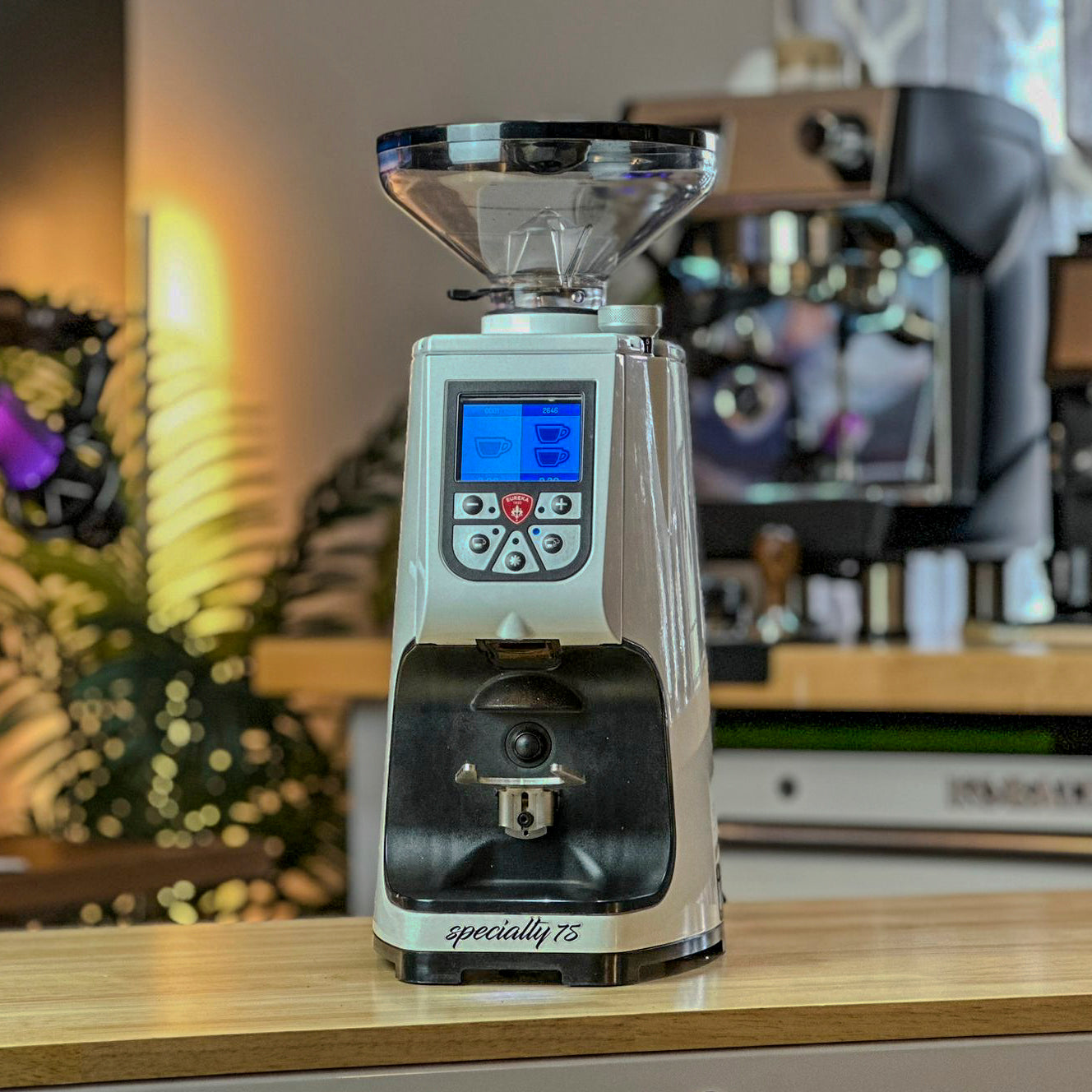
Use a repeatable baseline recipe, then make one change at a time. Single-dose grinders reduce the need to purge rare coffee. The Turin DF54 is a compact option for rotating coffees, while the Turin DF83V gives advanced users a larger variable-speed platform.
Frequently asked questions
How many pounds are in a microlot?
There is no universal limit. Ask the seller or importer for the actual lot size and separation basis.
Is a nanolot always from one farm?
No. It may be a small separation at a cooperative or washing station.
Are community lots less ethical?
Not inherently. They can distribute market access and premiums across many small producers. The payment structure and transparency matter.
Why does the same named coffee taste different next year?
Climate, harvest, processing, storage, and roast change. Agricultural identity does not guarantee identical flavor.
Bottom line
Microlot and nanolot describe relative separation and scarcity, not official grades. Community lots combine producer contributions to create scale and consistency. Single-origin identifies a geographic boundary that may be broad or narrow, while blends intentionally combine lots. Look beyond the prestige word and ask what was separated, who produced it, how it was processed, and why the lot exists.