


Best Commercial Espresso Machines Guide
Coffee Business Resource Center
A high-volume café needs an espresso setup that keeps making the intended drinks when orders arrive together and keep coming.
That involves the machine, but also the grinders, milk station, staff roles, stock, and handoff. The best machine purchase addresses the work that is limiting your bar.
The Aurelia Wave Volumetric, Aurelia Wave Digit, and Nuova Aurelia XT are three options from our commercial range worth comparing for a busy café. They offer different control and workflow choices. This guide uses current listings and manufacturer documents rather than claiming a hands-on speed ranking.
Define the rush you need to serve
Start with actual order data if you have it. Look at the busiest short periods, the length of the rush, and the drinks ordered together.
Count extraction cycles as well as drinks. Include extra espresso, decaf, cup sizes, milk alternatives, and hot-water use.
Watch the bar during those periods. If groups are regularly occupied while prepared doses wait, more brewing positions may help. If groups sit empty while staff wait for grinding or milk access, another part of the station needs attention.
A daily total doesn't tell you whether the bar is keeping up. Your shortlist should be based on the service pattern and a clear understanding of where orders wait.
The shortlist at a glance
| Machine | Reason to compare it | What to establish in a demonstration |
|---|---|---|
| Aurelia Wave Volumetric | Programmed dosing with a conventional control arrangement and display | Whether its controls and configured steam system suit the team |
| Aurelia Wave Digit | Touchscreen operation with additional workflow and diagnostic features | Whether the interface and auto-purge improve the actual routine |
| Nuova Aurelia XT | A different workstation platform with configuration-dependent automation options | Which options are included and how they work with your menu and grinders |
All three are listed by Espresso Outlet in two- and three-group versions. Confirm current availability, exact configuration, and package pricing through the linked product pages or a written quote.
Aurelia Wave Volumetric: programmed dosing for an organized bar
The Aurelia Wave Volumetric is worth considering when the team wants programmed extraction stopping and a conventional control arrangement.
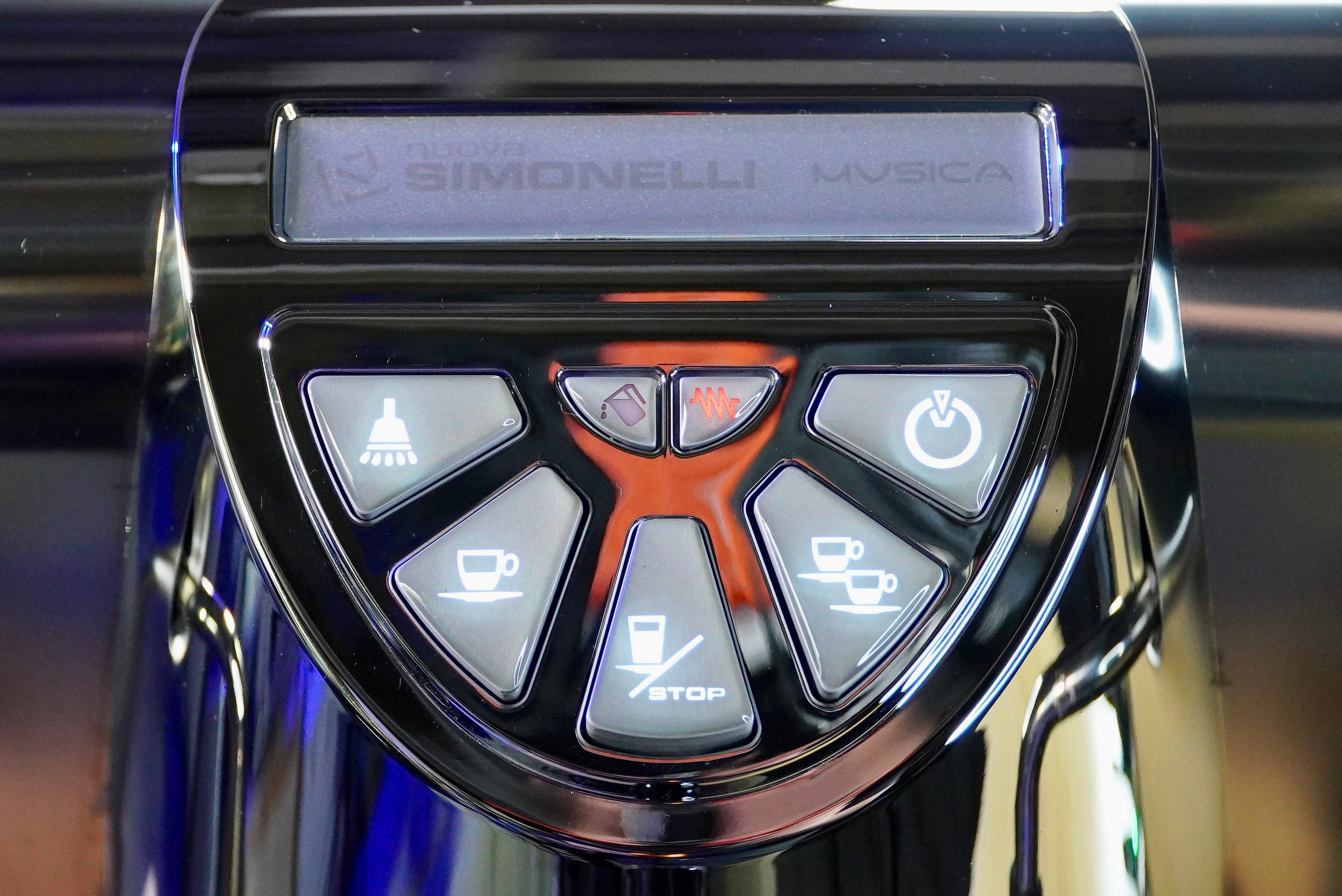
Its current listing identifies volumetric dosing and a TFT display for programming and operating information. The operator can begin another appropriate task while a programmed extraction completes.
The value depends on the routine around it. Staff still need to dose and prepare coffee consistently, check beverage yield and taste, and keep the order sequence clear.
Ask which steam configuration is being quoted. Available automation options should be evaluated against the menu and included explicitly if you want them.
In a demonstration, have the team make repeated mixed orders. Watch the combination of brewing, milk work, and handoff rather than judging the machine from one fast sequence performed by someone who knows it well.
This is a useful starting point when programmed dosing meets the operating need and the team is comfortable with the interface. More elaborate controls should solve an identifiable problem before they become a reason to spend more.
Aurelia Wave Digit: a different interface and operating tools
The Aurelia Wave Digit adds touchscreen operation, auto-purge, and enhanced diagnostic information in the current U.S. configuration described on our product page.
Those features are worth comparing if your shift leads will use them to manage settings and routine care. Ask to see the everyday screens, cleaning process, alerts, and recipe programming.
Have someone from your own team use the interface during the demonstration. A feature's practical value is easier to judge when the person responsible for the shift can explain how it helps their work.
Auto-purge can support a repeatable between-extraction routine, but it doesn't remove the need for the manufacturer's complete cleaning procedure.
Keep the model identity clear. Digit and T3 are separate versions; a T3 feature in a range brochure should not be assumed to exist on the Digit being quoted. Use the correct manual and configuration documents from Simonelli's equipment archive.
Choose Digit because the controls and operating tools suit the business. A touchscreen by itself doesn't establish higher drink output than another model with the same group count.
Nuova Aurelia XT: compare the whole configured workstation
The Nuova Aurelia XT is a separate platform from Aurelia Wave. The current U.S. listing includes a touchscreen interface and describes a workstation with configuration-dependent milk and connected workflow options.
It deserves consideration when you have a specific reason to evaluate those options, such as standardizing milk preparation or coordinating compatible machine and grinder functions.
Ask for the exact build in writing. E-Milk, C-Automation, and related technologies should not be assumed to be included simply because the platform can support them.
If an option is important to the purchase, demonstrate it with the relevant cups, milks, recipes, and compatible equipment. Ask what staff still need to do, what cleaning it adds, and how it is supported.
For a multi-location business, consider how recipes, training, maintenance, and settings will be managed across sites. A system is useful when the people responsible can operate and support it consistently.
The newer platform is not automatically the better purchase for every café. Compare its configured benefits and complete cost with what the Wave options already provide for your menu.
Two groups or three?
Choose the group count after studying the extraction workload and testing the station. A third group is useful when the workflow can keep another brewing position productively occupied.
It also needs room. Simonelli's U.S. installation sheets list both the Aurelia Wave and Nuova Aurelia at 32 inches wide in two-group form and 41 inches in three-group form. Depth and height differ between the platforms. Wave two group, Wave three group, Nuova Aurelia two group, Nuova Aurelia three group.
Draw the extra nine inches on the complete counter. Check what happens to the grinders, milk station, finishing area, and staff movement.
Three groups on one machine also share parts of the installation and machine systems. They should not be treated as a separate backup machine.
Put sustained milk service into the comparison
Use the actual sizes and proportions of milk drinks you sell. Include hot-water drinks if the machine will supply them.
Run the sequence long enough to resemble the rush. Watch whether steaming or finishing creates a growing backlog and whether the drinks remain consistent.
If considering automated milk functions, evaluate the configured system rather than a generic promise of automation. Include alternative milks, cleaning, recipe changes, and the training your team will need.
Don't leave the grinders out of the budget
Compare the machine with a commercial grinder setup that can support the coffee program. Include the method for decaf and any second coffee.
Observe dose preparation, adjustments, stock refills, and movement between tasks. These can limit the station even when the machine has available groups.
Also include refrigerator access, cups, ice where needed, and an order system that makes handoff clear. A well-specified machine still depends on those supporting jobs.
If the business already operates, use observed delays to decide which changes belong in the same project.
Prepare the site and service plan before ordering
Give the exact installation documents to the qualified professionals responsible for power, water, drainage, and the counter. Don't reuse another model's electrical figures.
Specify water treatment from the actual supply and the selected manufacturer's requirements. Agree on installation, startup, training, maintenance, and recordkeeping.
Ask who provides service locally and how warranty work is arranged. Clarify labor, travel, parts, and any other terms in the written agreement.
For a trailer or mobile operation considering equipment at this scale, have the builder assess the complete loaded installation and utility arrangement. A machine's commercial capability doesn't establish that it suits a particular mobile build.
Compare the result and the complete quote
By the end of the process, you should know which configuration completes your test service consistently, which features the team will use, and what the installed package costs.
Include the grinders, water system, site work, delivery, commissioning, training, and support alongside the machine price.
You can send our commercial team your peak order data, menu, counter plan, utilities, and location. That gives us a practical basis for comparing these and other commercial espresso machines.
Sources and further reading
- Simonelli USA: equipment documents, for model-specific manuals and installation sheets.
- Aurelia Wave manufacturer brochure, with features separated by version.
- Current Espresso Outlet listings for Wave Volumetric, Wave Digit, and Nuova Aurelia XT.
Specifications and listed configurations checked September 8, 2026. This is a use-case shortlist from published information, not a measured output ranking. Verify included options on the final quote.