


Should You Spin the Tamper After Tamping
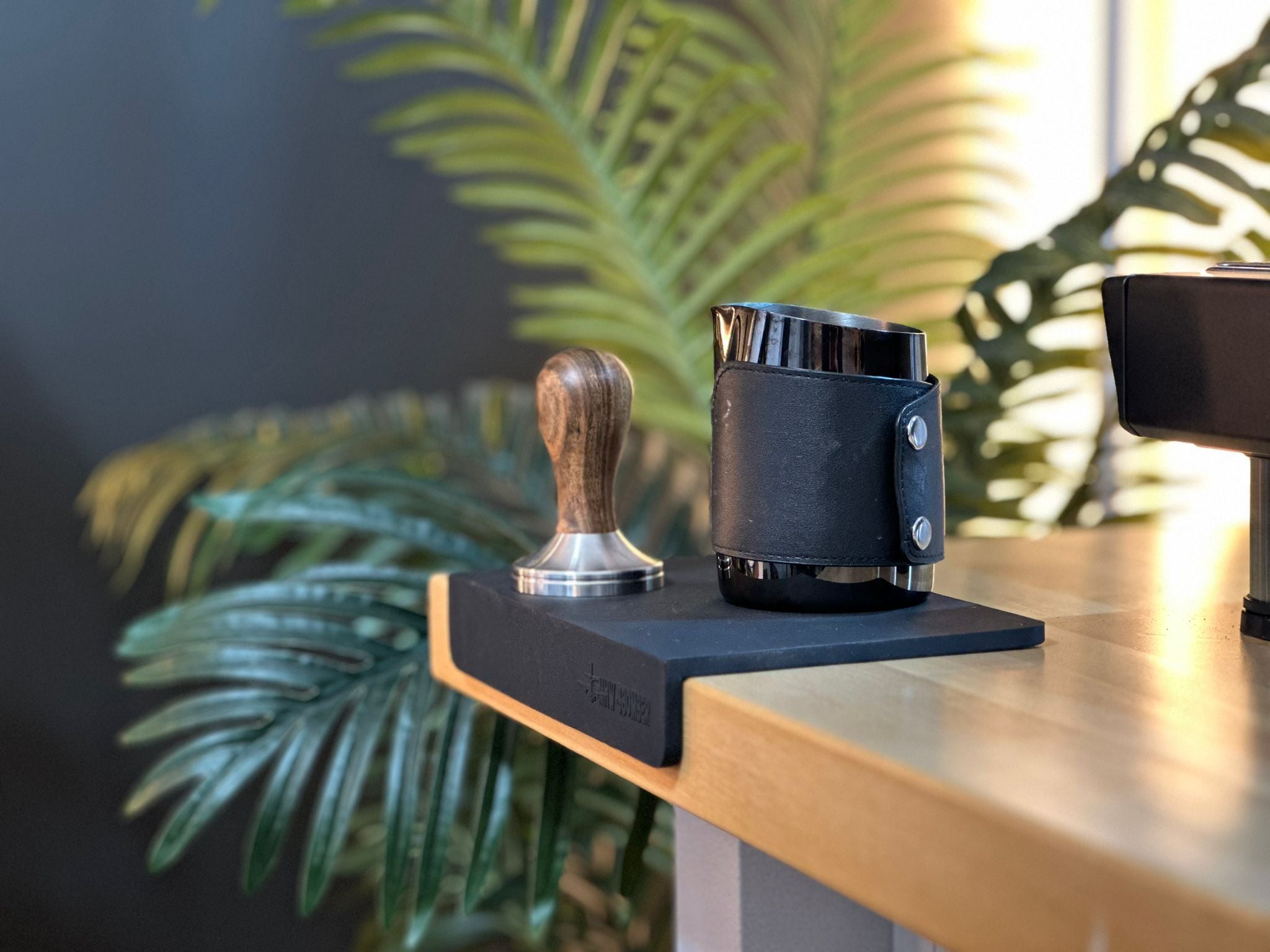
You do not need to spin the tamper after tamping espresso. The finishing twist, often called polishing, can smooth the puck’s appearance, but a glossy surface does not establish better extraction. A level tamp followed by a clean, straight lift is a simple, repeatable approach.
What polishing does—and does not show
A twist can change how the top layer looks. It does not tell you whether the grounds underneath are evenly distributed or whether water will flow uniformly through them. Barista Hustle’s discussion of tamper polishing explains why it is an unnecessary finishing step.
Nor does a small twist automatically ruin a shot. If you already use one, judge the results by repeatability and taste rather than the appearance of the dry puck.
How to finish a tamp cleanly
- Distribute the grounds evenly before applying pressure.
- Keep the tamper level while fully compressing the bed.
- Release pressure without leaning the tamper sideways.
- Lift straight up and keep the prepared basket from being knocked.
Avoid tapping the basket rim after tamping: it can disturb the puck you just prepared. For the complete workflow, see dose, distribution and tamping.
What if grounds stick to the tamper?
Start by cleaning and drying its base and the basket. Check that the tamper fits properly and is not catching on the basket wall. If the fit is unusually tight, use the manufacturer’s technique for removing it smoothly instead of forcing a sideways movement.
A few loose grounds on the surface are not a reason to keep pressing and twisting. Concentrate on a repeatable preparation routine; our tamping pressure guide explains how much effort is useful.
Focus on the variables you can diagnose
If a shot tastes unbalanced or flows unevenly, record the dose, beverage weight and grind setting. Check distribution and basket cleanliness before attributing the problem to polishing. Follow how to fix espresso channeling for a more systematic investigation.