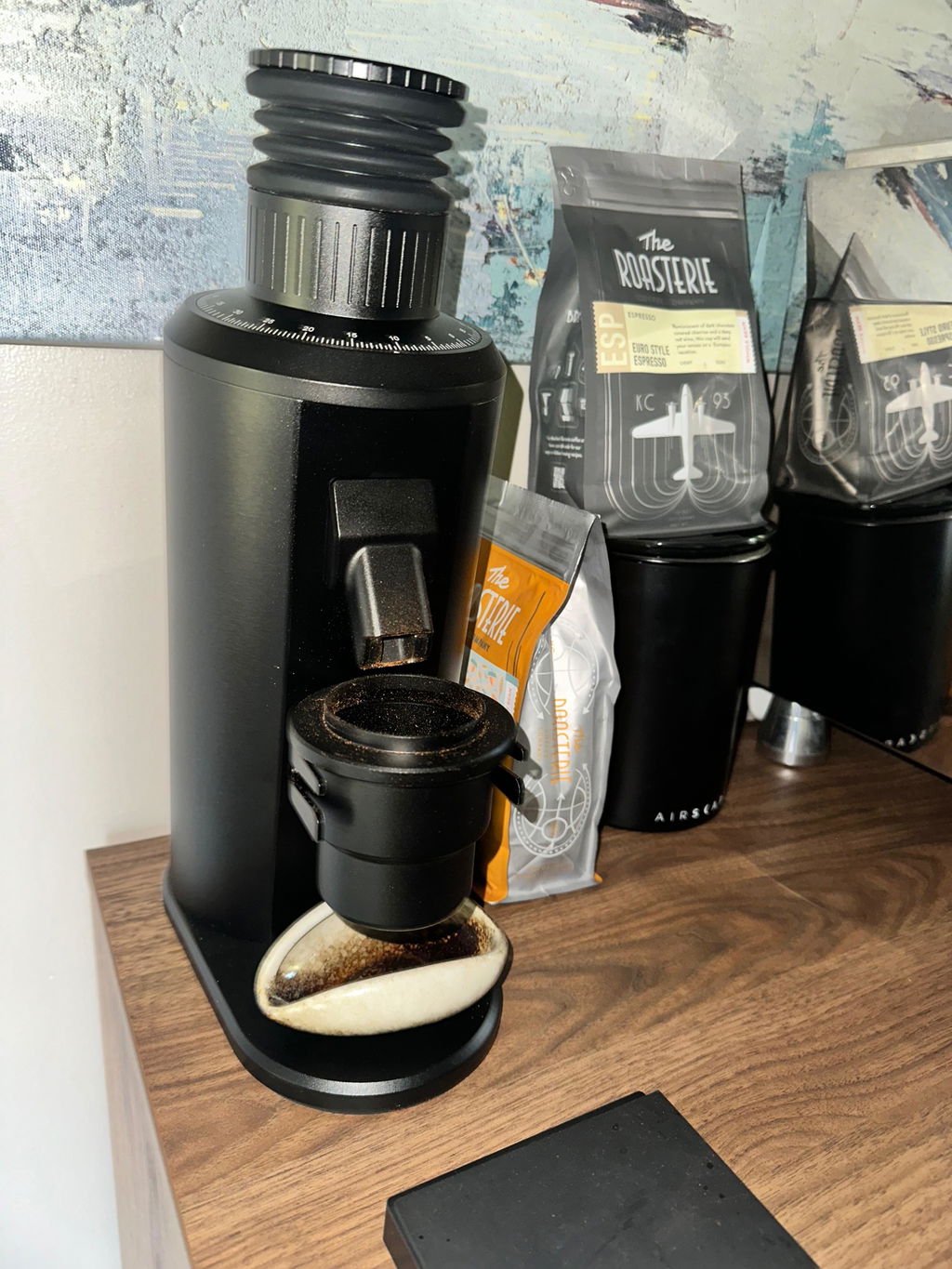
Coffee Grinder Static
Static can make coffee grounds cling to the chute, collection cup, and nearby surfaces. Start by cleaning the exit path and checking the dose that actually reaches the basket. Not every clump or retained gram is caused by electrical charge.
Why grinding creates charge
Contact, separation, and fracture during grinding can charge coffee particles. Roast, bean moisture, particle size, equipment materials, and environmental conditions influence what happens. Grounds can carry either sign of charge; it is inaccurate to describe all fines as positively charged.
Primary research on electrostatic charging in coffee grinding examines mitigation strategies. A specific humidity or speed setting is not a universal cure across grinders.
Work through these checks
- Unplug the grinder before cleaning accessible parts as directed.
- Clear accumulated grounds from the chute and cup.
- Check declumper or ionizer maintenance instructions for your model.
- Weigh beans in and grounds out over several doses.
- Keep collection and bellows technique consistent.
If output is low, inspect for mechanical retention or a blockage rather than immediately adding water. Oily buildup can trap grounds even when static is modest.
Ionizers and RDT address different situations
A built-in ionizer can reduce charge near the exit, but requires the recommended cleaning. RDT adds a small amount of moisture before grinding and should only be used where the manufacturer permits it. It is not appropriate for every hopper or grinder.
Measure the useful improvement
A tidier cup is helpful, but also check repeatability. If the actual dose changes, espresso flow can change too. Use the same puck preparation routine before attributing flavor differences to static reduction.
When comparing home grinders, look at accessible cleaning, chute design, and the collection workflow along with anti-static features. An expensive grinder can still show static with some coffees.