


Nuova Simonelli History
Nuova Simonelli’s history begins with Orlando Simonelli in 1936. It spans several different kinds of innovation: changes to water delivery, machine layout, electronic dosing and automation. Those developments are easier to understand when model names and dates stay attached to the correct machine.
1936: Orlando Simonelli’s first machine
The manufacturer’s heritage archive places the beginning in Cessapalombo, in Italy’s Marche region. It describes the 1936 machine as electrically heated, with two groups and extraction using water-network pressure. It should not be labeled a modern pump machine or placed in a later city simply because the company subsequently moved.
Postwar development and the Nuova Simonelli name
The archive records Selene in 1950 and Eureka in 1959, followed by the management buyout and Nuova Simonelli name in 1969. It places the home-oriented Elli in 1973, electronic volumetric dosing on ISX in 1975 and the Logica super-automatic in 1984. These dates show why the Elli should not be presented as a 1950s lever machine.
Company histories often use the word first. A manufacturer’s first model with a feature is not automatically the world’s first. A useful timeline identifies the machine and function without turning an unverified priority claim into fact.
Why electronic dosing mattered
Programmed dosing lets a barista stop repeating one task manually while preparing the next part of a drink. However, volumetric dosing measures water moving through a machine; it does not necessarily weigh espresso in the cup. Grind, dose and coffee absorption can change the final beverage. Periodic weighing remains useful even when the stop is automatic.
That is a different kind of automation from a machine that also grinds, prepares the coffee and ejects the puck. Our super-automatic guide explains the distinction. An electronic button panel by itself does not make a machine bean-to-cup.
Home equipment and café workflow
A compact machine and a multi-group café system solve different problems. At home, warm-up, counter access and making one or two milk drinks may dominate. In a café, the busiest interval, staff movements, cleaning access and service availability can matter more than the average daily cup count.
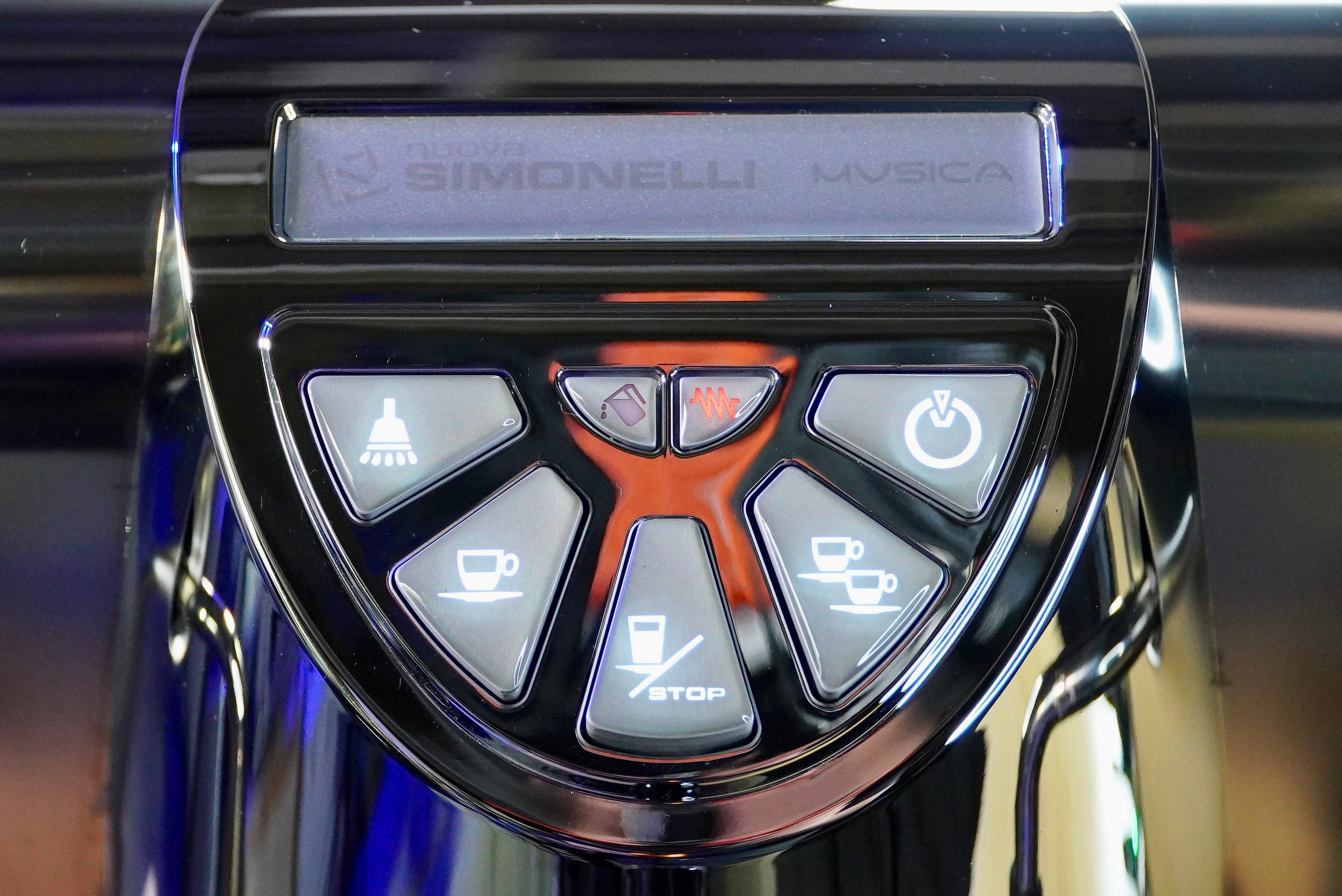
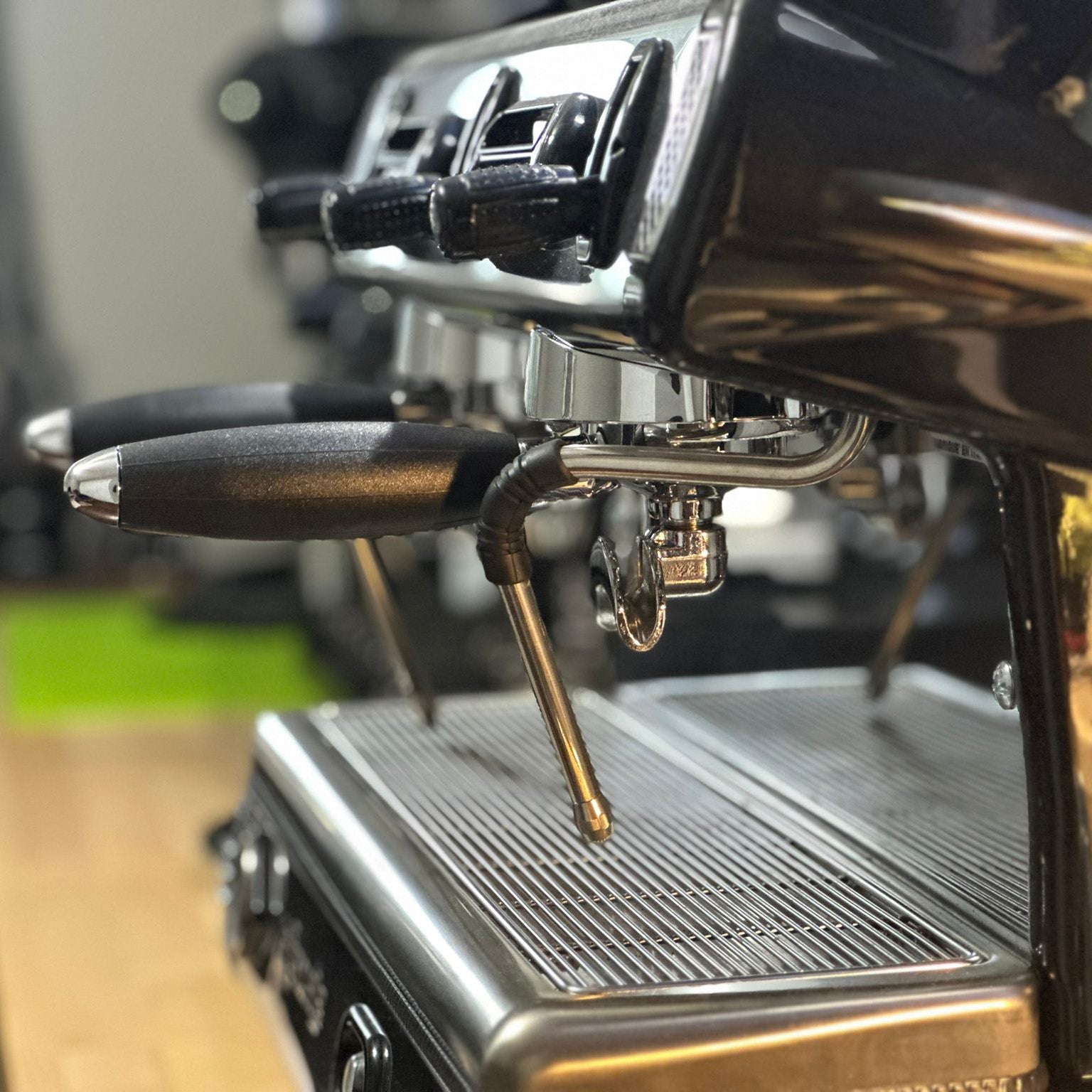
Our original Musica review shows one compact heat-exchanger approach, including reservoir and direct-connect configurations. Its photographs illustrate the tank, controls and steam wand. The ability to brew and steam together comes from the heating layout, not from the brand name alone.
Reading present-day specifications
The current manufacturer catalog is the appropriate starting point for current model features. Match its regional documentation to the machine being purchased. Group count, boiler arrangement, electrical supply and water connections can vary within a product family; features from a flagship machine should not be assigned to every model.
- Identify the full model and configuration before comparing quotations.
- Plan water treatment, wastewater handling and electrical capacity with the installer.
- Check the expected milk-drink workload and available local service.
- Treat competition use and company longevity as context, not a guarantee of results in your own setting.
For the wider engineering story, compare Gaggia’s pressure developments with our history of espresso-machine invention.