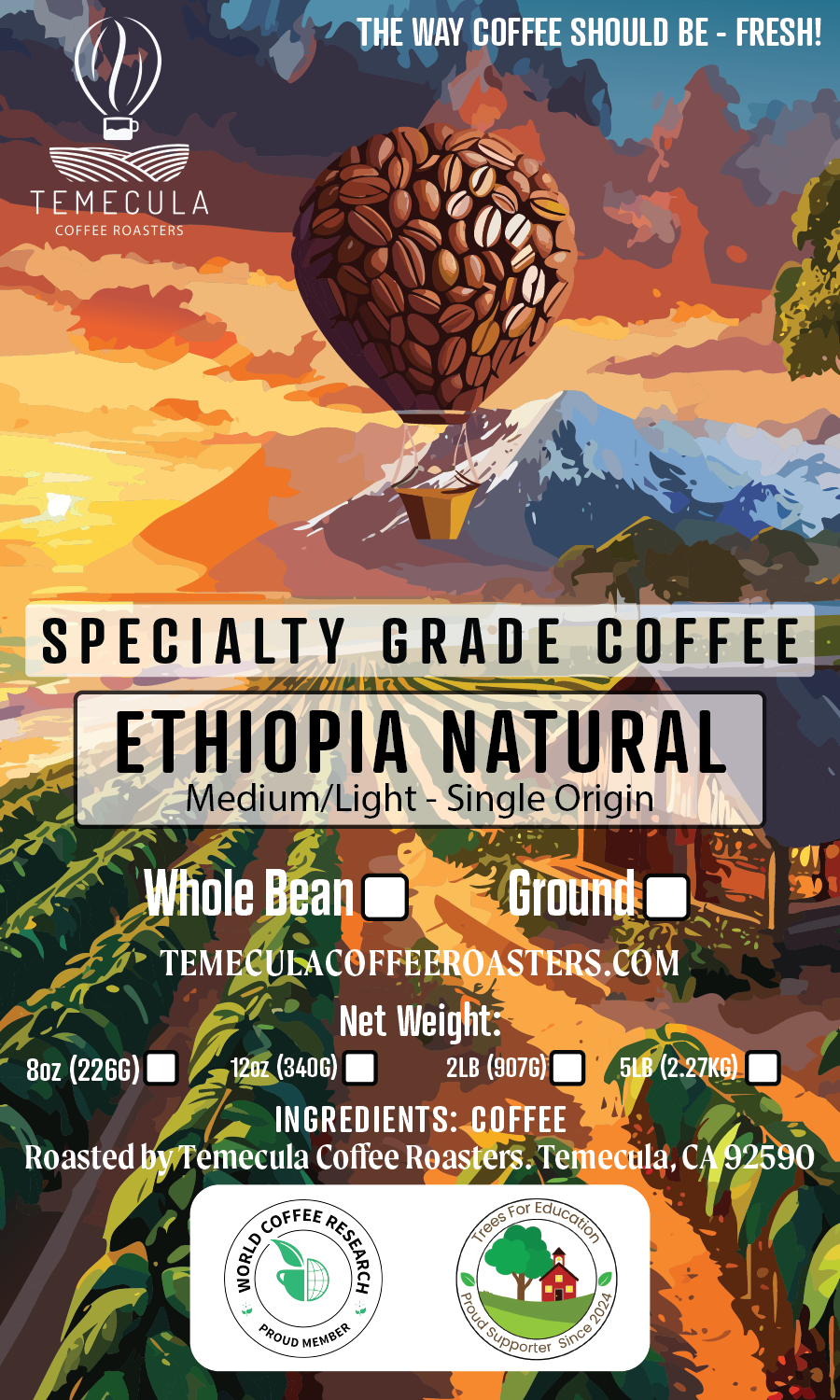
Temecula Ethiopia Sidama Natural Medium-Light Roast
- Green Coffee and Roasted Coffee does not qualify for free shipping. Shipping costs are set by our roaster partners. Coffee orders are shipped directly from the roaster partner.
- In stock, ready to ship
- Backordered, shipping soon
Temecula Ethiopia Sidama Natural Medium-Light Roast: Flavor, Origin, and Brewing Guide
Temecula Ethiopia Sidama Natural Medium-Light Roast is roasted by Temecula Coffee Roasters with a documented medium-light profile. The supplier describes caramel, vanilla, florals, and berries, supported by delicate body and bright perceived acidity. This high-elevation natural coffee combines fruit-driven processing with a medium-light roast intended to retain aromatics and clarity. This guide separates verified coffee facts from general preparation advice so buyers can choose the right product and brew it consistently.
Coffee Profile
| Roast | medium-light |
|---|---|
| Origin | Sidama, Ethiopia |
| Producer | Not specified |
| Process | natural and sun-dried |
| Cultivar | Local Sidama heirloom varieties |
| Elevation | 2,000–2,200 meters |
| Tasting profile | caramel, vanilla, florals, and berries |
| Available formats | 8 oz, 12 oz, 2 lb, or 5 lb; whole bean, coarse, drip, or fine ground |
Flavor and Roast Development
The tasting descriptors are sensory reference points, not added flavors, unless this page explicitly identifies the coffee as flavored. Roast development changes solubility, body, and the balance between origin character and caramelized flavor. This medium-light presentation emphasizes caramel, vanilla, florals, and berries. Store the package sealed, cool, and dry. Grind whole beans immediately before brewing; after opening a preground bag, minimize exposure to air and moisture.
Brewing and Dialing In
Start with 18 g coffee to 300 g water at 200–205°F. Use a medium-fine grind, bloom with about 55 g, and pour in controlled pulses. If the cup is sharp or thin, grind finer or extend drawdown; if it is drying, grind coarser.
Taste the brewed coffee after it cools slightly before changing the recipe. Under-extraction often appears as sharp acidity, weak sweetness, or a short finish; over-extraction can become bitter, drying, or hollow. A burr grinder such as the Turin DF64 Gen 2.7 makes small grind adjustments repeatable.
Choosing and Serving This Coffee
Choose it when the documented origin, process, and flavor profile match the balance of sweetness, acidity, body, and clarity you prefer. Whole bean gives the most control over extraction. Select preground coffee only when the grind matches your brewer; espresso, drip, pour-over, and French press settings are not interchangeable.
Frequently Asked Questions
What does this coffee taste like?
Expect caramel, vanilla, florals, and berries, with delicate body and bright perceived acidity.
What roast level is it?
The documented roast is medium-light. When the supplier does not publish a formal level, this page says so.
Where is it from?
The documented origin is Sidama, Ethiopia.
How was it processed?
natural and sun-dried. No extra processing claims are inferred.
Which brew method should I use?
Use the recipe above as a starting point, then adjust grind to control flow, extraction, and finish.
Should I buy whole bean or ground?
Whole bean offers the most freshness and dialing control. Choose a ground option only when it matches your brewer.
Freshness and Consistency
Freshly roasted coffee releases carbon dioxide, so a short degassing rest can improve extraction consistency, especially for espresso. Use filtered water with enough mineral content for extraction, weigh coffee and water, and keep dose and brew ratio fixed while evaluating grind. For pour-over, a fast drawdown usually calls for a finer setting; a stalled bed calls for a coarser setting or gentler agitation. Clean burrs, baskets, brewers, and servers regularly so stale oils do not obscure sweetness or finish.
Evaluating the Cup
Compare the first hot sip with the cooler cup because heat can hide sweetness and finer aromatics. Note fragrance, flavor, acidity, body, aftertaste, and overall balance before changing the recipe. If milk or sweetener is part of your routine, taste the coffee black first and then prepare it your usual way. This sequence makes grinder adjustments and repeat purchases more informed while keeping the evaluation relevant to how you actually drink coffee.
Choosing a Grind and Package Size
Select a grind that matches the brewer rather than using one setting for every method. Coarse grounds suit French press, medium grounds fit most drip brewers, and finer settings are appropriate for cone filters or espresso only when specified. Larger bags make sense for high-volume households and offices, but smaller packages help preserve aromatics for occasional drinkers. Keep unopened portions sealed and avoid storing coffee beside heat, light, moisture, or strongly scented foods.
Green Coffee and Roasted Coffee does not qualify for free shipping. Shipping costs are set by our roaster partners. Coffee orders are shipped directly from the roaster partner.