



TBD Emo-tional Support Dark Roast
- Green Coffee and Roasted Coffee does not qualify for free shipping. Shipping costs are set by our roaster partners. Coffee orders are shipped directly from the roaster partner.
- In stock, ready to ship
- Backordered, shipping soon
TBD Emo-tional Support Dark Roast: Profile and Buying Guide
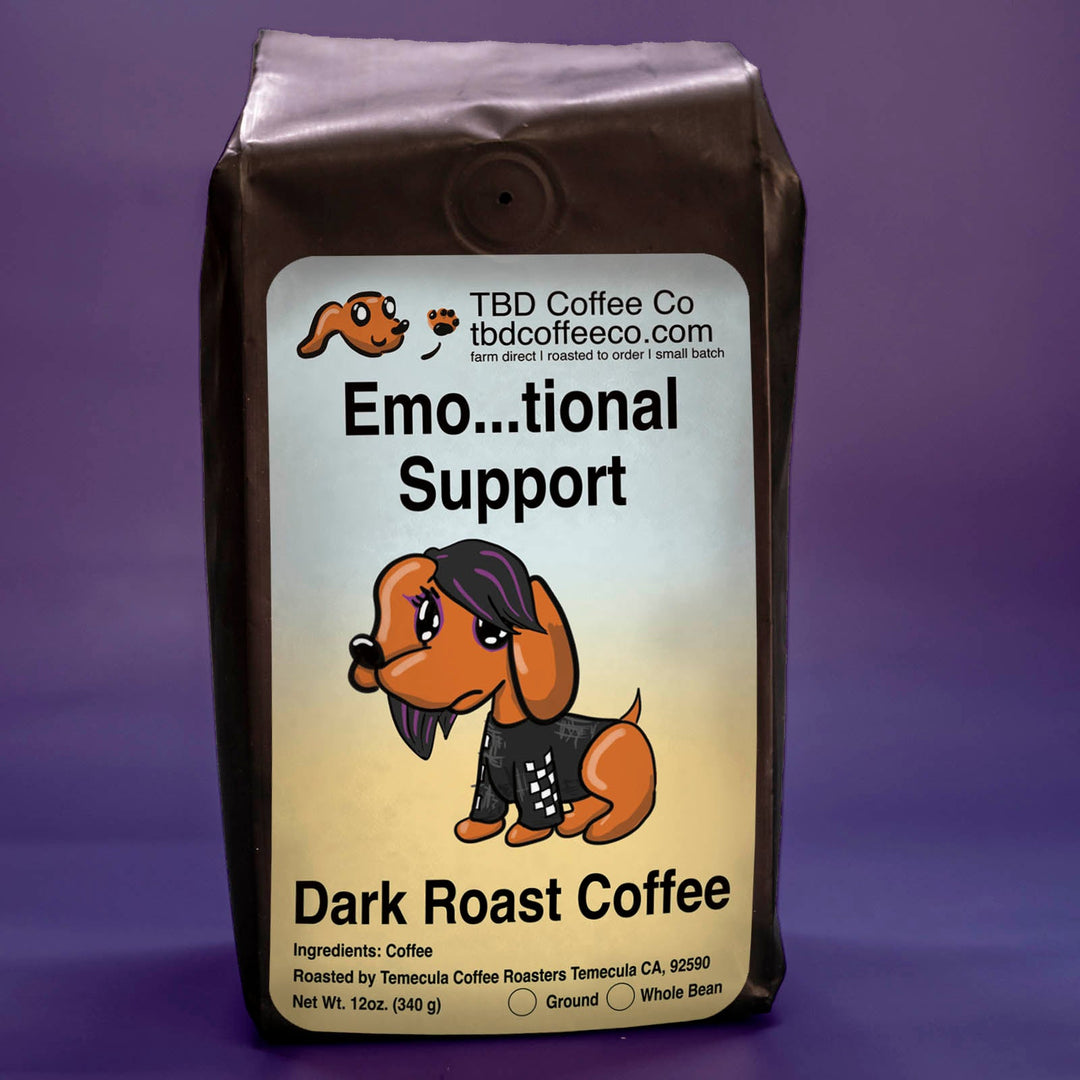
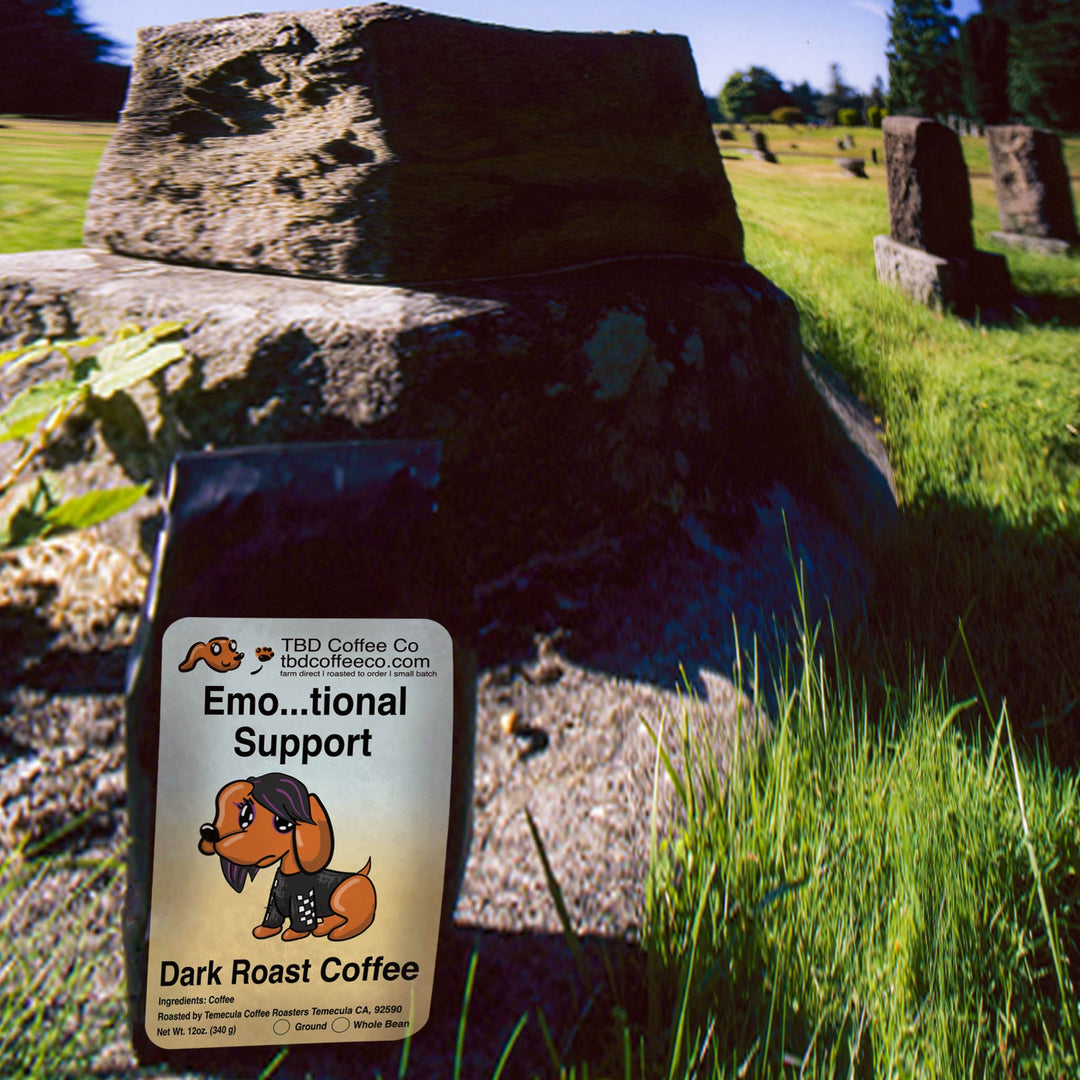
TBD Emo-tional Support Dark Roast has a documented dark Italian-style profile; the producer is not specified in the supplier record. Its cup is described with dark chocolate, caramelized sugar, and toasted marshmallow, supported by heavy body and low perceived acidity. Named for Marlee the dachshund, this slow-developed blend uses Arabica and Robusta for a substantial, comfort-coffee profile. This page separates verified sourcing details from preparation advice so buyers can select the coffee and format with clear expectations.
Coffee Profile
| Roast | dark Italian-style |
|---|---|
| Origin | Arabica and Robusta blend; countries not specified |
| Producer | Not specified |
| Process | Blend; individual processes not specified |
| Cultivar | Not specified |
| Elevation | Not specified |
| Tasting profile | dark chocolate, caramelized sugar, and toasted marshmallow |
| Available format | Whole bean or ground for drip, espresso, or French press |
Flavor, Roast Development, and Freshness
The tasting descriptors are sensory reference points rather than added ingredients unless the product is explicitly labeled flavored. Roast development influences solubility, body, and the balance between origin character and caramelized flavor. This dark Italian-style presentation is expected to emphasize dark chocolate, caramelized sugar, and toasted marshmallow. Store the coffee sealed, cool, and dry. For whole bean coffee, grind immediately before brewing; for preground formats, limit air exposure after opening. Fresh coffee releases carbon dioxide after roasting, so a short degassing rest can improve consistency, particularly for espresso.
Brewing and Dialing In
Use 18 g coffee to 290–300 g water at 192–198°F. Darker roast development increases solubility, so a slightly coarser grind and cooler water can control bitterness. Shorten contact time if the finish turns drying; grind finer only when the cup tastes hollow.
Taste the result before making a second change. Under-extraction often presents as sharp acidity, weak sweetness, or a short finish; over-extraction can taste dry, bitter, or hollow. A capable burr grinder such as the Turin DF64 Gen 2.7 makes small, repeatable grind adjustments easier.
Who This Coffee Is For
Choose it for a developed, full-bodied cup that stands up to milk, sweet breakfast foods, and lower-acidity preferences. Select whole bean for maximum control or a matching grind when convenience is the priority. Grind size is method-specific, so espresso, drip, pour-over, and French press settings should not be treated as interchangeable.
Frequently Asked Questions
What does this coffee taste like?
Expect dark chocolate, caramelized sugar, and toasted marshmallow, with heavy body and low perceived acidity.
What roast level is it?
The documented roast is dark Italian-style. Where the supplier does not publish a formal level, this page says so rather than guessing.
Where is it from?
The documented origin is Arabica and Robusta blend; countries not specified.
How was it processed?
Blend; individual processes not specified. No additional processing claims are inferred.
Which brew method should I use?
Use the recipe above as a starting point, then adjust grind to control flow, extraction, and finish.
Should I buy whole bean or ground?
Whole bean offers the most freshness and dialing control. Choose ground only when it matches your brewer and convenience needs.
Consistency Notes
Water quality and temperature can change the cup as much as the recipe. Use filtered water with enough mineral content for extraction, weigh both coffee and water, and keep dose and brew ratio fixed while evaluating grind. For pour-over, an unexpectedly fast drawdown usually calls for a finer grind; a stalled bed calls for a coarser setting or gentler agitation. For espresso, weigh beverage yield rather than relying only on shot volume. Clean burrs, baskets, brewers, and servers regularly so stale oils do not obscure the coffee’s sweetness or finish.
How to Evaluate the Cup
Let the brewed coffee cool for several minutes before deciding whether the recipe works. Heat can mute sweetness and hide finer aromatic detail. Compare the first sip with the cooler cup, noting fragrance, flavor, acidity, body, aftertaste, and overall balance. If milk or sweetener is part of your normal routine, taste the coffee black first and then prepare it your preferred way. This simple sequence makes repeat purchases and grinder adjustments more informed.
Green Coffee and Roasted Coffee does not qualify for free shipping. Shipping costs are set by our roaster partners. Coffee orders are shipped directly from the roaster partner.