

Gooseneck Kettles for Coffee
A gooseneck kettle is a kettle with a long, narrow, curved spout designed to give the brewer more control over water placement and flow rate. It is strongly associated with pour-over coffee because small changes in where and how quickly water is added can change agitation, slurry level, drawdown, and extraction.
Why the spout matters
A conventional kettle can pour quickly and unpredictably, especially at low flow. A gooseneck spout adds hydraulic resistance and gives the brewer finer control over the stream. That makes it easier to wet a coffee bed evenly, maintain a consistent pour rate, avoid striking the filter wall, and repeat the same pouring pattern from brew to brew.
Flow control is not the same as extraction control
The kettle does not determine extraction by itself. Grind size, coffee-to-water ratio, water temperature, filter geometry, bed depth, and agitation still matter more than the shape of the spout. A precise kettle simply makes manual water delivery more repeatable.
Electric vs. stovetop gooseneck kettles
Stovetop models are simple and can work well when precise temperature display is not needed. Electric variable-temperature kettles add programmable heating and often hold a selected temperature, which is useful when comparing recipes or brewing lighter coffees that may benefit from hotter water.
When do you actually need one?
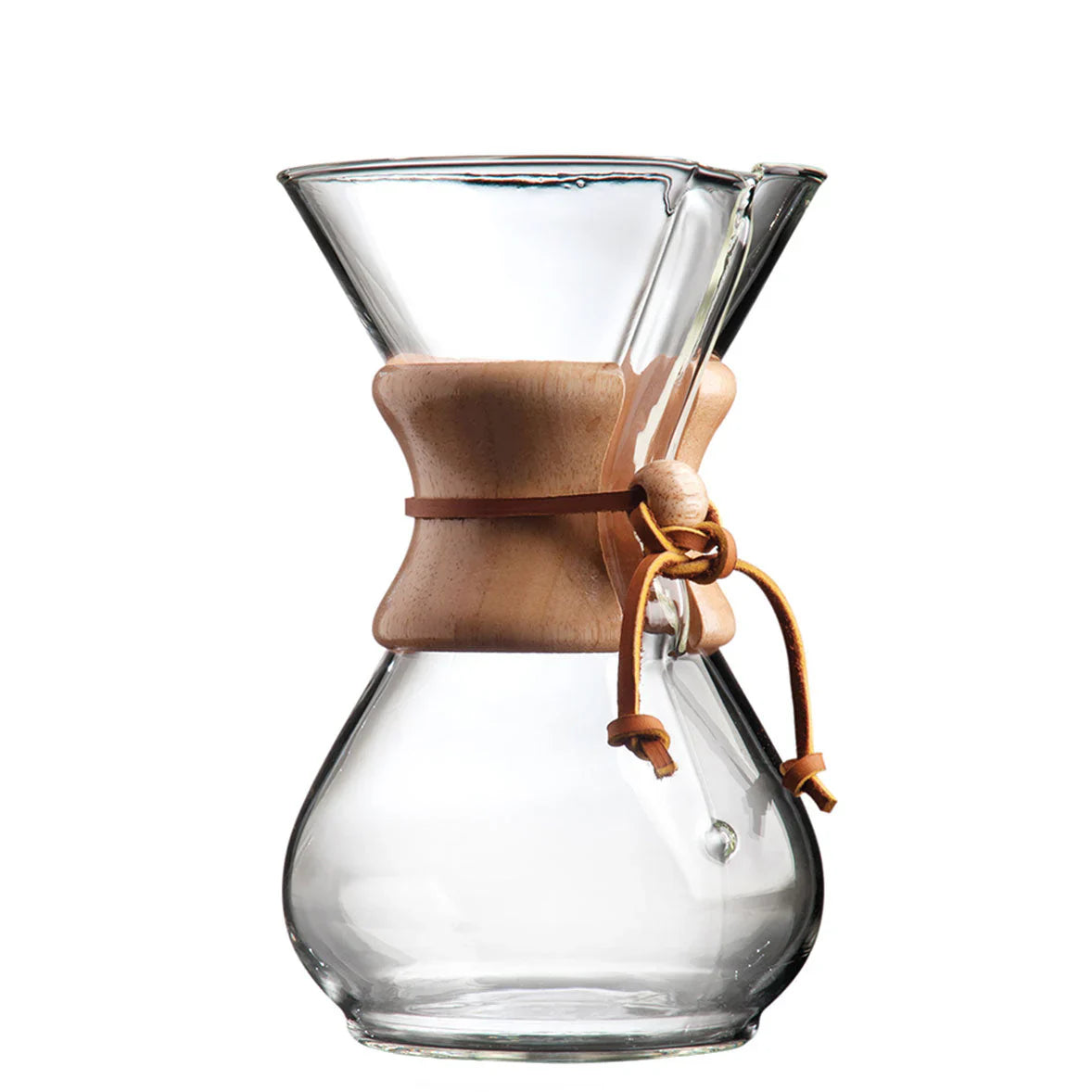
A gooseneck kettle is especially useful for V60-style cone brewers, flat-bottom drippers, Chemex, and other manual percolation methods. It is less important for full-immersion methods such as French press, where the exact path of the pour is usually not a primary extraction variable.
If you are assembling a manual-brewing setup, browse our brewing equipment. See more brewing terminology in the Coffee, Espresso & Brewing Equipment Glossary.