



Fines in Coffee Grinding
Fines are the smallest particles in a coffee grinder's particle-size distribution. Every burr grinder produces some fines because coffee fractures irregularly; the important question is how many are produced, how small they are, and how they behave in the chosen brewing method.
Why fines matter
Small particles have far more surface area relative to their mass than large particles, so they can release soluble material quickly. They also move through a coffee bed more easily and can collect in filter pores or low-flow regions. That combination means fines affect both extraction and hydraulic resistance.
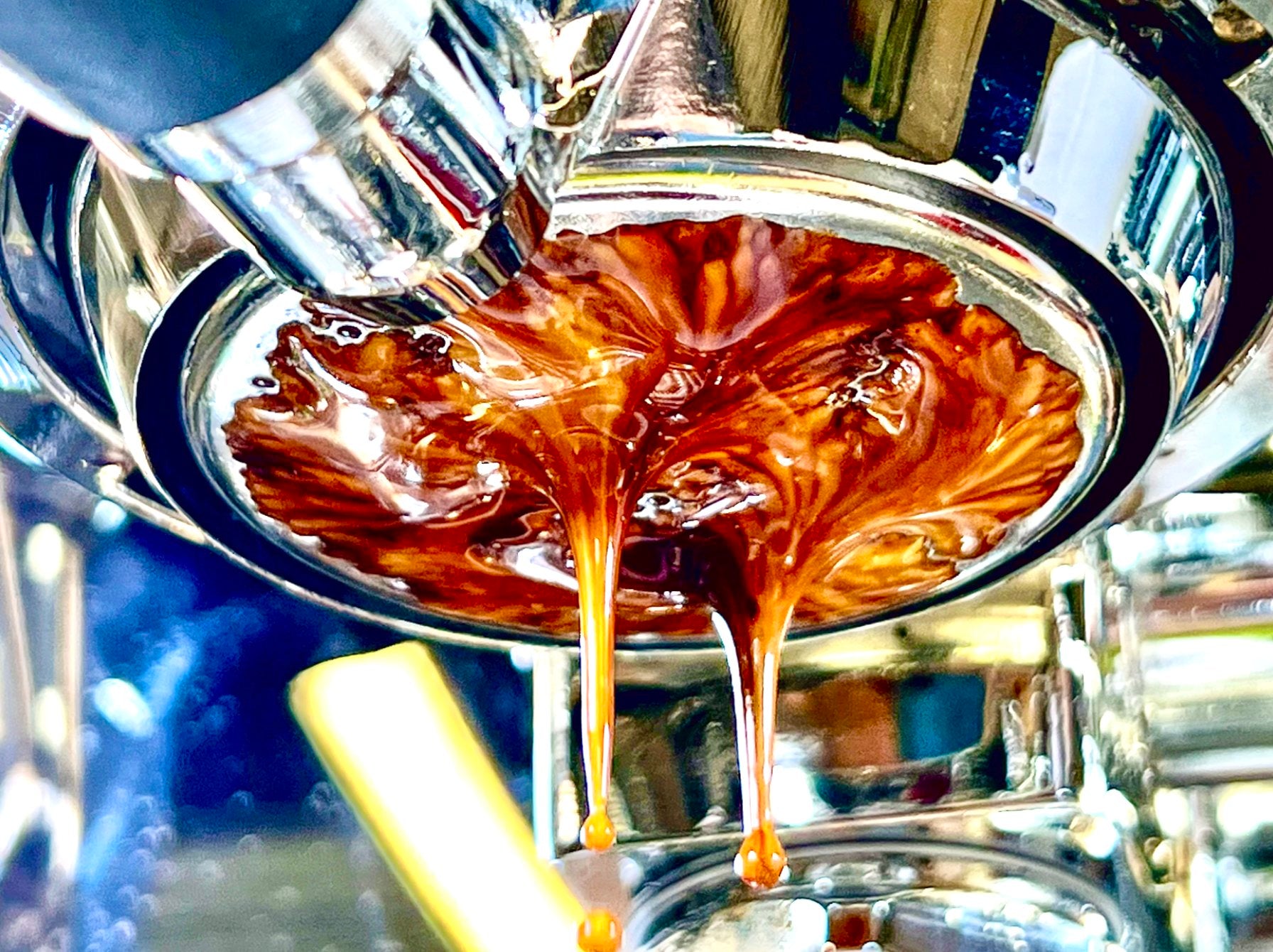
In espresso, fines help create the resistance required for pressure brewing, but an excessive or poorly distributed fine fraction can contribute to localized clogging and uneven flow. In pour-over, fines can migrate toward the filter and slow drawdown substantially. Our published guide on fines migration and filter stalling explains that mechanism in detail.
Fines are not automatically bad
A common mistake is to treat all fines as defects. Traditional espresso often relies on a relatively broad particle distribution to create body, viscosity, and resistance. Some high-clarity burr geometries intentionally reduce the fine fraction, but that can change shot style, required grind setting, and mouthfeel.
| Brewing context | Typical effect of more fines |
|---|---|
| Espresso | More resistance, potentially more body, but greater risk of uneven flow if excessive. |
| Pour-over | Slower drawdown and more filter clogging; may increase extraction and astringency. |
| French press/metal filter | More sediment and heavier texture in the cup. |
What changes fines production?
Burr geometry, burr sharpness, alignment, RPM, feed rate, roast level, bean density, and grind setting can all shift particle distribution. Very brittle dark-roasted coffee generally fractures differently from dense light-roasted coffee. Worn or poorly aligned burrs can also change the amount and consistency of small particles; see our guide to burr alignment, fines, and grinding performance.
Should you remove fines?
Sifting can be useful for experiments, but it is not a normal requirement for good coffee. Removing particles changes both dose composition and brewing behavior, so a recipe usually needs to be redialed. A better everyday approach is to use a suitable grinder, control agitation, and adjust grind size and brew ratio based on taste.
Fines should therefore be understood as part of the grind distribution—not simply waste material. Their ideal proportion depends on whether the goal is dense traditional espresso, high-clarity espresso, fast filter drawdown, or another brewing style.
Explore home coffee grinders or return to the Coffee, Espresso & Brewing Equipment Glossary.