



120V vs. 208V vs. 240V Commercial Coffee
Coffee Business Resource Center
You find an espresso machine that fits your counter and budget. Then the electrician asks whether it is the 120V version or the 208–240V version. Those versions may look almost identical, but the answer can change the installation and how the machine handles your busiest stretch of service.
Start with the exact model's electrical requirements. The voltage available at your site, the machine's approved voltage range, phase, frequency, and connection requirements all have to work together. A plug that fits is only one piece of that check.
What the voltage numbers tell you
Voltage describes the electrical supply. It does not, by itself, tell you how many drinks an appliance can make, what circuit it needs, or how much electricity you will buy in a month. For those questions, you need more information from the equipment documentation and your electrician.
In a U.S. project, these are useful starting distinctions:
| Supply discussed | What an owner should understand | What to confirm before ordering |
|---|---|---|
| 120V | Common for smaller appliances and some commercial espresso machine versions. | Actual appliance current, required circuit, and whether other equipment shares that circuit. |
| 208V | Available in many commercial buildings with a 120/208V three-phase service. An individual appliance can still use a single-phase connection. | Whether the exact machine is approved for 208V, and its performance and electrical requirements at that voltage. |
| 240V | Another common supply for commercial equipment, including machines designed for 208–240V operation. | The actual site voltage, phase, connection, and model-specific installation requirements. |
The distinction between a building's supply and an appliance's connection matters. For example, Eaton explains how a 120/208V three-phase system provides different voltages between its conductors. You do not need to identify those conductors yourself; give the electrician the machine specification and have the supply confirmed. Eaton's power-system explanation
Labels such as “110V” or “220V” sometimes appear in product names. Use the operating range in the current specification sheet, rather than assuming the number in the product name is the entire requirement.
Compare factory versions, not just voltage labels
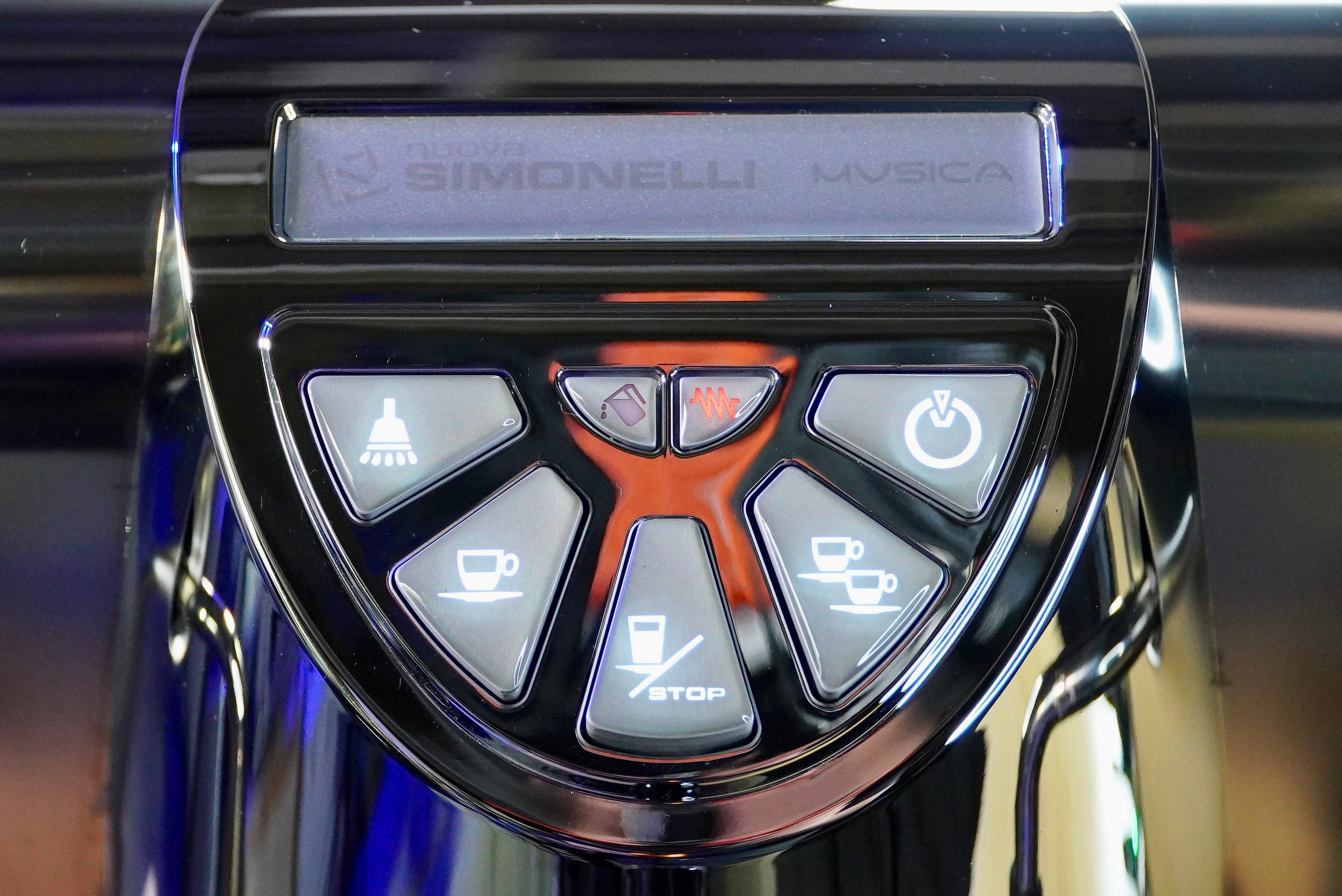
Nuova Simonelli's Appia Life Compact provides a useful real example. Its manufacturer-hosted 110V specification lists 110–125V, 1,500W, and 13A. The 220V specification lists 208–240V, 3,000W, and 14A. These are separate specified versions of the machine. Appia Life Compact 110V specification, Appia Life Compact 220V specification
That difference gives you a better question to ask the equipment supplier: how will each version cope with your actual drink pattern? A cart serving occasional espresso and a café making several large milk drinks together can place very different demands on the same size machine.
More available heating power can matter during warmup and recovery, but doubling a specification's wattage does not promise twice as many drinks per hour. Boiler design, controls, drink sizes, steam demand, water temperature, and barista workflow all influence service. Ask about sustained performance with your menu rather than accepting an unexplained cups-per-hour figure.
A plug adapter does not turn the lower-power factory version into the higher-power version. Any supported conversion is a model-specific manufacturer and technician question, including the machine's approval and installation requirements.
Why 208V and 240V deserve a separate conversation
If a machine is approved for both voltages, that tells you it can be installed within that range under its instructions. It does not necessarily mean every heating element produces identical power at both ends of the range.
For a simple fixed-resistance heater, power changes with the square of voltage. As an illustration only, a heater producing 3,000W at 240V would produce about 2,253W at 208V if its resistance stayed the same. That calculation describes the heater in this hypothetical example. It does not describe every espresso machine, account for its controls, or authorize operating equipment outside its approved range.
For a real purchase, ask the manufacturer how that specific configuration behaves on your confirmed supply. If your shop has 208V, get the relevant performance and installation information before judging the machine against a demonstration that used 240V.
Amps still matter
Two appliances using the same voltage can require very different circuits. A small grinder and a substantial water heater may both be labeled for 120V, yet they are very different loads.
Likewise, a receptacle near the counter does not prove you have an unused circuit ready for the espresso machine. It may already serve a refrigerator, display case, or another room. The electrician should identify the circuit and confirm the complete installation, including any protection required in that location.
Give the electrician the actual nameplate and installation sheet. Do not size the circuit by dividing a marketing wattage by a voltage and rounding up to a familiar breaker. That shortcut can miss the manufacturer's requirements and other parts of the electrical design.
For a cart, confirm power at each kind of venue
“Power available” is not a complete event specification. Ask the venue to confirm the voltage, receptacle, circuit capacity, location, and whether the supply will be shared. A photograph helps the venue's electrician identify the connection; it is not a substitute for their confirmation.
Distance matters too. A suitable outlet across a courtyard is a different installation problem from one immediately behind your cart. Agree on an approved supply and distribution arrangement before accepting the booking. Do not make a household extension cord the solution after you arrive.
Then account for the rest of the cart. Your espresso machine may be compatible with the venue while the combined grinder, refrigeration, pump, and water-heating loads exceed the proposed supply. Review the whole operating setup, including what runs together during warmup.
Voltage does not determine your electric bill
Electricity consumption is measured in energy, commonly kilowatt-hours. A heating element's power rating describes its demand while operating; controls may cycle it during the day. Hours of operation, heat loss, water use, settings, and the utility's tariff influence the bill.
Choose the version that suits the site and the work. Then manage consumption through approved operating settings, sensible opening hours, and maintenance. Buying an unsuitable lower-power machine to save electricity can create a service problem without giving you a useful estimate of savings.
When you discuss a machine with Espresso Outlet, share your menu, busiest service period, and confirmed site power together. For mobile projects, Meet Dylan is a useful place to start that equipment conversation.
Sources and further reading
- Nuova Simonelli: Appia Life Compact 110V specification.
- Nuova Simonelli: Appia Life Compact 220V specification.
- Eaton: Single-phase and three-phase power, for the supply-system distinction.