I have recently entered the world of “fully manual espresso”, with the Turin Axis and the Weber HG-2 Mk2 manual grinder. Going manual has significantly improved the espresso I make and has almost eliminated “throw away shots” while dialing in grind size. My modded flow control Breville Dual Boiler has become an expensive milk steamer. Why? It’s all because manual espresso respects the coffee puck and allows it to determine how best to extract coffee goodness from it. The Turin Axis is the perfect manual lever machine for this.
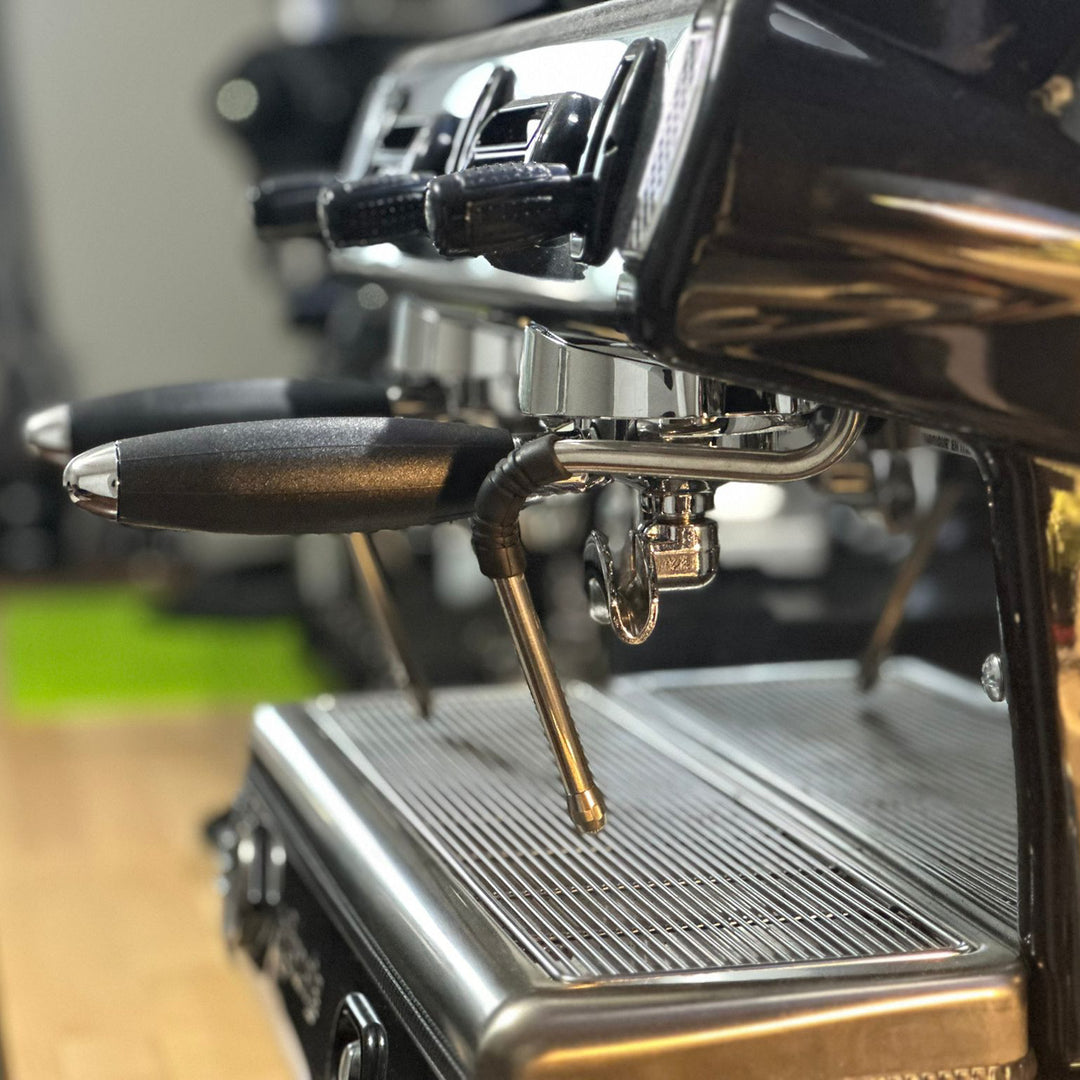
The Turin Axis' quality is excellent. One can feel it in its sturdy construction and the way its moving parts operate seamlessly and smoothly. The Axis’ frame is made with “blackened” aluminum (anodized?) which offers a very sturdy platform to work with.
The Axis’ brew assembly is made entirely of stainless steel so hot brew water and coffee acids, never touch the aluminum. This is important as exposing aluminum to hot water/acids, could leach harmful minerals from it.
The stainless steel brew assembly also plays an important role in the Axis’ thermal stability. The Turin uses a PID controlled heating element to heat the stainless steel brew assembly to a targeted brew temperature. Stainless steel has lower heat conductivity. This helps maintain thermal stability, once the brew assembly reaches the targeted brew temperature. The brew assembly, including cold water in the reservoir, reaches thermal stability in around 10-15 minutes. The brew assembly is relatively small and includes the portafilter collar. Once the brew assembly is heated, the collar becomes too hot to touch, so there is almost no decrease of brew water temperature as it hits the coffee puck.
The best thing about the Axis is the manual control it offers the barista. The coffee puck/grind size determines the brew method. The Axis respects the coffee puck and allows it to determine how best to extract coffee goodness from it. Electronic pump machines do not respect grind size/coffee puck. These machines push out a consistent “static pump pressure”, regardless of grind size (resistance) and puck degradation. Because of this, grind size has to be dialed in to “accommodate” the machine’s static brew pressure.
The Turin Axis respects grind size and the coffee puck. The Axis allows the barista to manually control water’s contact time with the coffee puck in a way that will best extract its coffee goodness. The barista does this by manually controlling lever pressure to match the needs of the coffee puck/grind size. Since using the Turin Axis, I have not thrown out any shots while dialing in grind size. All shots have been acceptable at worst and excellent at best.
Want good espresso every time, without having to dial in? Controlling extraction manually is the only way to do this. Get the Turin Axis manual lever espresso machine!!
This worked great for the first few months, was using it a couple times a week. But now the threads no longer line up when I screw the ground espresso holder to the bottom of the espresso brewer, which has rendered the device unusable -- espresso sputters everywhere! Such a shame.
Great machine and well built.
The Milo successfully replaced four separate nice single dose grinders for a daily mix of filter and espresso coffees. In addition to saving space, using one grinder interface is much better than four. So far retention has been good. The burr set seems to be comparable to other quality grinders. The Milo integrates very well with the Lita. The Wendougee discord site quickly provided helpful answers to questions about both the Milo and the Lita. I haven’t disassembled the grinder to clean the burrs yet, but the procedure appears to be less convenient than for some other grinders but that may have been necessary to get the electronic burr adjustment.
My machine broke twice and the customer support still has not responded. I have to text and call my sales representative that is also slow to respond. AVOID at all costs.