




East View Half-A$$ed Half-Caff Coffee
- Green Coffee and Roasted Coffee does not qualify for free shipping. Shipping costs are set by our roaster partners. Coffee orders are shipped directly from the roaster partner.
- In stock, ready to ship
- Backordered, shipping soon
East View Half-A$$ed Half-Caff Coffee combines Brazil coffee with decaffeinated Guatemala coffee to deliver reduced caffeine without giving up the substantial character associated with a darker blend. East View describes it as having big body, roasty structure, and dark-chocolate character, with velvety smoothness and subtle sweetness rather than harsh bitterness. It was created as a lower-caffeine counterpart to the roaster's Dark Horse blend. Whole-bean and freshly ground options are offered in 12-ounce, 2-pound, and 5-pound sizes.
Coffee profile
| Style | Half-caffeinated blend |
|---|---|
| Components | Brazil coffee and decaf Guatemala coffee |
| Documented character | Big body, roasty and dark chocolate |
| Cup goal | Smooth, subtly sweet and not harshly bitter |
| Related blend | Created as a counterpart to Dark Horse |
| Formats | Whole bean or freshly ground |
| Sizes | 12 oz, 2 lb and 5 lb |
| Process/cultivar/farm | Not specified in the product record |
Origin, process and roast approach
Half-caff coffee is useful when full-caffeine coffee does not fit the time of day or desired intake, but flavor still matters. This blend pairs a regular Brazil component with a decaffeinated Guatemala component; the exact blend percentage and the Guatemala decaffeination method are not specified in the product record. It is therefore described as half-caff without making an exact caffeine claim. Dark chocolate is a sensory impression, not added flavoring. The record also does not disclose farms, cultivars, processes, elevations, or a formal roast level, so those details remain unstated.
Brewing guidance
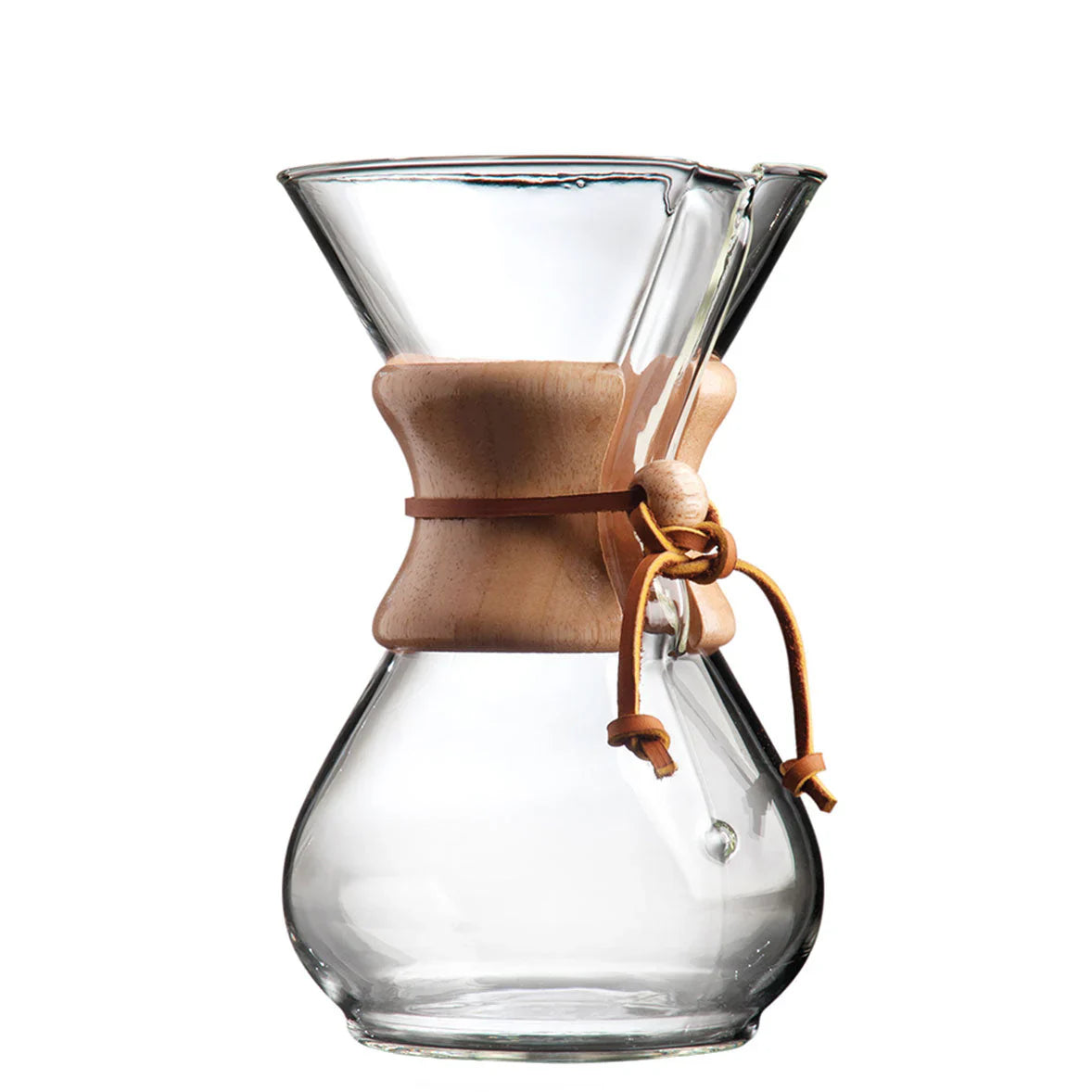
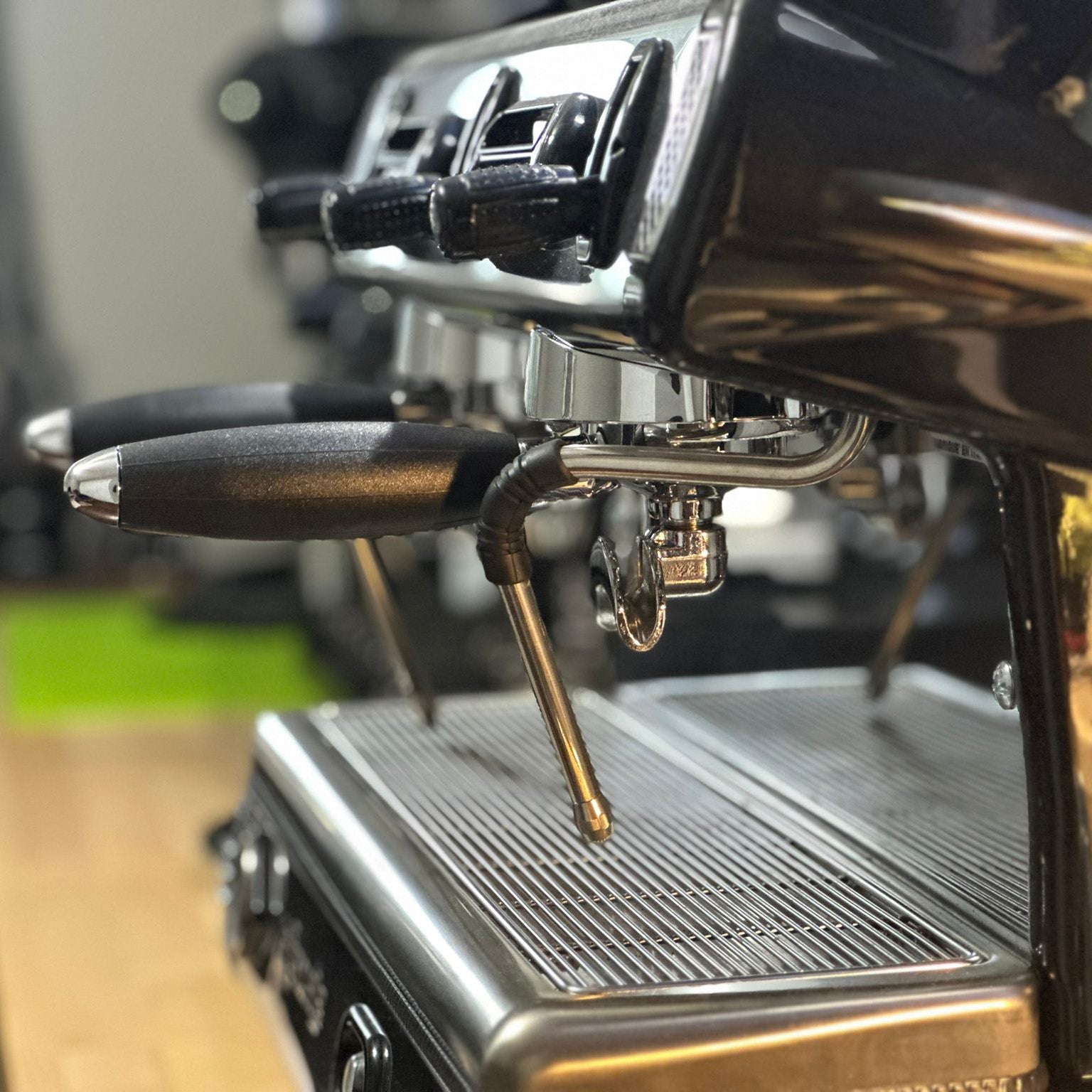
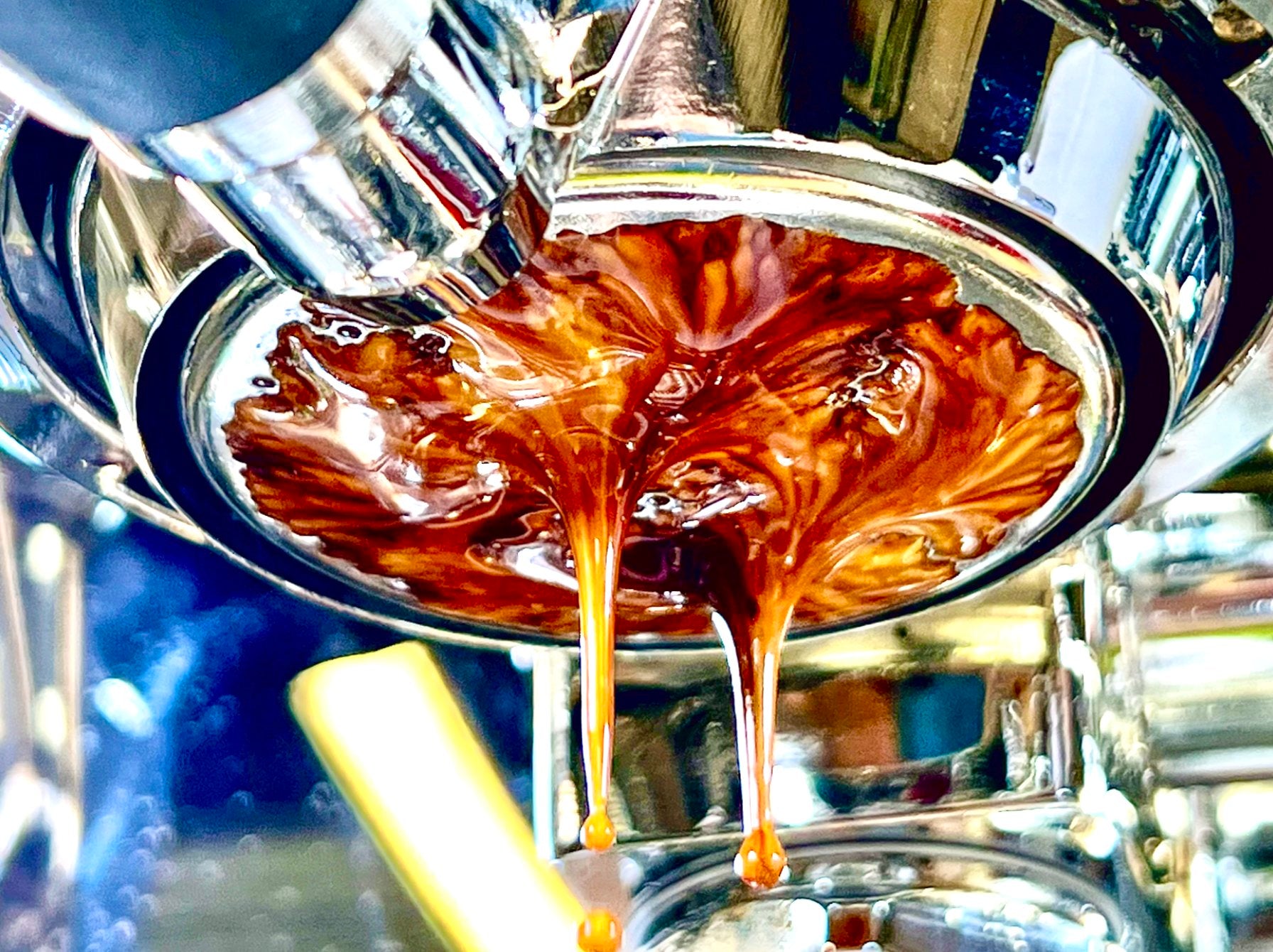
For drip coffee, begin with 30 grams to 500 grams of water at a 1:16.7 ratio. Use a medium grind and water around 198°F, then aim for three to four minutes of contact time. Decaffeinated coffee can extract differently from regular coffee, so use taste rather than copying a grinder setting from another blend. If the cup is thin or sour, grind finer; if it is dry or overly bitter, grind coarser. For espresso, start with 18 grams in and 38 grams out in 27–32 seconds, then adjust beverage yield to balance body and finish.
Choosing a method and format
This blend can be useful later in the day, for a second cup, or whenever a lower-caffeine option is preferred, but individual caffeine sensitivity varies. Brew it with the same precision as fully caffeinated coffee. Decaf components are often more porous and can produce extra fines, so watch flow rather than copying a setting from another bag. Paper filtration can make the finish cleaner; immersion highlights the blend's body. When using milk, taste the coffee first to confirm that the extraction is sweet rather than simply strong. Select the bag size according to real consumption so the coffee is not left open longer than necessary.
Dialing in, freshness and equipment
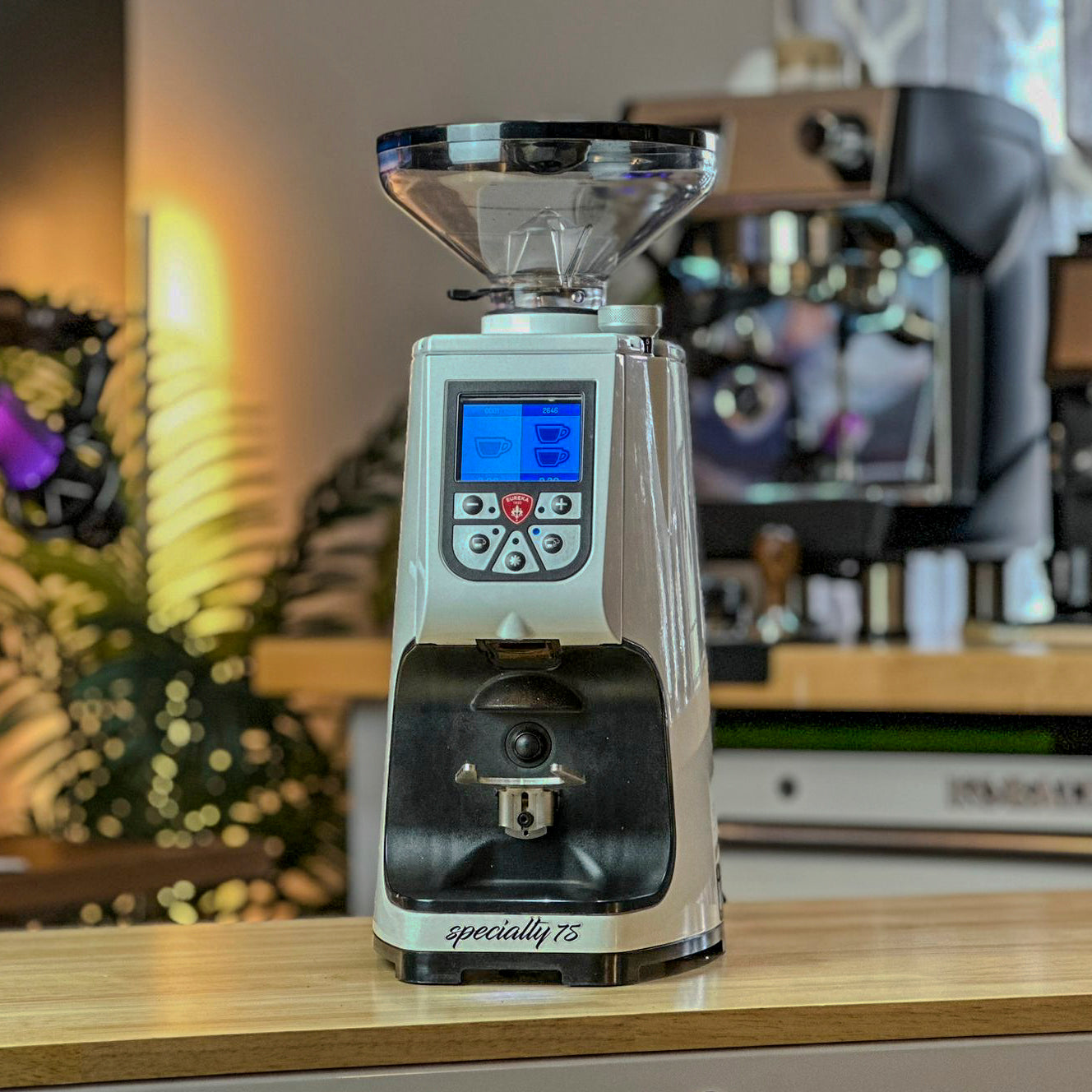
Half-caff is best dialed in as its own coffee. Weigh dose and water, keep the brew ratio stable, and let fresh coffee degas before locking in a grind setting. Look for body, sweetness, and dark-chocolate character, then check whether the finish stays clean. For repeatable grinding, consider the Turin DF64 Gen 2. Espresso users can pair it with the Turin Legato and record dose, beverage yield, and shot time.
For best results, buy the format that matches your equipment. Whole bean preserves more aroma until grinding; ground coffee prioritizes convenience. Store the sealed coffee in a cool, dry cabinet and avoid refrigeration after opening. Orders placed through Espresso Outlet are routed to the roasting partner for fulfillment, so roast and dispatch timing follow that partner's workflow.
Frequently asked questions
Which coffees are in the blend?
The documented components are Brazil coffee and decaf Guatemala coffee.
Is it exactly half the caffeine?
The page identifies it as half-caff but does not provide a laboratory caffeine measurement.
How was the Guatemala coffee decaffeinated?
The decaffeination method is not specified in the current product record.
Is dark chocolate added?
No added chocolate is documented; dark chocolate describes the cup character.
Can it be used for espresso?
Yes. Begin around 18 grams in and 38 grams out, then adjust by taste.
What formats are available?
Choose whole bean or freshly ground in 12-ounce, 2-pound, or 5-pound sizes.
Use collapsible tabs for more detailed information that will help customers make a purchasing decision.
Ex: Shipping and return policies, size guides, and other common questions.