




East View Classic Espresso Blend
- Green Coffee and Roasted Coffee does not qualify for free shipping. Shipping costs are set by our roaster partners. Coffee orders are shipped directly from the roaster partner.
- In stock, ready to ship
- Backordered, shipping soon
East View Classic Espresso Blend combines coffees from Costa Rica, Guatemala, and Sumatra to deliver a familiar, full-flavored espresso profile. East View developed the blend in response to customers asking for a dedicated espresso offering: rich, spiced, bold, and sweet, with pleasant bitterness and enough depth for straight shots or milk drinks. The Costa Rica and Guatemala components are dark roasted and paired with an earthy, spicy dark-roast Sumatra. Although composed for espresso, the same blend can also make a satisfying drip coffee. Whole-bean and freshly ground options are available in 12-ounce, 2-pound, and 5-pound sizes.
Coffee profile
| Style | Three-origin espresso blend |
|---|---|
| Origins | Costa Rica, Guatemala and Sumatra |
| Roast approach | Dark-roasted components |
| Documented character | Rich, spiced, bold and sweet |
| Recommended use | Espresso, milk drinks and drip coffee |
| Formats | Whole bean or freshly ground |
| Sizes | 12 oz, 2 lb and 5 lb |
| Producer details | Not specified in the product record |
Origin, process and roast approach
The blend is designed around classic espresso expectations rather than light-roast fruit intensity. Costa Rican and Guatemalan coffees supply structure and sweetness, while dark-roast Sumatra contributes earthy spice and depth. Exact farms, cultivars, processing methods, component percentages, and roast endpoints are not documented on the product record, so they are not presented as facts. The stated “spiced” quality is a tasting impression from the coffee and roast, not a claim that spices are added. Dark roast development generally increases solubility, which means extraction can move quickly when the grind is fine.
Brewing guidance
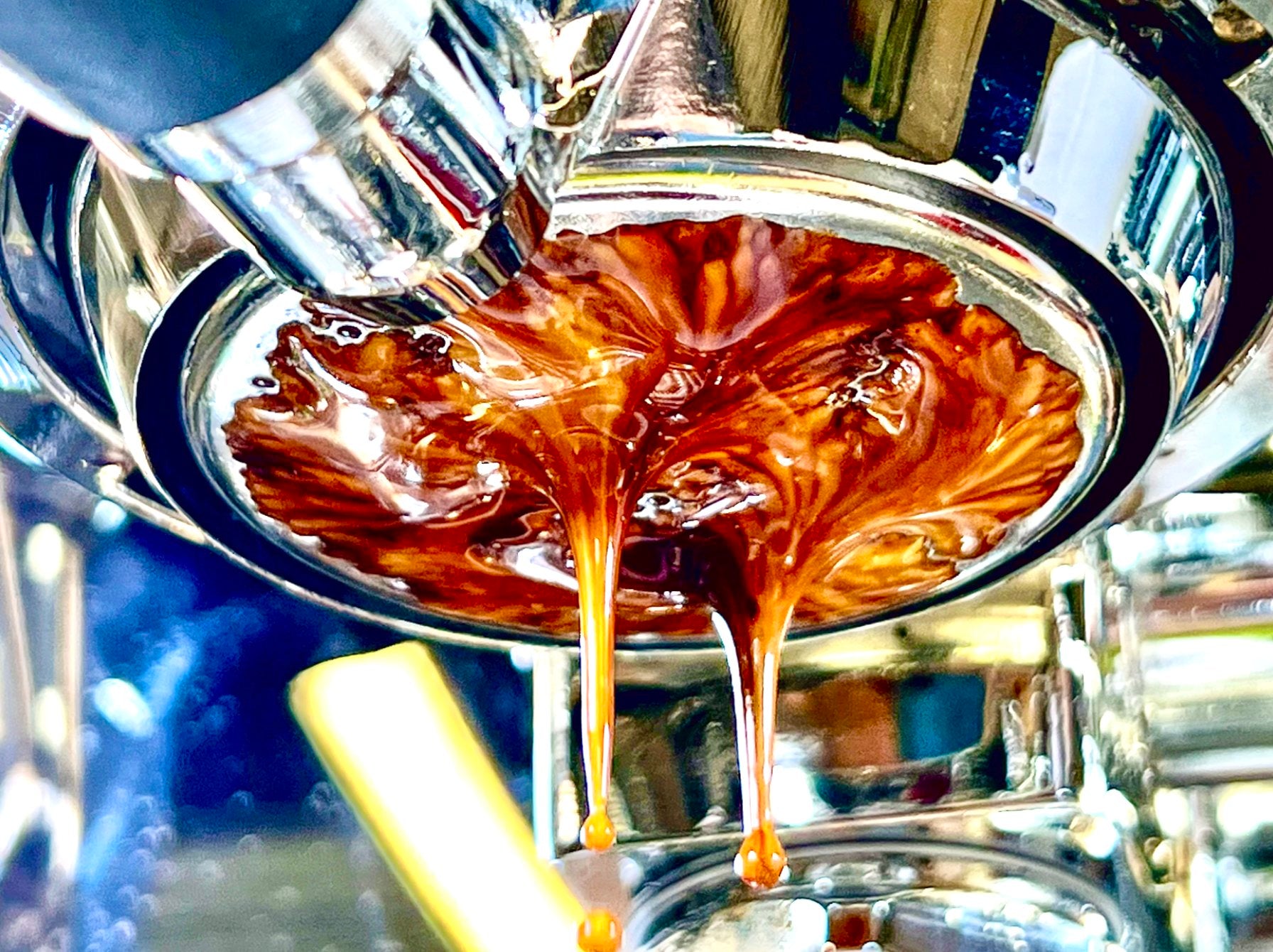
For espresso, begin with an 18-gram dose and a 36-gram beverage yield in 26–30 seconds. Taste before changing more than one variable. Sourness or a thin body usually calls for a finer grind, higher yield, or slightly longer contact time. A harsh, drying finish suggests grinding coarser or reducing yield. For cappuccino or latte service, a slightly longer 1:2.2 ratio can open the blend while preserving enough intensity for milk. On drip, start at 30 grams of coffee to 500 grams of water with a medium grind and water near 198°F.
Choosing a method and format
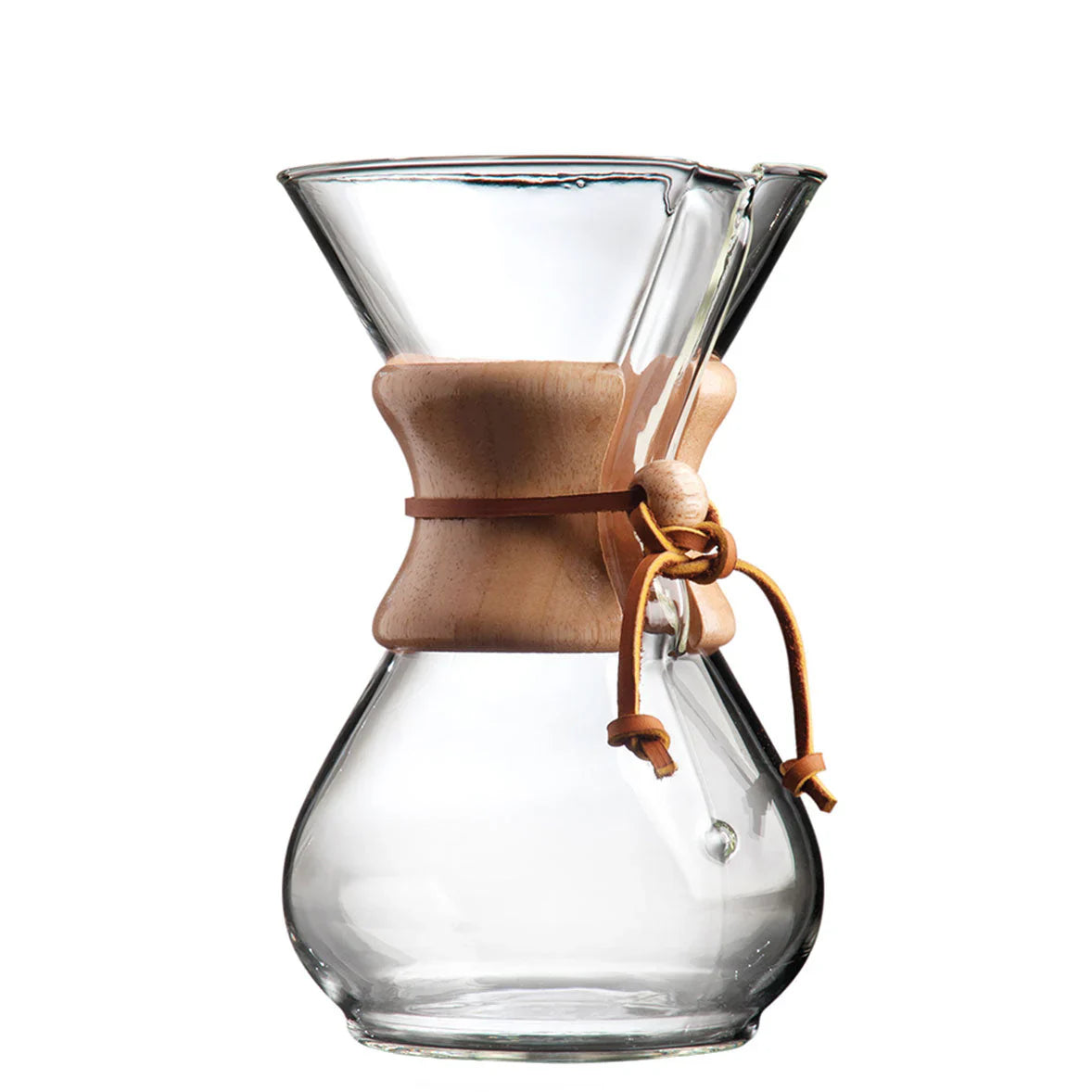
A useful espresso workflow starts by warming the portafilter and cup, distributing the grounds evenly, and tamping level. Keep the 18-gram dose stable while adjusting grind until the target beverage yield lands in the desired time window. Then taste: increase yield for more extraction and openness, or shorten it for greater concentration. When steaming milk, avoid using temperature to hide a poorly extracted shot. For drip service, rinse the paper filter and preheat the carafe. The larger bags make sense for frequent espresso use, while a 12-ounce bag is easier to finish during the coffee's most expressive period.
Dialing in, freshness and equipment
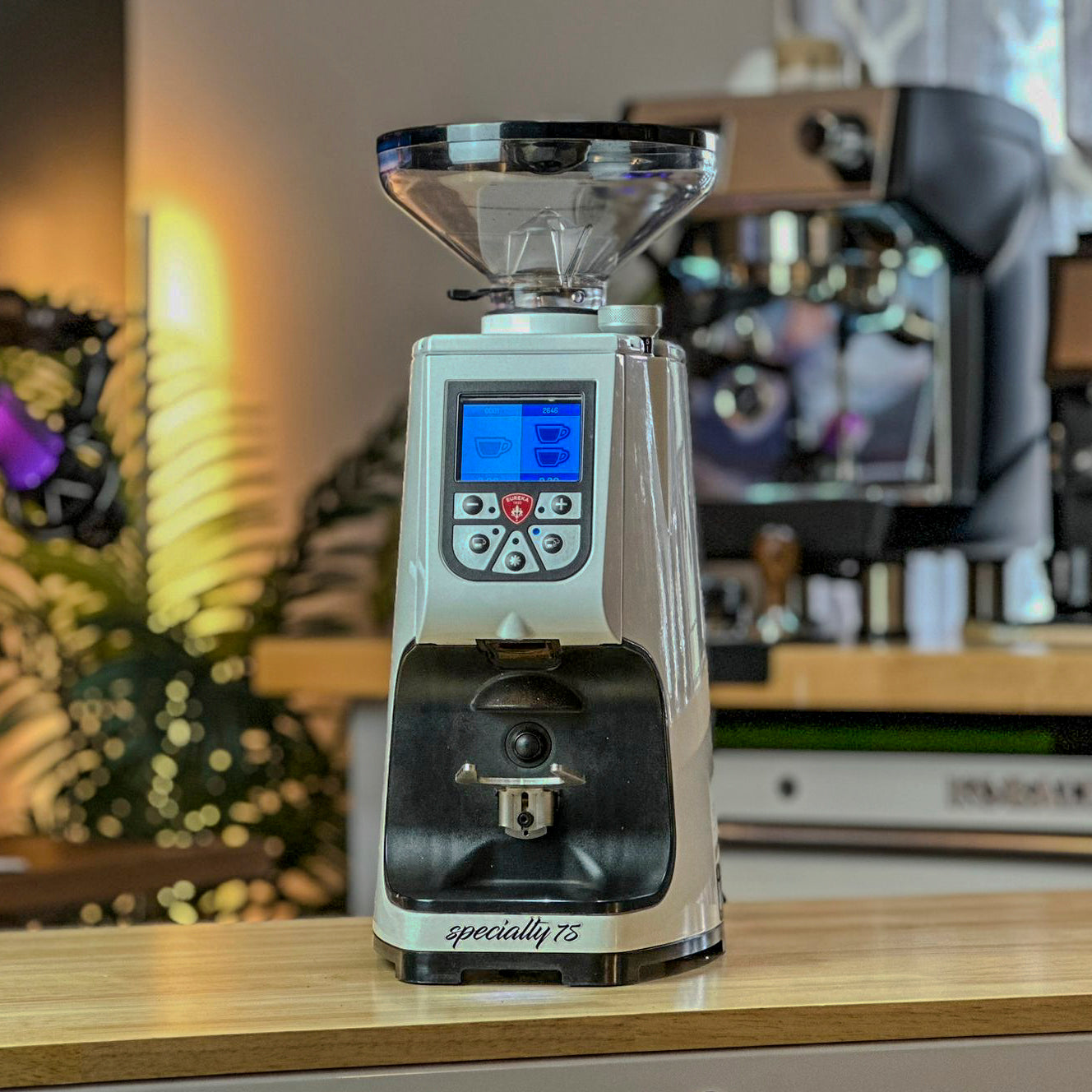
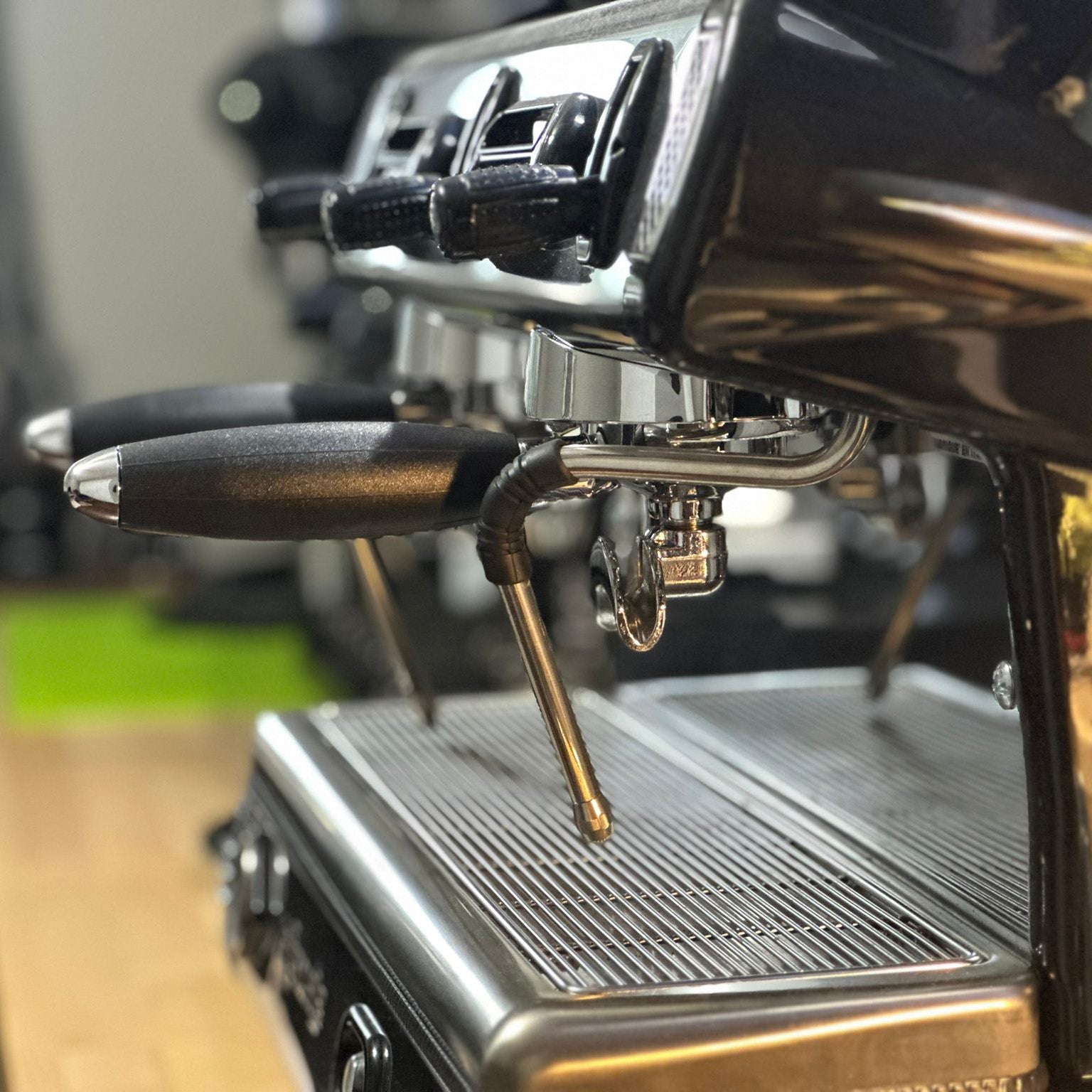
Give fresh coffee several days to degas, especially before dialing in espresso, because excess carbon dioxide can disturb flow and crema. Judge the shot by sweetness, body, acidity, bitterness, and finish—not crema alone. Keep dose fixed while adjusting grind, then record beverage yield and time. The Turin DF64 Gen 2 grinder supports precise adjustments, while the Turin Legato espresso machine provides a practical platform for controlling the recipe.
For best results, buy the format that matches your equipment. Whole bean preserves more aroma until grinding; ground coffee prioritizes convenience. Store the sealed coffee in a cool, dry cabinet and avoid refrigeration after opening. Orders placed through Espresso Outlet are routed to the roasting partner for fulfillment, so roast and dispatch timing follow that partner's workflow.
Frequently asked questions
Which coffees are in the blend?
The documented origins are Costa Rica, Guatemala, and Sumatra.
Is it only for espresso?
No. East View also recommends it as a dark, satisfying drip coffee.
Are spices added?
No added spices are documented; “spiced” describes the sensory profile.
What recipe should I try first?
Start with 18 grams in and 36 grams out in about 26–30 seconds.
Will it work in milk drinks?
Yes. Its bold body and developed roast character are intended to remain clear in milk.
What sizes are available?
Whole-bean and freshly ground choices are offered in 12-ounce, 2-pound, and 5-pound sizes.
Use collapsible tabs for more detailed information that will help customers make a purchasing decision.
Ex: Shipping and return policies, size guides, and other common questions.