


Espresso Brew Ratio Explained
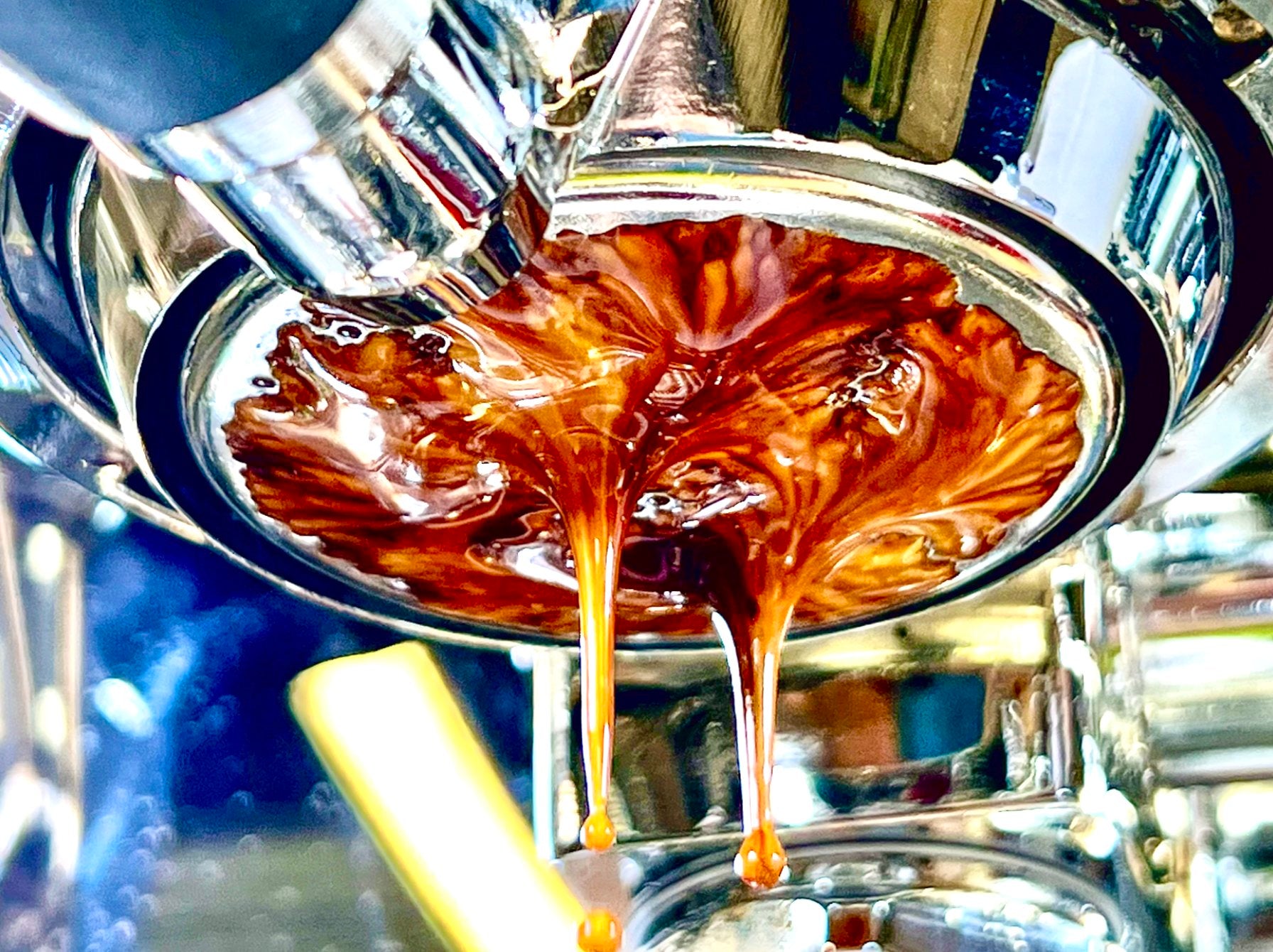
Espresso brew ratio describes the relationship between the dry coffee dose and the liquid espresso yield, usually by mass. If you use 18 grams of coffee and stop the shot at 36 grams in the cup, the espresso ratio is 1:2.
Why ratio is more useful than ounces
Volume is a poor way to compare espresso because crema adds variable foam. Weighing the dry dose and beverage yield gives a much more repeatable recipe. A scale makes it possible to separate two questions: how much coffee went into the basket, and how much beverage was produced.
Our broader brew ratio guide explains how ratio conventions differ between espresso and filter coffee.
Common espresso ratio ranges
| Style | Approximate dose-to-yield relationship | Typical character |
|---|---|---|
| Ristretto | About 1:1 to 1:1.5 | More concentrated, lower beverage yield |
| Normale / modern espresso | Often near 1:2 | Balanced concentration and extraction for many coffees |
| Lungo | Often 1:2.5 to 1:4+ | Less concentrated, higher total beverage yield |
These are descriptive ranges, not universal rules. Light roasts may taste better at longer ratios because they are less soluble, while darker or more traditional espresso blends may work well at shorter ratios.
Ratio changes strength and extraction
Increasing yield while keeping dose fixed usually lowers beverage concentration but allows more material to be extracted from the coffee. Shortening the ratio raises concentration but can reduce total extraction. This is why a longer shot can simultaneously taste less intense and more extracted.
Ratio does not replace grind size
Ratio sets the target relationship between dose and yield. Grind size controls how quickly water can pass through the puck and strongly affects extraction rate. If an 18-gram dose reaches 36 grams in the cup far too quickly, the solution is usually to grind finer after ruling out puck-preparation problems—not simply to let the shot run longer without considering taste.
A practical starting point
For a new coffee, a 1:2 ratio is a useful neutral starting point: for example, 18 grams in and 36 grams out. Then taste. If the coffee seems sharp, thin, or underdeveloped, a longer yield may help. If it tastes dry, hollow, or overly bitter, a shorter yield or other recipe change may work better.
A capable grinder is essential for making those changes precisely; see our home coffee grinders.
Watch: Understanding Espresso Ratio
James Hoffmann explains why dose-to-yield ratio is one of the most useful ways to define and adjust an espresso recipe.
For more terminology, visit the Coffee, Espresso & Brewing Equipment Glossary.