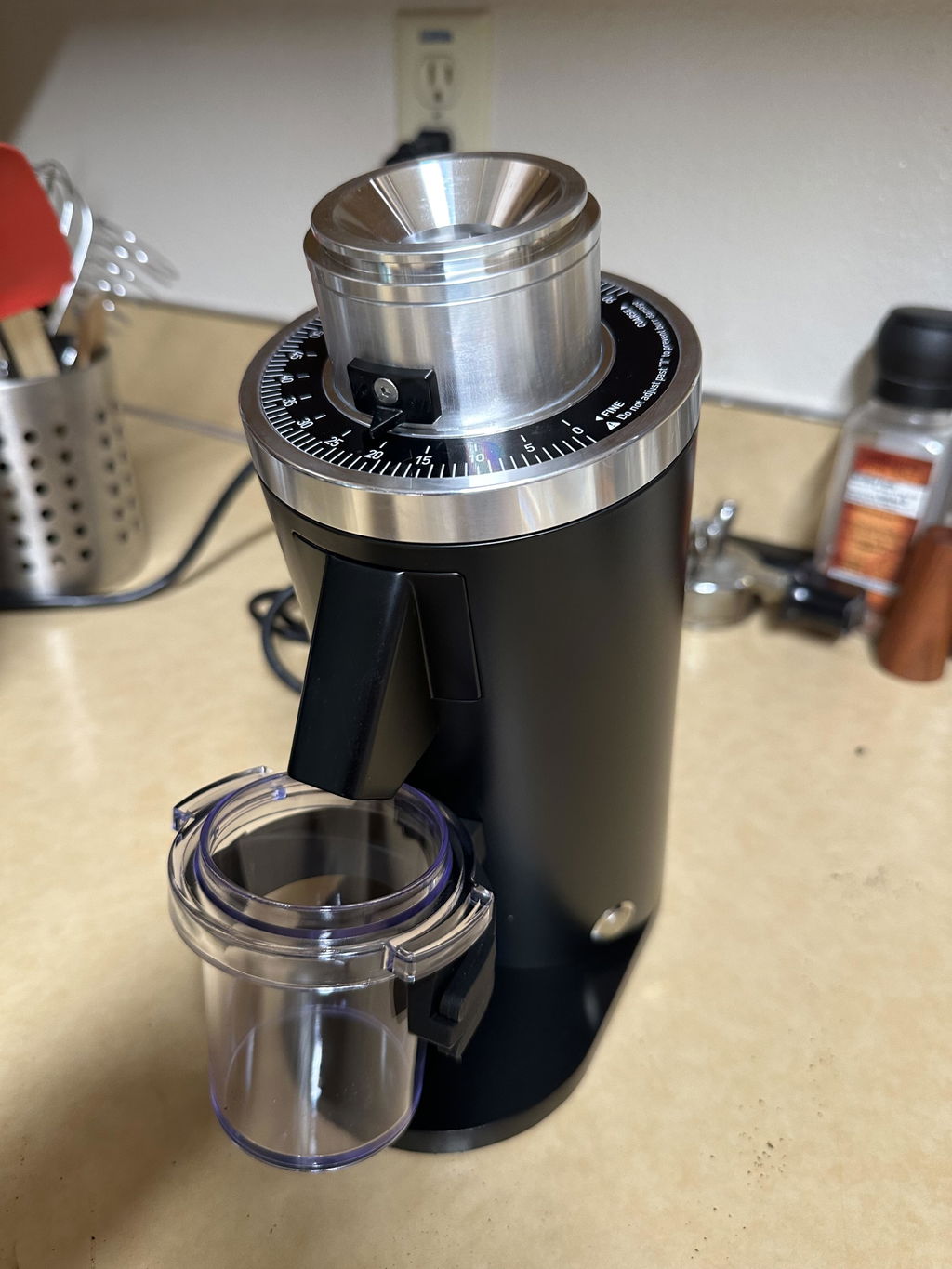
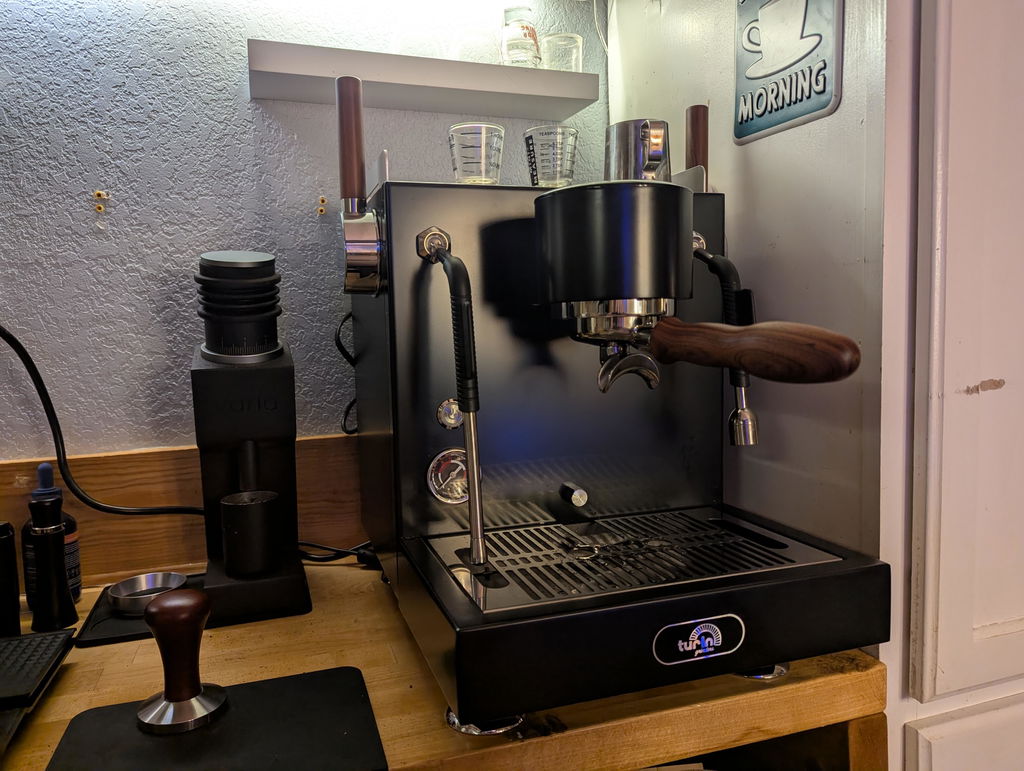
Turin Grinder Development
Turin’s grinder range reflects the growth of home single dosing: weighing beans for one drink, choosing a grind setting and minimizing unnecessary coffee left in the machine. The most useful history follows the changes between actual models and generations, rather than assigning an unsupported founding story or launch date.
The original DF64 platform
The original DF64 combined 64 mm flat burrs, stepless adjustment and a single-dose workflow. Our DF64 in-depth guide distinguishes that older platform from the current generation. The name has remained recognizable while parts of the chute, adjustment, static management and user interface have changed.
Single dosing is a way of loading a grinder, not proof of literally zero retention. Some grounds can remain in the chamber or exit path. A small difference between the beans loaded and grounds collected on one dose does not measure how much older coffee was exchanged into that dose.
Generation 2 and later revisions
The current DF64 Gen 2 listing documents the offered revision and its features. Later revisions include changes intended to improve everyday handling and static management. Those features should not be added retrospectively to an original DF64 review.
For an owner, the practical questions are whether grounds collect cleanly, the setting stays repeatable and the grinder is straightforward to maintain. An ionizer needs a clean operating environment; it cannot promise no static under every coffee and humidity condition.
The DF64V is a separate variable-speed line

The DF64V product page describes the progression from variable-speed operation to later ionization and feed changes, followed by the current Gen 3 motor and chamber updates. A DF64V generation number is not the same as a standard DF64 generation number.
Variable speed adds an experimental control, but it does not mean the lowest setting is always best. Coffee hardness, feed and grind setting influence motor load and the result in the cup. Use the supported operating range and read our variable-speed grinding guide before treating RPM as a recipe on its own.
Burr options and compatibility
The 64 mm format makes different burr choices possible on supported models. Diameter alone is insufficient: mounting, thickness, rotation direction and carrier clearance must match. Check the exact grinder revision and burr set with the seller.
A burr option may be supplied separately rather than installed and aligned. Confirm what the order includes. A coating does not establish the cutting geometry or guarantee a flavor improvement; our burr-coating guide and alignment guide explain what to examine.
How to compare a new model with one you own
- Write down the complete model, generation and current burr set.
- Identify the limitation you want to fix: adjustment, mess, workflow, noise or taste.
- Check whether maintenance or a compatible part resolves it before replacing the grinder.
- Compare both grinders using the same coffee, but dial each in independently.
- Include seller support, warranty and replacement-part availability in the decision.
The range has expanded beyond one DF64 platform, so avoid treating every Turin grinder as a scaled copy with identical burrs or motors. For a different single-dose development story, see the Niche Zero history. The best choice is the model whose documented features address your brewing routine.