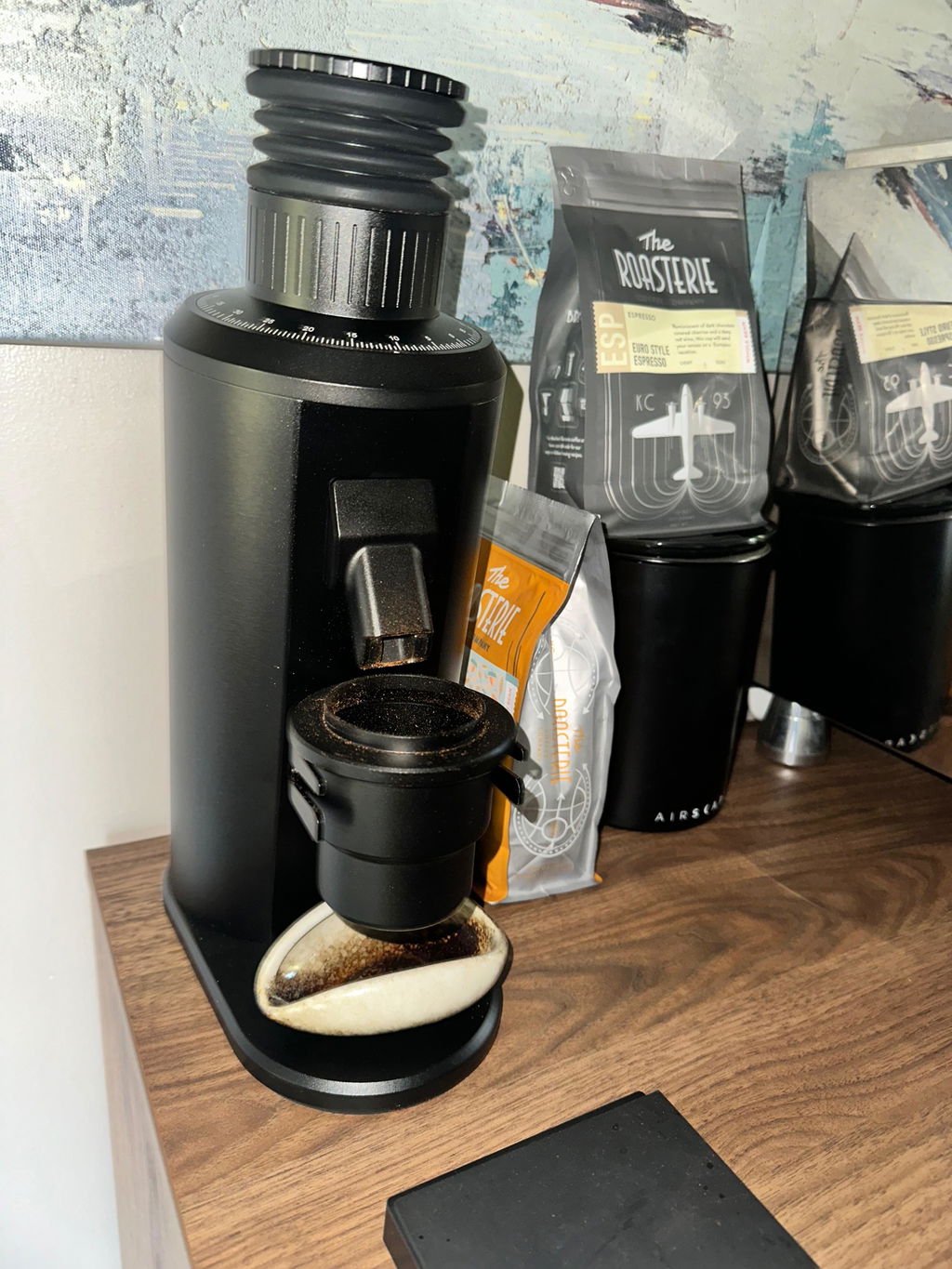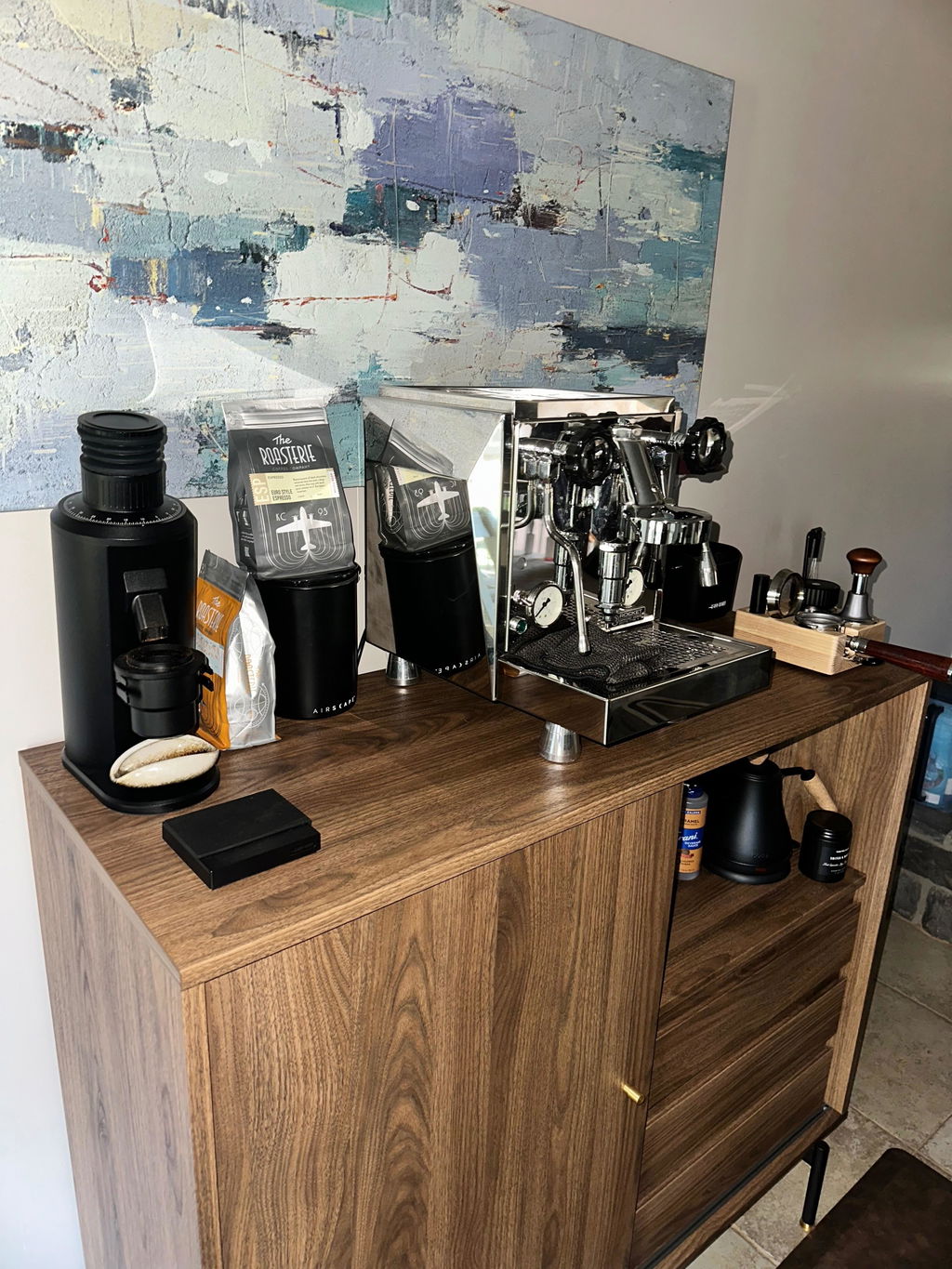
Niche Zero History: Single Dosing
The Niche Zero helped bring a particular grinder workflow to wider attention: weigh one portion of beans, grind it, and switch coffees without maintaining a full hopper. Its history is best understood as a design response to home use, rather than a claim that one grinder invented single dosing.
The problem behind the design
In its company development account, Niche says founder Martin Nicholson began working on the problem in 2014. The company describes four years of development, more than 30 prototypes and Indiegogo funding for initial manufacturing. Those are the manufacturer’s account of its development, not independently audited production statistics.
The goal was a compact domestic grinder with a short, accessible grounds path and a simple routine. In a café, a hopper can be convenient because coffee moves through quickly. At home, a smaller daily volume makes retained grounds and switching between regular coffee and decaf more noticeable.
What makes the Zero distinctive?
The Niche product range identifies the Zero with 63 mm conical burrs and the Duo with 83 mm flat burrs. They are separate designs. Buying a Zero does not provide an interchangeable route to the Duo’s flat burr sets.
Stepless adjustment lets users make small changes without predefined click positions. It still takes practice to find and record settings, especially when changing beans. A number that works for one owner is not a universal recipe: calibration, roast, basket and desired yield all affect the setting.
Low retention is a practical goal, not a literal guarantee
Several measurements get called retention. Total retention is coffee remaining inside the grinder; exchange retention concerns older grounds displaced into a later dose. The difference between beans in and grounds out for one shot does not measure both. A grinder can return nearly the same mass while exchanging some older grounds.
To assess your own routine, weigh several successive doses, follow the maker’s cleaning instructions and note the effect of switching coffees. Do not expect the product name to eliminate cleaning or guarantee identical output under every condition. Our conical-versus-flat burr guide also explains why burr shape alone cannot guarantee body or clarity.
How single dosing changes everyday use
- Weigh only the beans for the drink you are making.
- Use the grinder’s normal recommended loading and operating procedure.
- Check the ground dose when dialing in, rather than assuming all beans reach the cup.
- Record the coffee, grind setting, dose and beverage yield.
- When switching methods, return to the recorded setting and check the next brew by taste.
Single dosing suits people who enjoy rotating coffees or adjusting each recipe. A hopper grinder with reliable dosing may suit someone who makes the same coffee repeatedly. The relevant comparison is the work you want to do each morning, including weighing and cleanup.
Development beyond the Zero
Niche subsequently introduced the Duo as a flat-burr alternative. That broadens the range rather than proving conical burrs have become obsolete. Compare the exact burr set and brewing method using the same coffee, and redial each grinder before deciding. Our filter and espresso burr guide explains why adjustment range and burr design should be considered together; the DF64 guide offers another single-dose layout to compare.